
Stumble upon a few of the 36 traditional art forms
Shop around in the old bazaars built as per the 18th century norms.
Encounter exquisite havelis and stunning temples artfully built in this old town of Jaipur,
Plenty of more gems await you on your Jaipur walking tour.

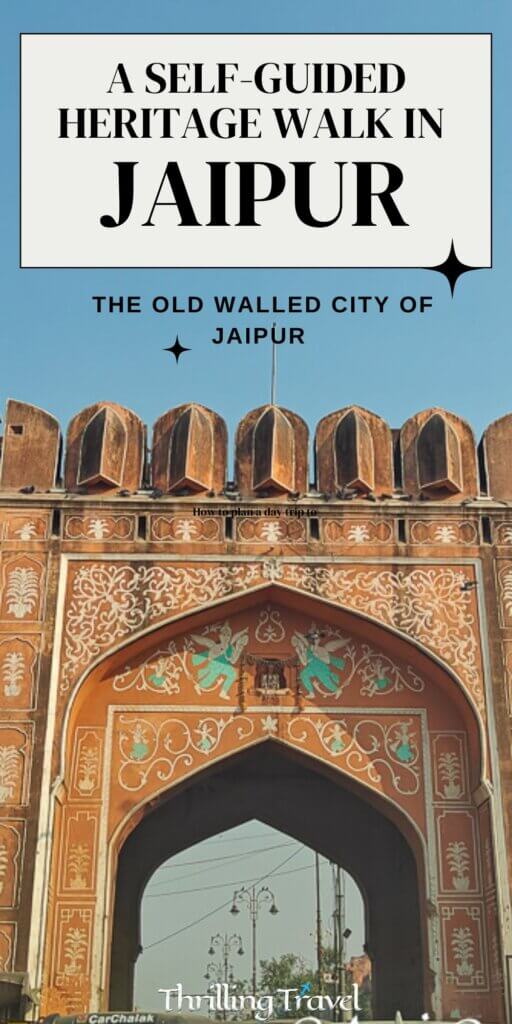
Embark on a heritage walk in Jaipur to get a feel of its authentic culture and tradition. Get a feel of how the old walled city - now a UNESCO world heritage site was planned with the various things to see including the Jaipur havelis, temples and traditional crafts that are still prevalent here. Besides a list of the best things to see in the Old city, the guide also gives you tips on how to plan a walking tour.
Even if you are in Jaipur for just one day, you cannot miss the blushing terracotta facade of its old walled city that gives it the sobriquet of “Pink City”. I have always been fascinated by the rose-toned frontages of the bustling bazaars that exist along the main roads – almost uniform in their regal aura and appearance. While I knew that it was all by design that was first made in the 18th century, what I was inquisitive about was what lay along those lanes that opened up subtly along the facade. What treasures lay beyond the pink facade? Was it as planned and symmetrical as its front?
Finally, with an amazing heritage walk in Jaipur, I discovered the secrets that have made Jaipur – a UNESCO World Heritage City.
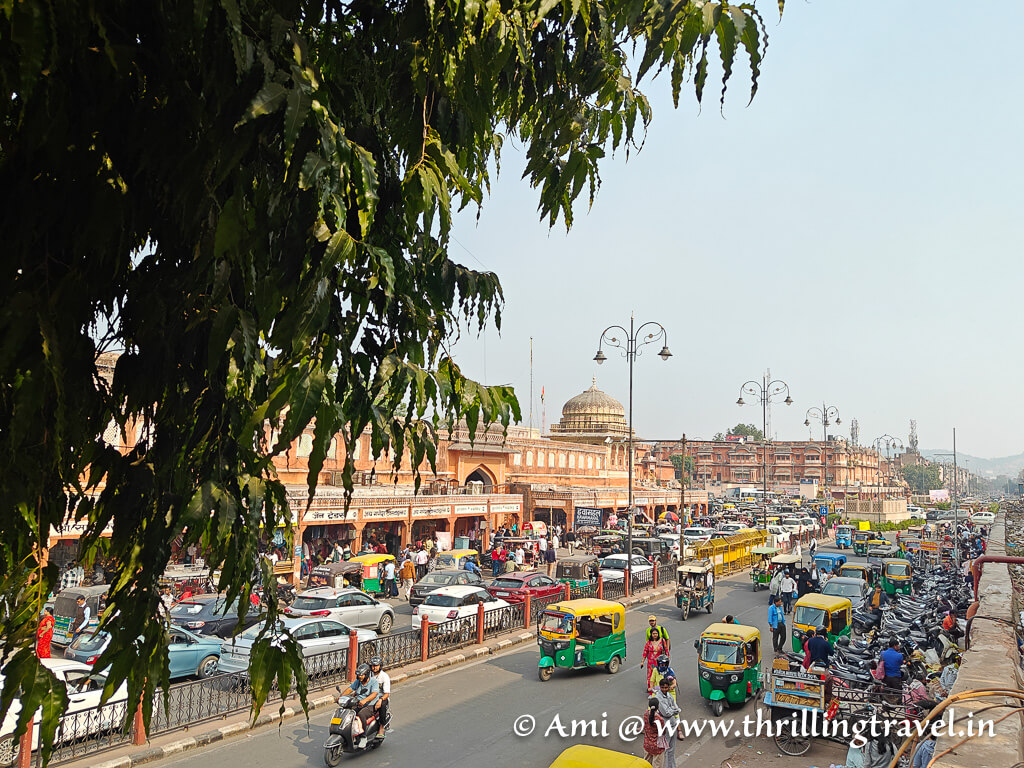
One of the reasons this city received the prestigious UNESCO tag was the ingenious city planning of Jaipur, which was implemented in the 18th century. Much of it is evident as you enter the heritage city – the wide main roads, the almost identical buildings alongside, and a clear demarcation of the royal and public spaces. However, the real magic lies in discovering the rest of the city plan that still lives on around and behind the regal rose-tinted town. The quintessential karkhanas or craft workshops that were set up by Maharaja Sawai Jai Singh II to boost the new town’s economy, the havelis constructed not just to dazzle but adapt to the climatic conditions of the town, the “desi piazzas” that emulated the public squares of Paris – they all still exist and the only way to discover it all is to sign-up for one of those “Jaipur walking tours”.
In this blog post, I will take you through my own Jaipur heritage walk. I will not only share the best places to see on a Jaipur old city walk but also interesting stories and facts about these places. You will also get tips on how to book a good heritage walk in Jaipur city, the pros and cons of various options and what is the best time to do this walk. I have also, included a Jaipur city walk map that might aid you if you choose to do a self-guided one.
All in all, you are in for a ride. So hop and enjoy the secrets of the old walled city of Jaipur.
Quick links for Jaipur city heritage walks and tours
- Booking.com has several good Jaipur stays listed on their site. These range from luxury hotels to mid-prices havelis, homestays and hostels. I have also got this post on the localities and areas where you can plan to stay for your Jaipur visit.
- I did my heritage walk with Archit from Heritage Tracks. You can use the link to browse through his offerings.
- GetYourGuide is a good resource with tons of Jaipur tours including heritage walks and cycling tours. You can check these five that could work for you
- Viator.com is another online resource for booking walking tours, transfers and guided tours in Jaipur. Here are five that you might want to consider for this visit.
- For any of your travel needs or general shopping, consider using Amazon through this link.
Disclaimer: This article includes affiliate links. This means that at no cost to you, I will receive a small commission if you purchase through my link. Thank you for supporting me with this.
History of Jaipur city planning
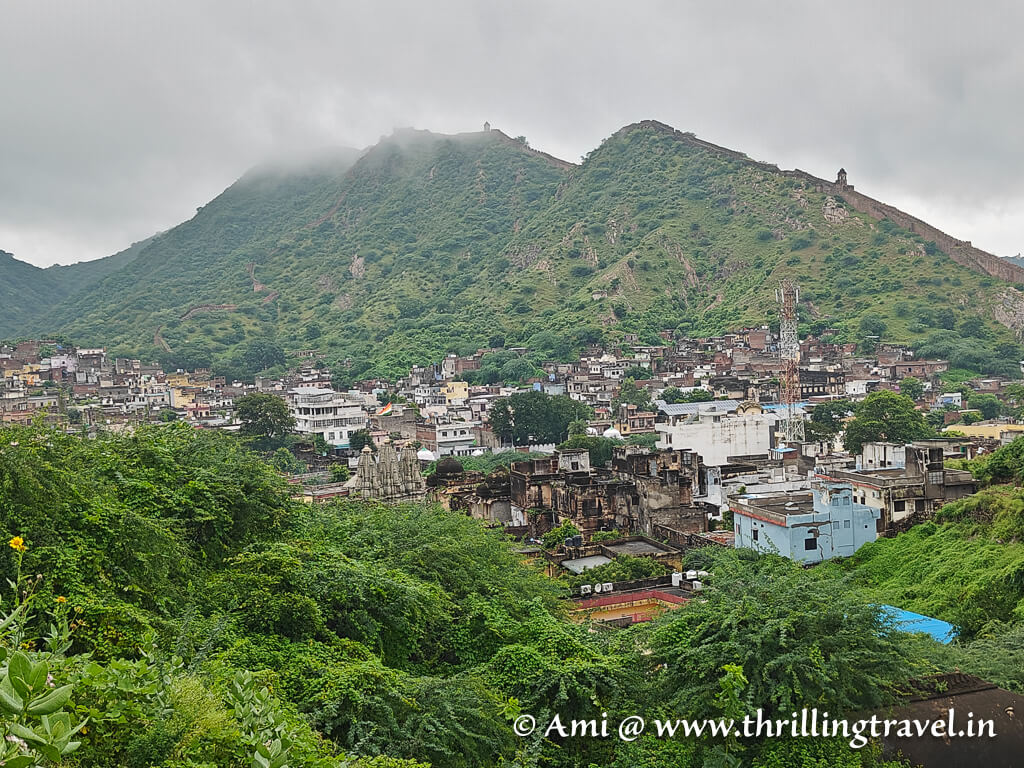
Let me share a little story about a kingdom called Dhundhar that will help you appreciate and enjoy the walking tours in Jaipur better. Ruled by the Kachhwahas, the kingdom had its capital in Amer, a hilly town bounded by the Aravallis on all sides. The capital flourished under the reign of the Kachhwaha kings, but by the 18th century, it had started bursting at its seams. The then ruler, Maharaja Sawai Jai Singh II, recognized this and started planning a new city that could replace the outgrown Amer. He engaged several architects and experts to scout new lands and develop a city that would not just be comfortable for his subjects but would encourage trade and commerce. Thus began the story of Jaipur.

After a thorough search and survey, in 1715, Sawai Jai Singh II laid the foundation of the new capital of Dhundhar which today has become the UNESCO World Heritage City of Jaipur. This he began by installing the Lord Govind Devji in a temple that marked the center of the city to be built along the plains near the Aravallis. He moved his residence to the new City Palace of Jaipur in 1727 and the palace still remains the residence of the royal family of Jaipur.
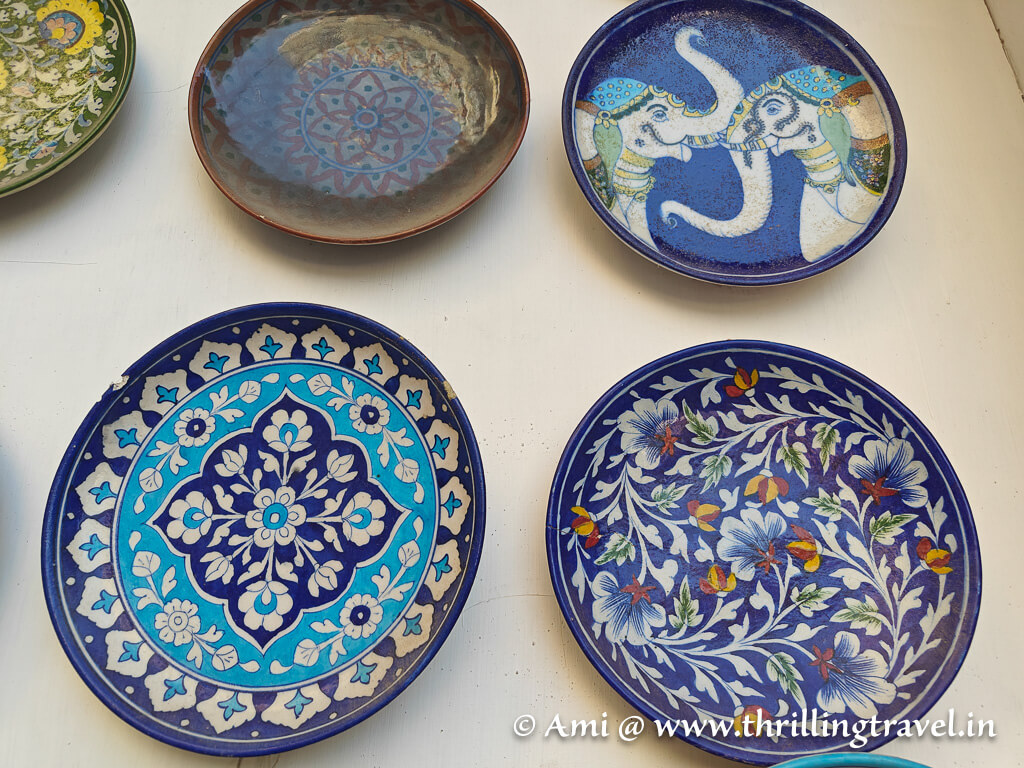
To encourage trade and boost the economy, Maharaja Sawai Jai Singh II invited craftsmen to make this new city their home. Free homes and workspaces were given to them to encourage these craftsmen and their income started with selling their wares to the royal court itself. In this manner, 36 karkhanas (royal workshops) were established in the new capital, a lot of which exist even today and with a good Pink city walk, you will get a chance to experience many of them firsthand. At the risk of repeating myself, this is why I say that a Jaipur city walk is a must for anyone wanting to learn more about the heritage in Jaipur.
Historical Jaipur city planning map and layout
If you have read my Hawa Mahal post, you might be familiar with the name – Vidyadhar Bhattacharya – the architect behind the marvel. Well, he is the architect credited with the ingenious city planning of Jaipur. Below is a rough layout of the walled city of Jaipur. You can see clear sectors and intersections – all of which are still relevant and exist today.
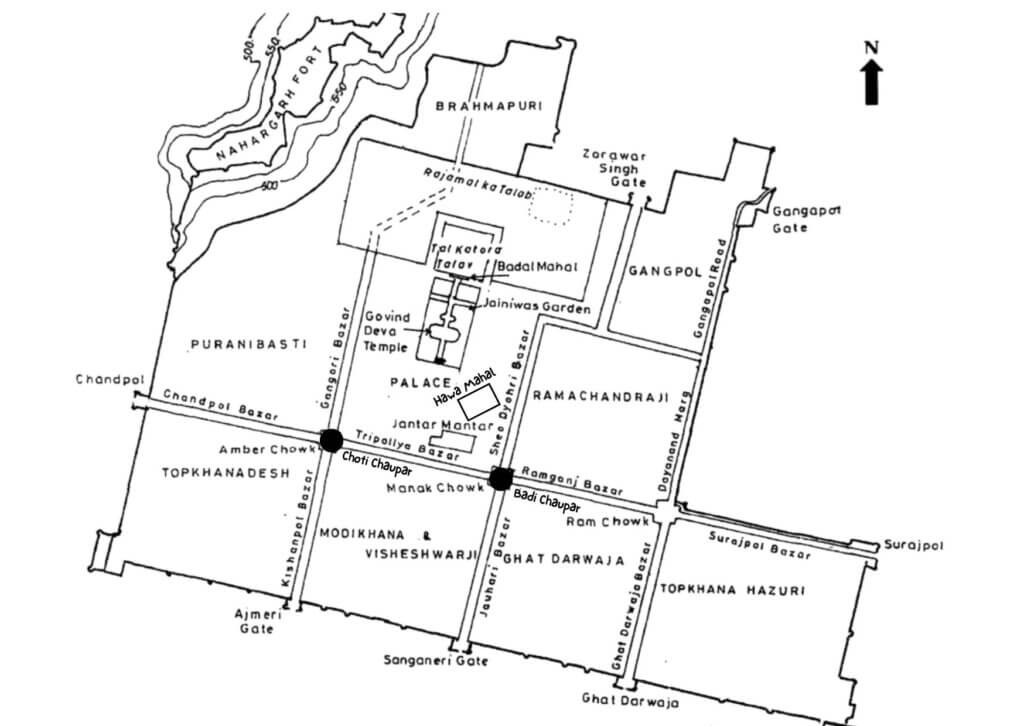
The Jaipur city architecture is actually brilliant and a little ahead of its time, given that it was created in the 18th century. It was done in a manner that the entire walled city fulfilled the principles of Vastu Shastra. Here are some interesting facts about Jaipur city planning that you will enjoy spotting when you are on your heritage walk in Jaipur Old City.
- The walled city has seven gates – with the two significant ones being the Chand Pol gate (Moon gate) in the west and the Suraj Pol (Sun Gate) to the east.
- The road connecting the two main gates formed the main road of the city. This was bisected by the north-south axes forming three main squares – Badi Chaupar, Choti Chaupar and Ram Chowk. These squares functioned as public squares – vibrant with their markets and a step well that brought in water using underground pipes.
- The water management system connected the various freshwater sources like Dhravyavati river, Man Sagar lake, Amanishah Nala and Jhotwara river through underground tanks, pipes and even natural structures. Their drainage and sewage system was also, well developed.
- As per the Vastu Shastra grid system, 9 sectors or chowkris were created for the city master plan. The one to the North west was unusable owing to the natural barrier of Aravallis and hence another one to the South east was included to complete the count of nine – a number believed to be lucky for Jaipur city. The grid pattern is akin to the Mandala grid.
- Of the 9 chowkris, two were taken by the royal family. Today, you can easily identify these royal chowkris with the landmark heritage sites in Jaipur – Hawa Mahal, Jantar Mantar and City Palace.
- Every structure in the city was planned in terms of size and placement. The main roads for example, were 111 feet wide while secondary roads were 54 feet and smaller lanes 27 feet. The height of the buildings was restricted to a single storey along the roads. That is one of the uniformities that you can spot when you pass through the city.
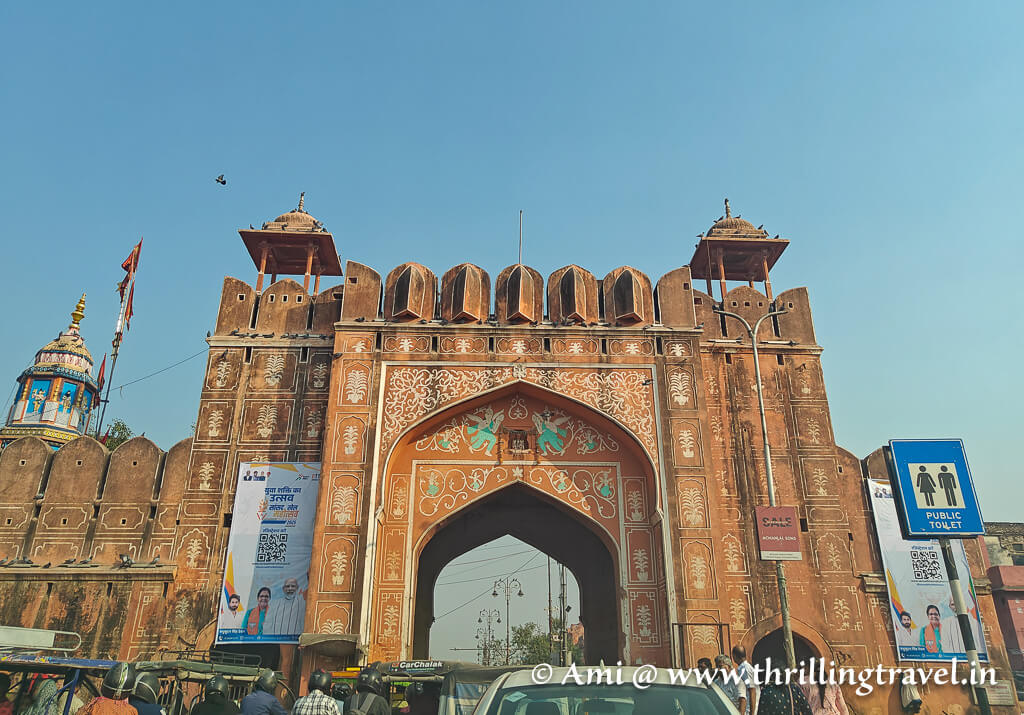
These are just the highlights of the unique Jaipur city planning concepts. There are more amazing things to discover as you explore the lanes of these chowkris. From the beautiful heritage havelis in Jaipur to quirky lanes of the karkhanas, you have a whirlwind of an experience waiting for you on the Jaipur heritage walk.
What are the different types of tours available to explore the old city of Jaipur?
There are several types of tours available to explore Jaipur Old City. These range from walks to cycle tours and e-rickshaw tours. Each of them has their pros and cons, which is what I will share in this section.
Heritage walks in Jaipur
I personally feel that the kind of immersive experience that you get when you do a heritage walk of Jaipur old city cannot be emulated by any other tour. The journey through the tiny living lanes of the chowkris, the sight, scent and sound of the local life and discovering fascinating obscure corners is what I believe you can best enjoy when you are on foot.
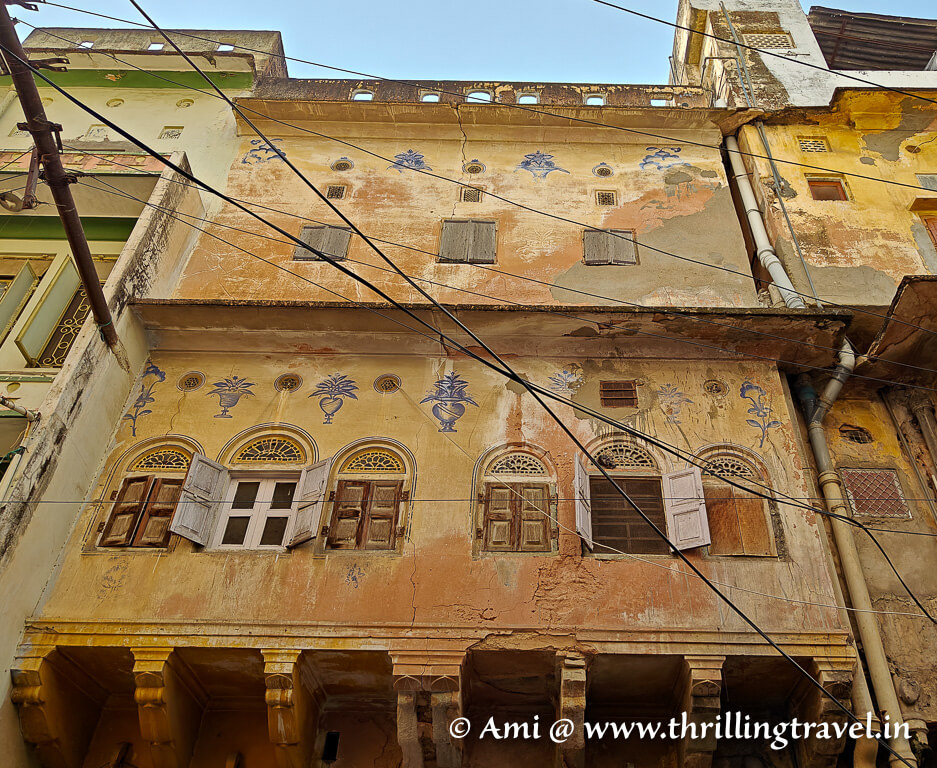
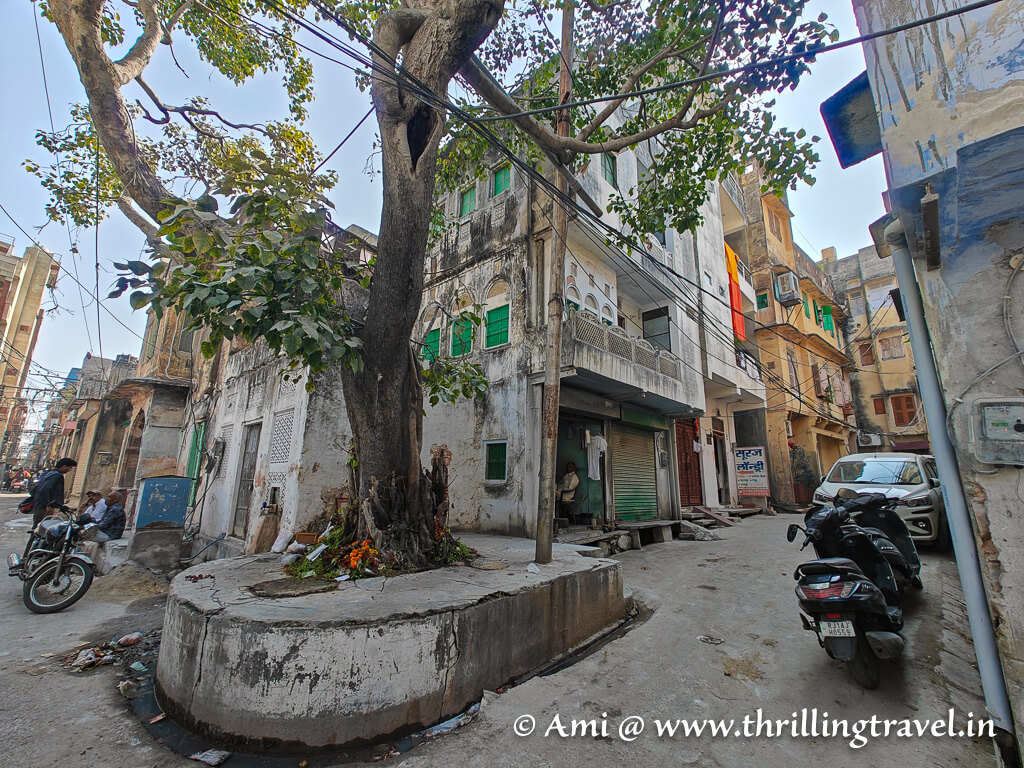
That said, there are a few cons too – especially if you are not used to old Indian towns or hamlets. They do give a culture shock to people who are experiencing it for the first time. For one, the narrow lanes are not straightforward and can get tiring to walk around, especially with the vehicular traffic that shares the space. It can be noisy, dusty and one might have to watch their steps to avoid puddles and open drains.
However, despite all that, I still highly recommend that you prepare yourself and enjoy a walk over any other type of heritage tours. There are several types of walking tours available for Jaipur old city – free walking tours, guided tours and self-guided exploration. I shall dwell more on these in my next section.
Jaipur cycle tours
If you have this picture of cycle tours that you might have taken in European cities like Madrid, please scratch that out. The cycle tours in Jaipur are a little different. They are amazing but you need to be able to meander around smaller lanes and be ready for traffic obstacles of all sorts.
That said, it is a great way to explore the inner city when it just waking up. You also, get to cover a larger distance, allowing you to get a peek at the old walls and gates of the city. Most of these cycle tours take place during early morning hours, which means there is less traffic and crowd on the road. That also, is a con as you do not really get to see the local businesses, bazaars and workshops in action at that hour.
If you are pressed for time and yet want to cover the old walled city, then this is a great option to consider. You can book one of these tours below –
- 3-Hour Morning Bike Tour of Jaipur Old City (Archit has a collaboration with them)
- 3-Hour Morning Bike Tour of Jaipur
E-rickshaw tour of the walled city of Jaipur
Consider the e-rickshaw tour as a time-saving option of the Jaipur walks. In fact, many Jaipur walking tours use this in combination to their itinerary on foot to cover a lot of points. It also works well for families with kids or people who for health reasons are unable to walk for too long. The e-rickshaws also, add a little pulse to your cultural experience of Jaipur city – after all, it is not every day that you get such a joyful and colorful ride.
The few cons that I would like to share include the fact that you are restricted to a set path and hence, might miss out on the smaller details of the town. The e-rickshaw tours are slightly pricier than the regular heritage walks of Jaipur. Here is one that you can consider if you wish to go ahead with this option.
How to plan a heritage walk in Jaipur?
I did two different types of heritage tours of Jaipur. The first time was when I deliberately got lost in the lanes of old Jaipur – purely out of curiosity as to what was behind the pink walls. It was more of a do-it-yourself walk. The 2nd time was a guided walk through the city – thanks to Heritage Tracks.
You have three options to consider when planning a Jaipur heritage trail. Along with the pros and cons of each of these options, I have also, shared resources to help you plan and book easily.
Free walking tours of Jaipur
Quite like the “free walking tours” available in Europe, there are a few options for Jaipur too with popular providers like Guruwalk. Some of them seem to be highly rated but then I have been quite skeptical about these “free” tours.
I have elaborated my discomfort about the so-called “free walking tours” in my post of Albaicin and Sacromonte walking tour. I have not just heard about the ethical concerns but am a little skeptical of the kind of tour itinerary they might be covering. Note that you are expected to give a tip at the end of the walk, which is not a fixed amount.
Also, remember they have a fixed time slot and a minimum number of participants. If you are low on budget, then you can consider signing up for one of these. Remember, though, to do a little research and make a few calls before you sign up for the free walks that you might find online. Check on the itinerary as well. You can compare it to my suggested one in this post.
Guided heritage walks in Jaipur
This was the 2nd walking tour that I did on my last visit to Jaipur and the one that I highly recommend you consider. While it was fun doing a self-guided heritage walk of Jaipur, I did not really know the background to the various attractions that I spotted on my trail. Also, then, I did not have a map to follow, nor any direction or guide. Without any helpful signage, it was all guesswork and no stories.
The guided walk on the other hand, threw up so many nuances of the old Jaipur city planning. It was fascinating to understand the stories behind what I was seeing. Archit, our Jaipur heritage walk guide, was born and brought up in this part and is also, an architect by profession. He not only shared factual data but tales that I would not have discovered.
There are several options to book a good Old Jaipur city heritage trail. You can always get in touch with Heritage Tracks that I considered, or book one of these trails online.
While booking a guided walk through old Jaipur, please keep in mind –
- Check the ratings of the option that you have selected – especially their qualitative comments
- Try to do a walk with the locals.
- Research a little on the route and trail that you are signing up on. You can use this guide to help you with that.
- On average, a good guided walk will cost you between INR 2000 – 2500 for a 2 – 3 hour experience.
Self- guided walk through Old Jaipur
This is possibly the most cost-effective option of walking tours in Jaipur. Just use the map and get going. That said, it is not the easiest. For one, the lanes can be confusing. Two, you really don’t know what you are looking at or what the story behind the architecture or planning is.
Of course, now you have this resource that I have built to help you with a DIY walking trail – if you still want to do it. In the absence of any audio guide, this is the best way to go around and unlock the secrets of the walled city of Jaipur.
My Jaipur heritage walk itinerary (with a map, routes and key attractions)
This Jaipur heritage walk map is based on the itinerary that I followed and the places that I have discovered on the trail. That said, it is possible that if you choose to do a self-guided heritage walk in Jaipur or choose another guided tour, then the places might be different. Several stops cover the same heritage trail and give you a similar experience as I had with these attractions.
There are specific features of the Jaipur old city that all of these attractions showcase. As you go along my heritage walk itinerary, you will decipher these for yourself. To give you a gist –
- There are over 400 temples spread across the old walled city of Jaipur
- Every street has a peculiarity and is named so. For example, Johari Bazaar is all about jewelers while Maniharon ka raasta is a street full of lac bangle makers (one of the karkhanas established in the 18th century). There are tons of streets like these and you might find at least a few during your walk.
- Heritage havelis in Jaipur are still occupied and you will find tons on your Jaipur heritage walking trails. They may not be the same as what I saw but likely you will spot the same features as I describe.
Do keep in mind the above when you are doing your research. And with that, let’s get onto my trail.
Sitaram Ji Mandir – the start of my heritage walk in Jaipur
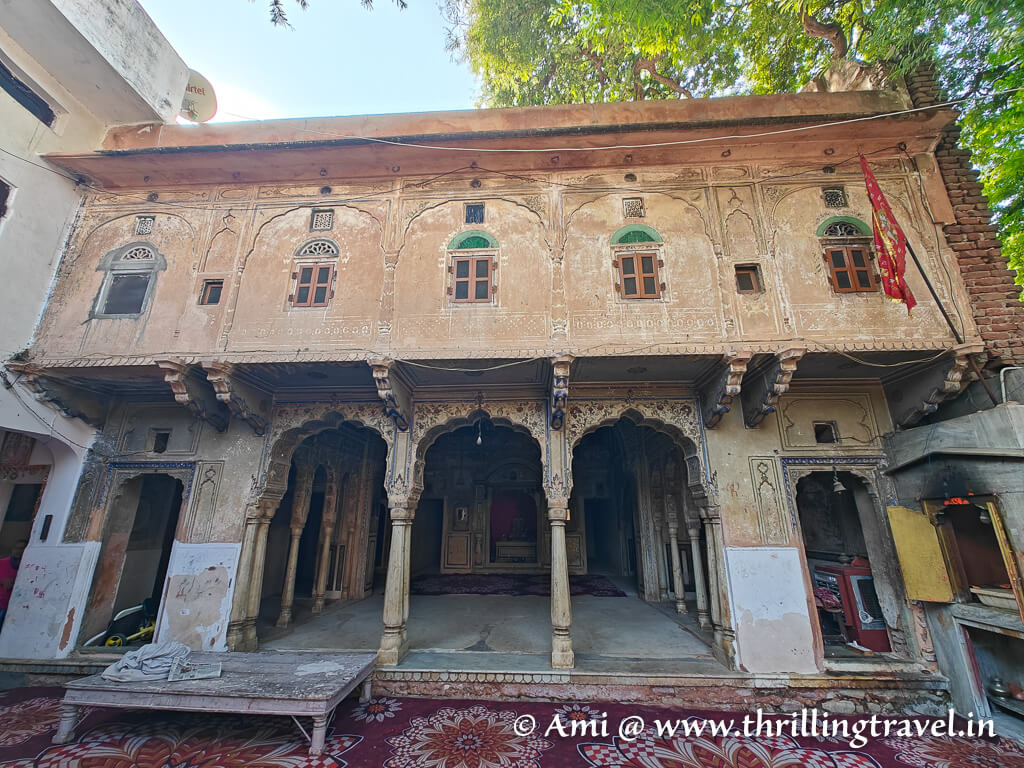
The busy city sounds suddenly dimmed as Archit led us through a small gate to a seemingly serene compound with an old tamarind tree and a set of old homes – except they were not just homes. They included an old temple dedicated to Sita-Ram and was built in the 1700s. Taking advantage of the quiet, Archit introduced us to the concept of Jaipur city planning, what its key features were and the general history of the place.
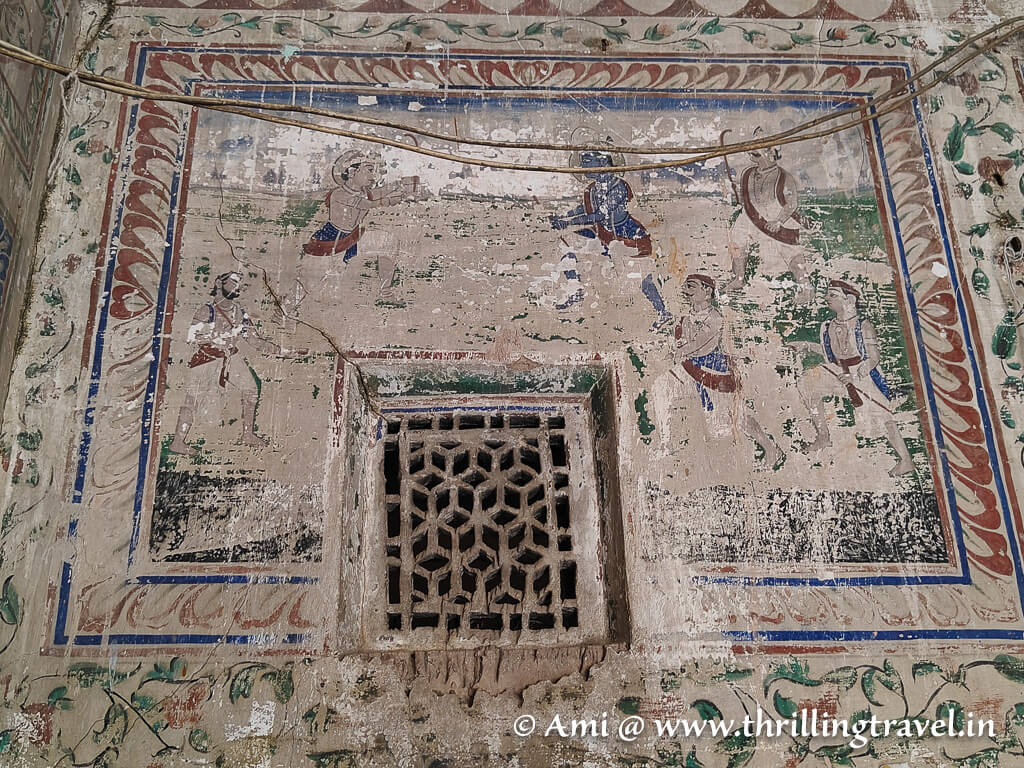
Though I had my ears glued to Archit’s stories, my eyes kept darting towards the old temple and its fading decor. The crumbling arches with the dimming murals kept beckoning me. They promised a slew of tales. What was uncovered later included a pictorial story of Lord Krishna playing hockey and several others from the Vishnu Purana and the Ramayana.
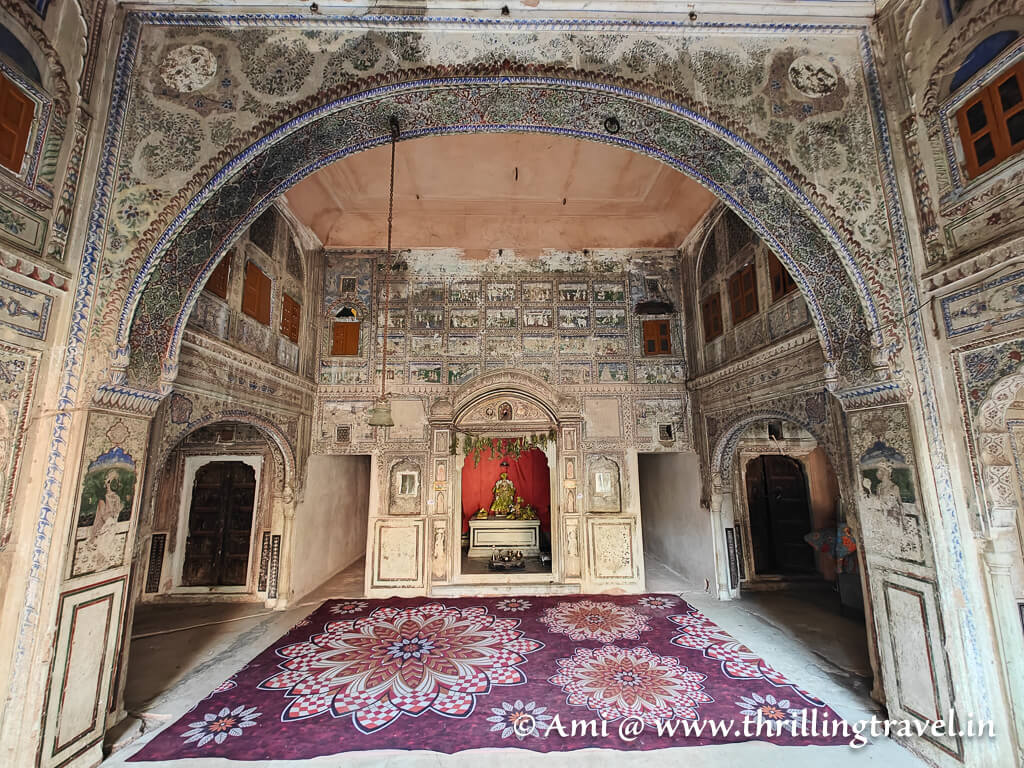
Even in its dilapidated state, the temple with its arched Sabha mandap (outer shrine) looked majestic. There was a certain elegance that the pillared facade with its quaint wooden windows exuded.“This is one of the lesser known living temples of Sita Ramji” – mentioned Archit. “The family who maintains it stays here. Currently we are attempting to restore these frescoes and bring back the temple to what it were years back”
And with a promise to show some more interesting temples, Archit guided us away to the next stop.

Thatheron ka raasta – one of the surviving Karkhanas of old Jaipur city
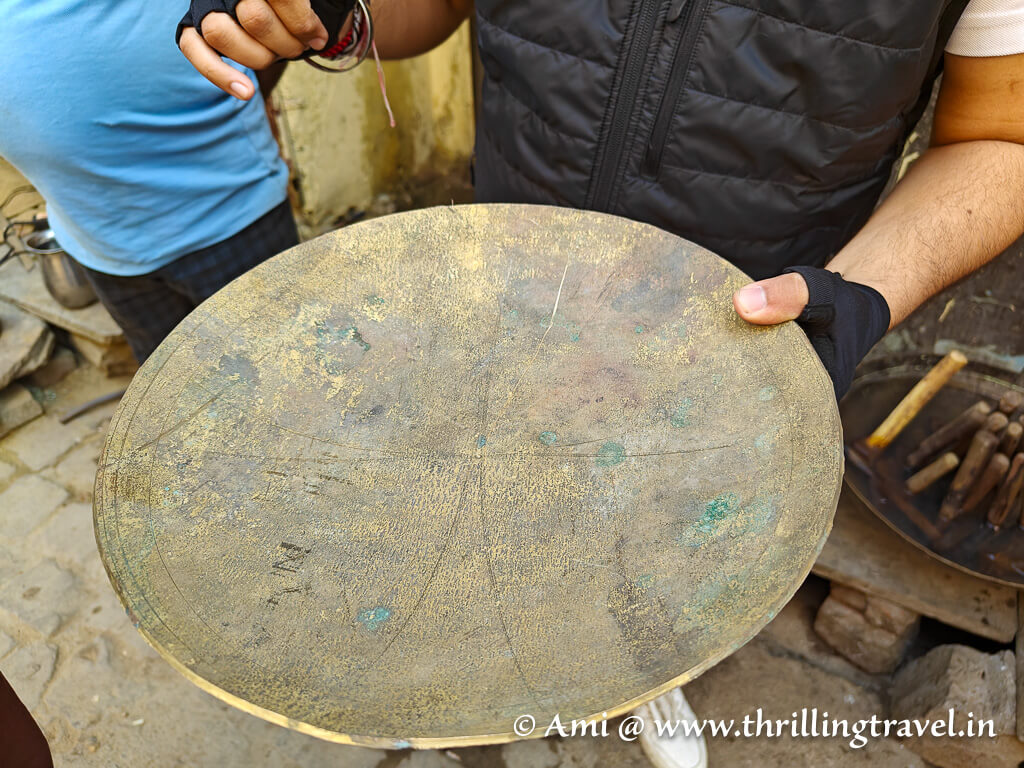
Thwack, That, Thwack…The rhythmic hammering ushered me into the world of Thatheras – the metal artisan community, originally from Punjab. Encouraged by Sawai Jai Singh II in the 18th century, the community settled along this street and gave it its current name – Thatheron ka raasta.
Brass and copper vessels stare at you from every home and shop on the street. You will see the inhabitants engaged in various activities that are involved in shaping a large sheet of metal into their desired object, all of which is done manually. It is this aspect of fashioning the vessel by manually beating it into shape that has earned this art form a UNESCO tag for its intangible cultural heritage.
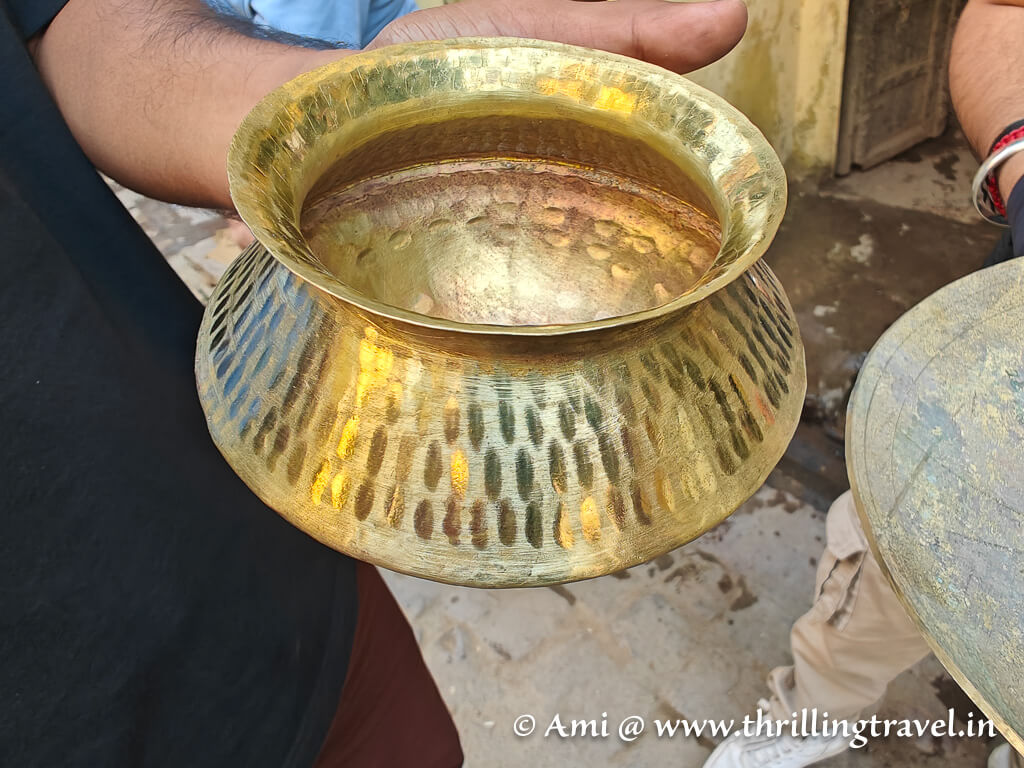
I had the opportunity of interacting with some of the artisans who happily showcased their tools – one of which was a set of hammers or Khacharas of varying weights and dimensions. They demonstrated a few of their techniques, like how they used tyre holes to painstakingly beat the metal sheets into bowls. After the shape was created, they used a special hammer to create deliberate dents called Matthaars. The Mathars is not just an aesthetic signature but also, serves to distribute heat evenly when the metal vessel is used.
In another home, I saw the polishing process involving sand and tamarind. It was kind of amusing to see how they used their feet to scrub the vessel with the paste and turning it into a shiny piece of work. Though primarily vessels, some of the artisans have graduated to creating gorgeous showpieces for your shelves – something that you can buy as gifts or memoirs.
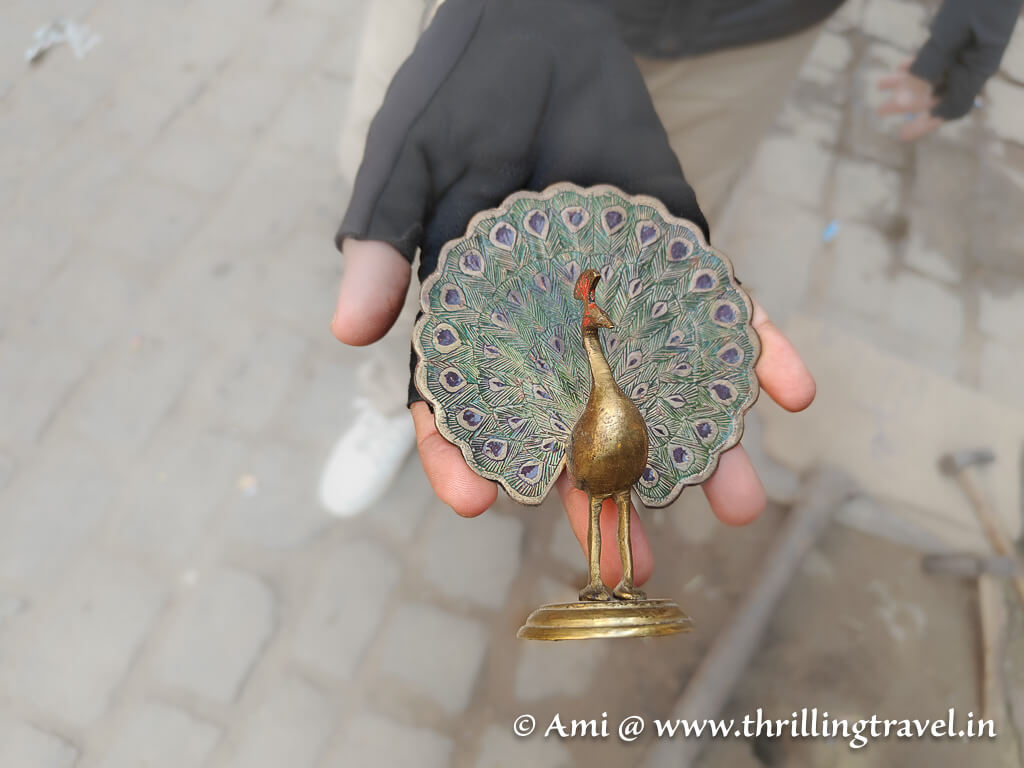
Thatheron ka raasta etches a mark on your Jaipur culture walk experience – even after the echoes of the hammers subside. The heritage art definitely deserves respect for living through generations and still being relevant today. The copper and brass vessels are now back in fashion for their health benefits and I hope that these Thatheras soon get their dues.
Cobblestone alleys and Terracotta buildings
One of the aspects that our guide pointed out and which I had missed earlier was the story of the rosy walls that gave Jaipur its nickname of “Pink City”. At one of the crossroads, Archit showed us the original color of the facade that was done in 1876. To my surprise, it was not the bright pink that one sees along the main streets. It was a lighter shade, bordering on tan.
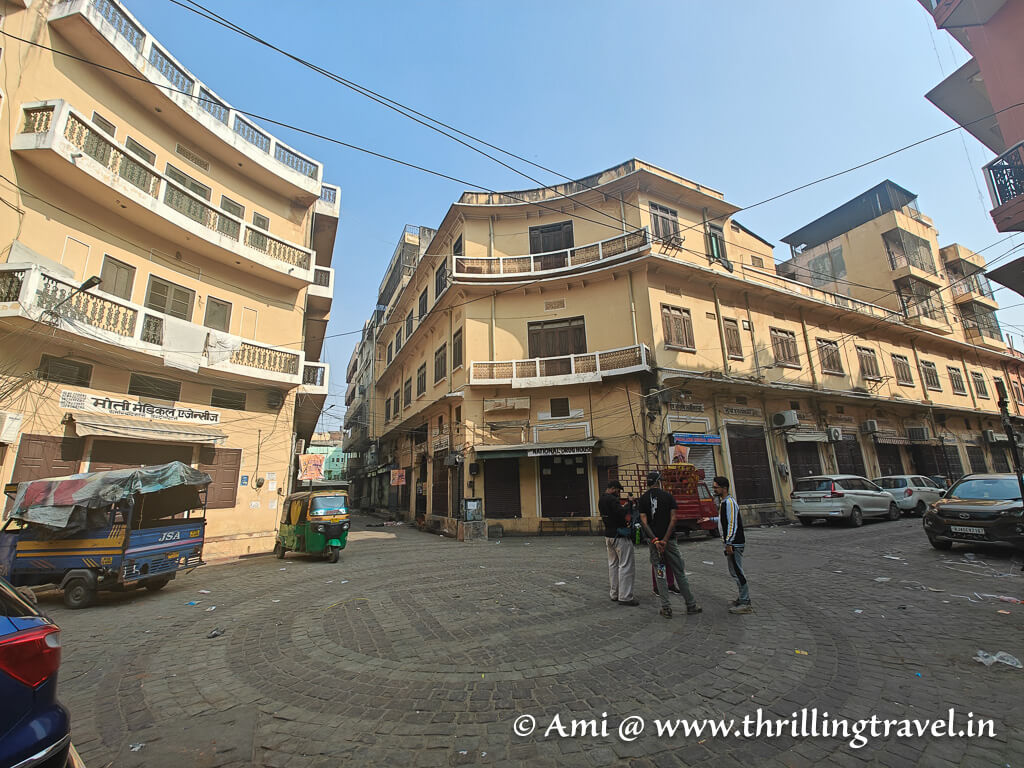
As the Jaipur story goes – By the order of Maharaja Sawai Ram Singh II, the building facades were changed to a uniform terracotta shade to welcome Prince Albert Edward VII of Wales. Turns out a journalist accompanying him saw it as a bright hue of pink (possibly at sunset) and published praises of the city in England, calling it the Pink City. Rumours are that he was color blind but that aside, the praise and name stuck, and finally, a decree was passed in 1877 to maintain this pink color as a symbol of hospitality.
Another feature of the smart Jaipur city planning was the cobblestone alleys. You won’t see them everywhere, but pay attention as some streets still have them. One could say that the architects emulated the European cities by creating these but in reality, there was a practical reason for it. The gaps between the cobblestones allowed the rainwater to drain through and keep the streets dry.
Nataniyon ka raasta
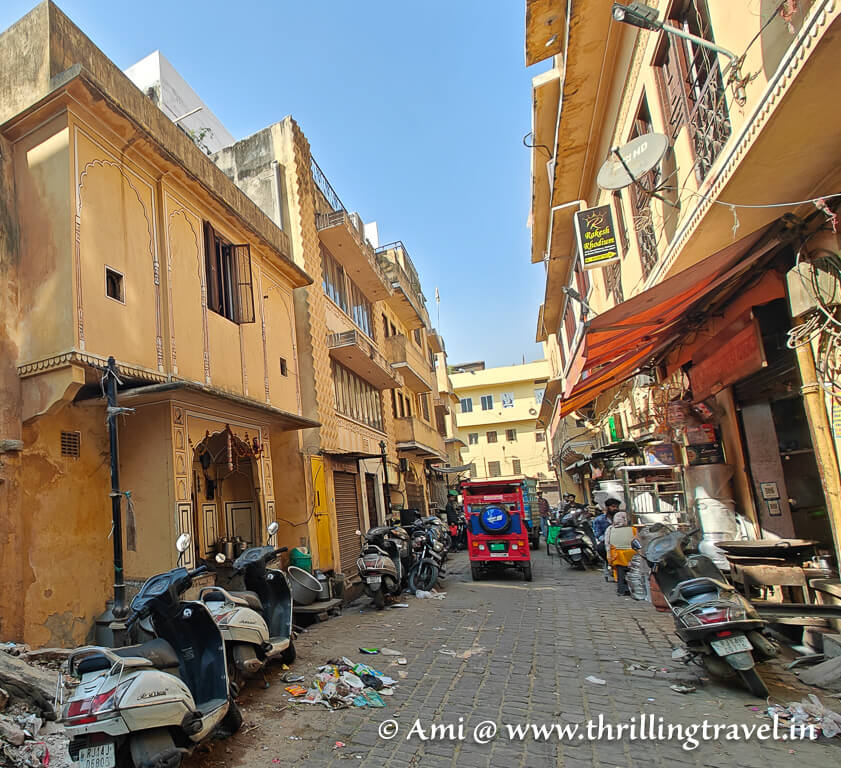
Natni essentially refers to a person skilled in performing arts like dance, drama or even tight rope walkers. Raasta means street and with that you know what this street was about. Essentially, it has residences of these performing artists, but today, you will see a line of shops selling packets of puris – the main base for Pani puris and many other Indian chaats.
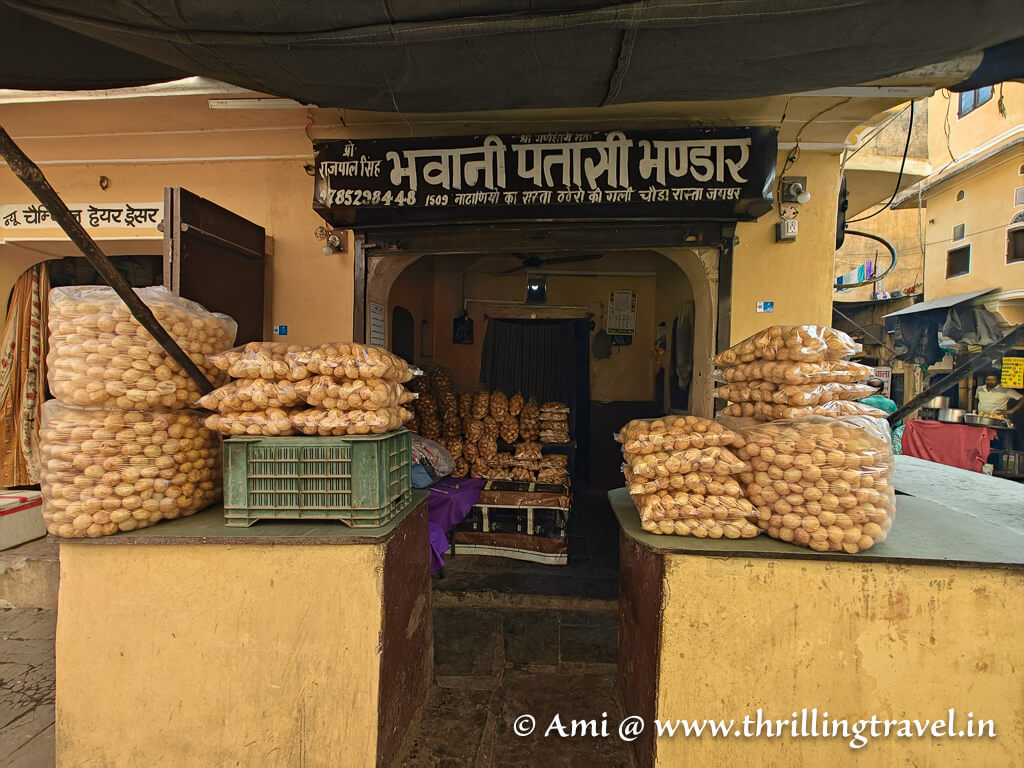
As Archit jokingly commented, “When you watch performances or movies, popcorn is the norm. And that popcorn in the Indian context is Pani Puri or chaats.” So in a way, the performers might have long gone but the accompaniments have taken over the street in the form of shops.
Old community well in Modi Khana Chowkri
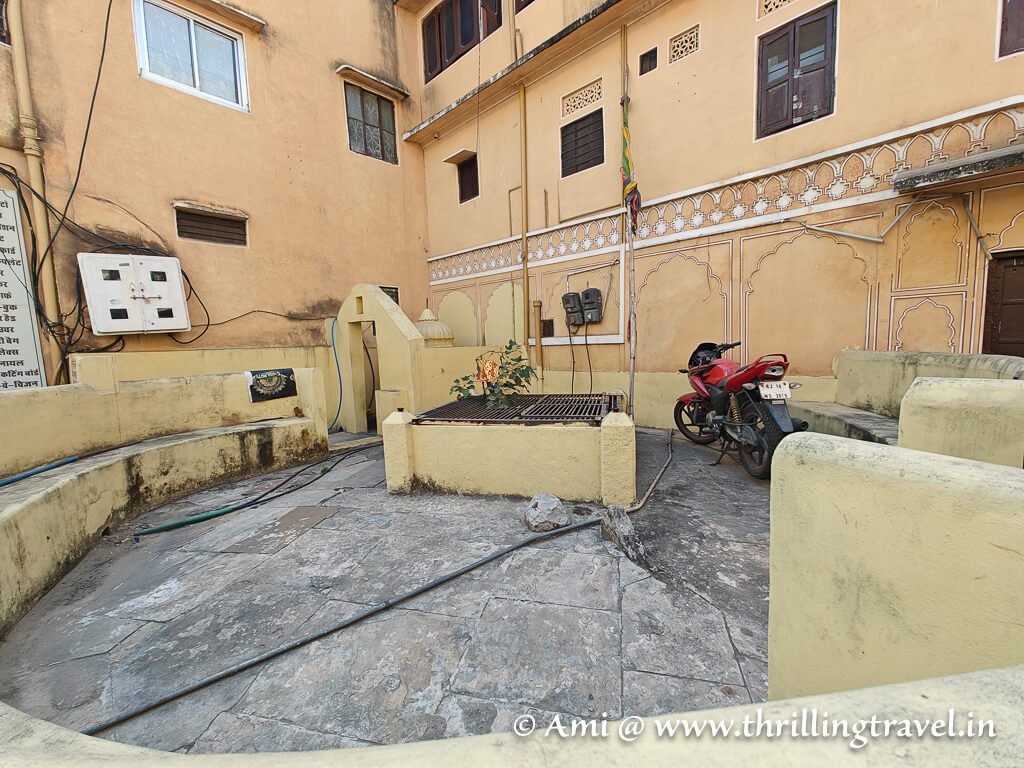
The walled city of Jaipur had a well-connected underground water system – most of which led to large wells. One such community well lies along the Jaipur city walk route that I have suggested. The well doubled up as a social gathering point – to celebrate special days, festivals, have a community meeting or even as an evening gossip corner for the women.
Also, water was considered sacred and when you visit this attraction on the heritage walk, you will notice a mini shrine or sometimes a big temple near it.
Aarogya Bharti Ayurvedic Hospital

A very majestic gate and building lie on the same street as the community well. For a moment, I thought it was a haveli belonging to a prominent family – only to realize later that it was an Ayurvedic hospital that was established in 1956. The hospital offers treatments for various ailments, but I am told that it is also, a great place for preventive and soothing treatments too.
However, that is not what piqued my attention here. It was the arched doorway, the green space and the intoxicating smell of everything natural. The place might have been an old haveli or at least it seemed to be modeled after one. After all, it did have the elements on one – a large gate leading to a courtyard around which the one-storied building stood.
Modikhana chowk aka Piazza
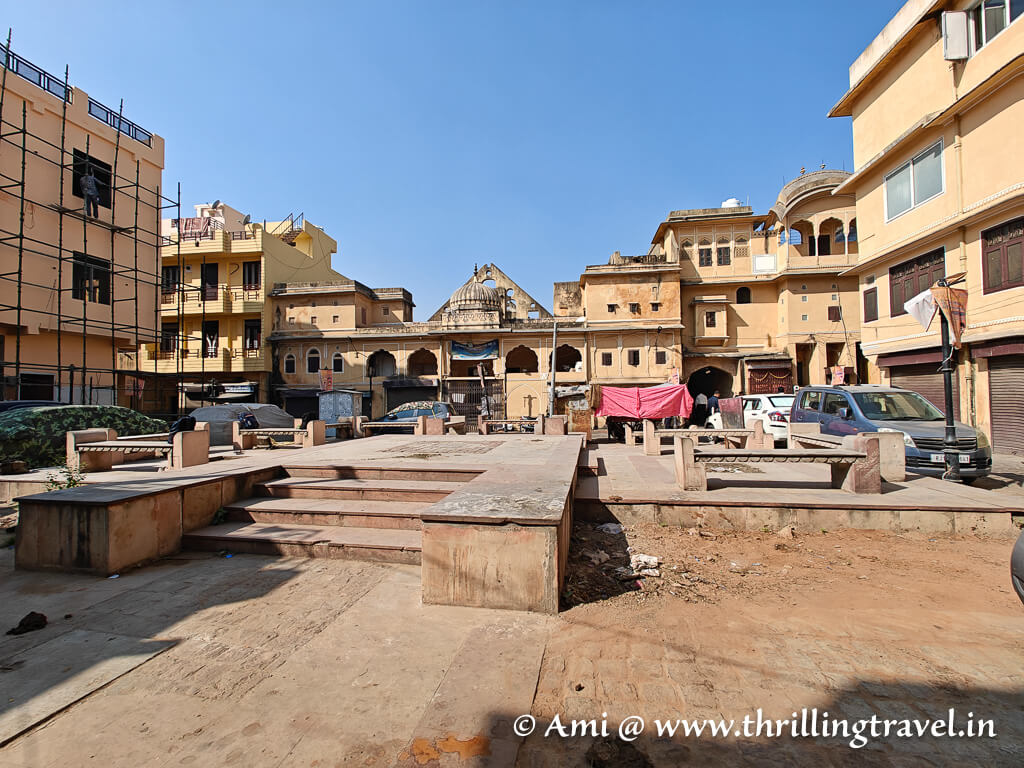
“The Jaipur city architecture has taken some inspiration from European cities like Paris,”- explained Archit as he just led us to evidence for this – a chowk or a square designed like a Piazza for community use. In my mind’s eye, I could see kids gathering around to play after school while the elderly folks occupied the benches around the space – catching up on their day or the world’s woes.
The old Jaipur city planning included many such spaces in each chowkri, but a few exist now. Surrounding this particular one in Modikhana Chowkri (sector that you can see in the old map of Jaipur) were several houses – one of which we entered to get a quick glimpse of the typical haveli architecture in Jaipur.
The Modikhana haveli
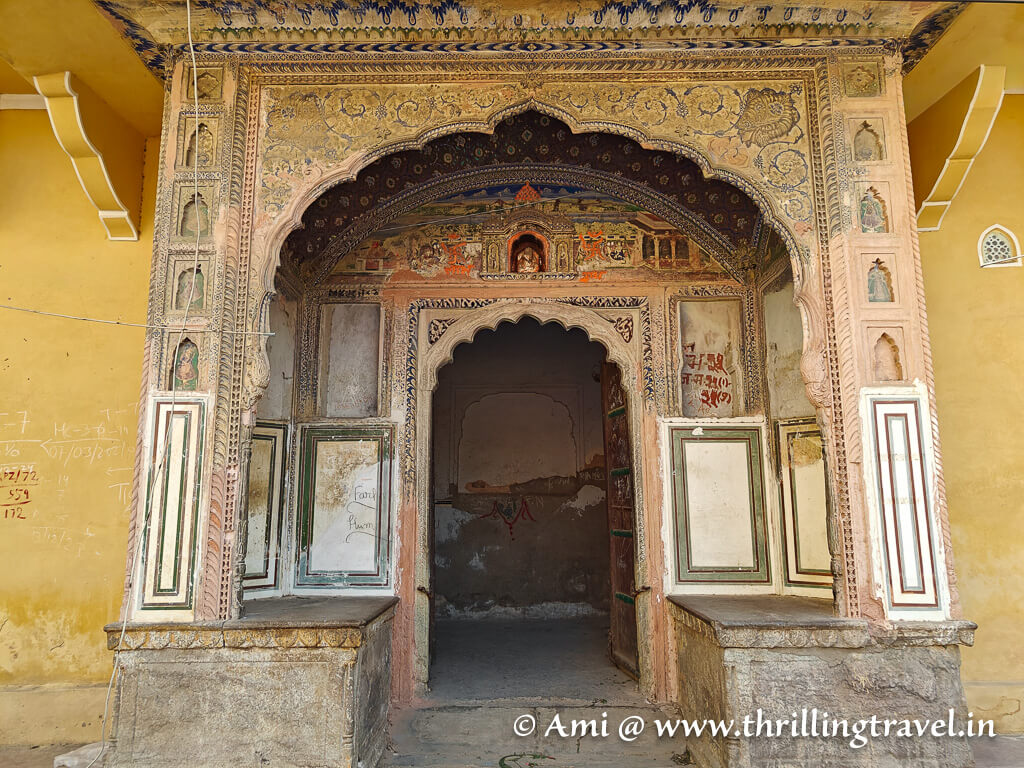
After having seen the havelis of Shekhawati, Bikaner and even Jaisalmer, the Jaipur haveli that I first visited felt quite simple. Then I was reminded of the fact that the size and decor largely varied with the social and economic standing of the family. While this one was simpler, it was by no means small. More importantly, I was able to see the key features of the climate-sensitive architectural style adopted in these havelis.
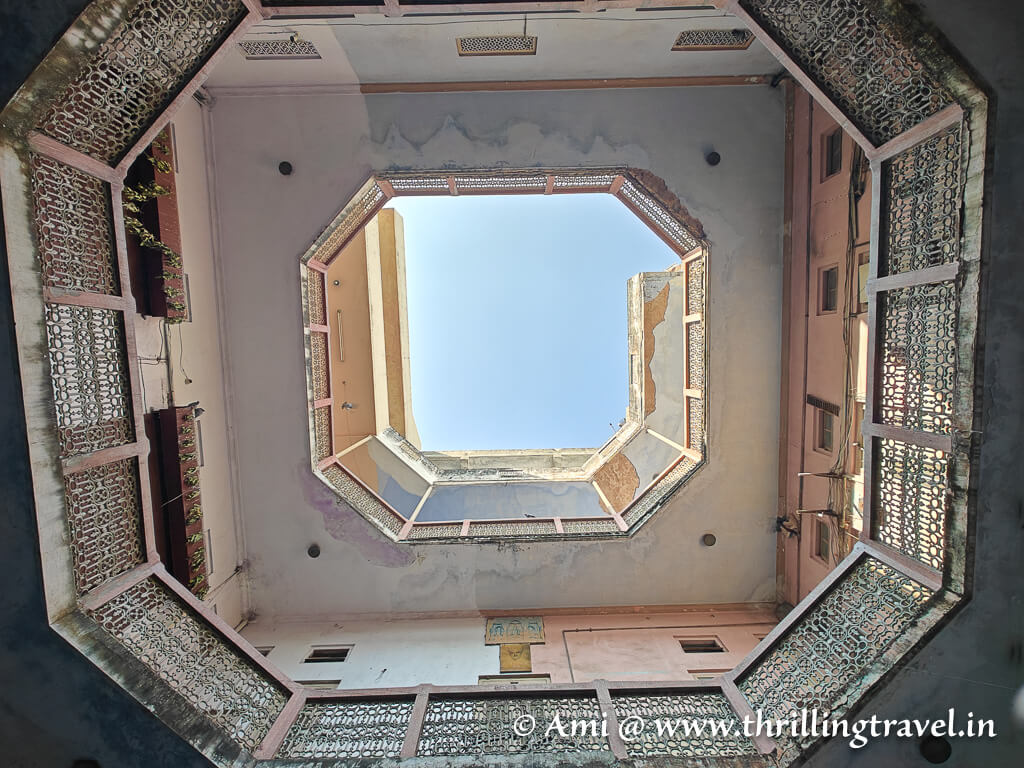
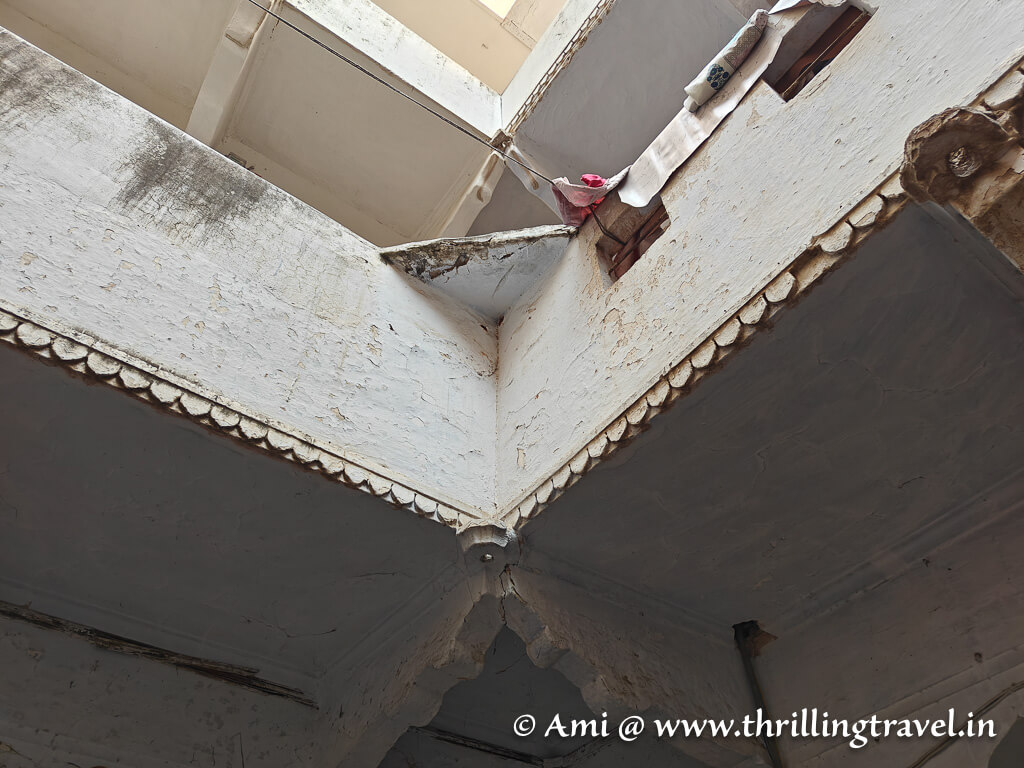
To tackle the extreme weather of Jaipur, the predominant material used for construction was Araish – a plaster made from limestone. This was like an insulation that kept the interiors cool during summers and warm in winters. It also helped waterproof the walls. Ornate eaves covered the courtyard levels, doubling up as a channel for rainwater that could be collected in drums or vessels kept on the ground.
The courtyard system ensured enough light and air. The lattice windows or jhalis not only sheltered the private spaces but by the theory of Venturi effect, ensured cool air made the atmosphere pleasant.
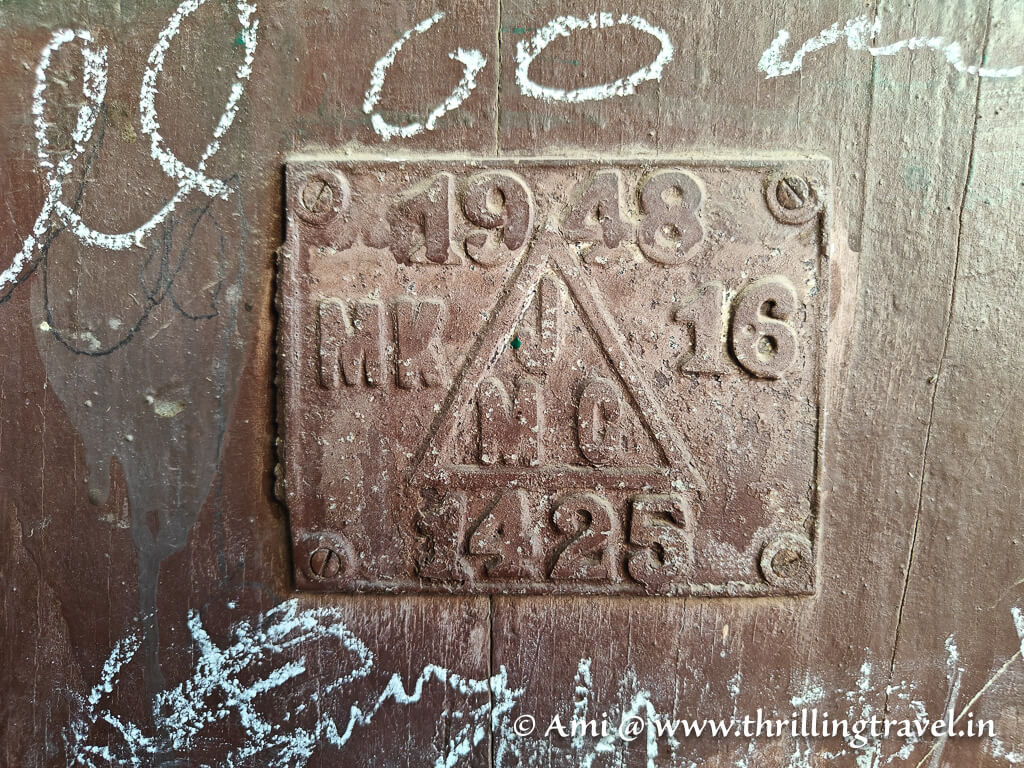
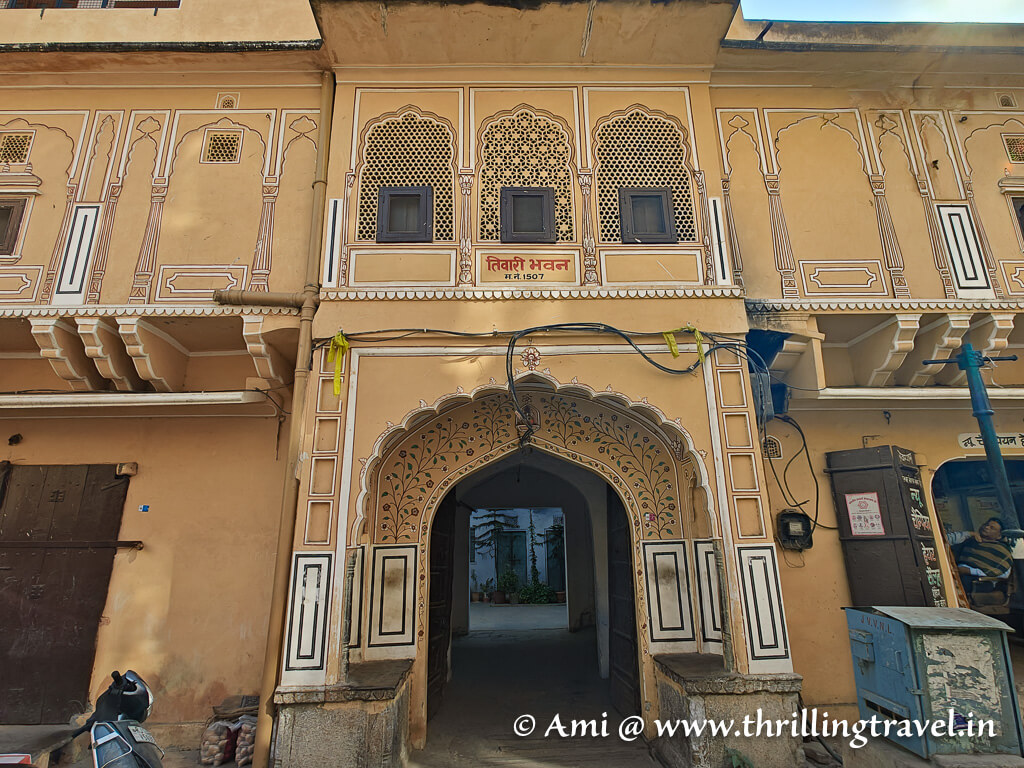
The gokhas by the main entrance (small caves) were usually used to keep food and water for the animals like the cows and dogs. One unique thing that you will see on every Haveli door is this plaque, where the year on the top indicates the year of property registration, the initials on the left correspond to the chowkri (Modi Khana in this case), and the right is the number indicating the street. The last number below the triangle with JMC (Jaipur Municipal Council) refers to the house number.
And with that, we moved ahead on our heritage walk of Jaipur to another spectacular haveli.
Kala Bhavan – one of the Jaipur heritage havelis that you can spot on the walking tour of Jaipur old city
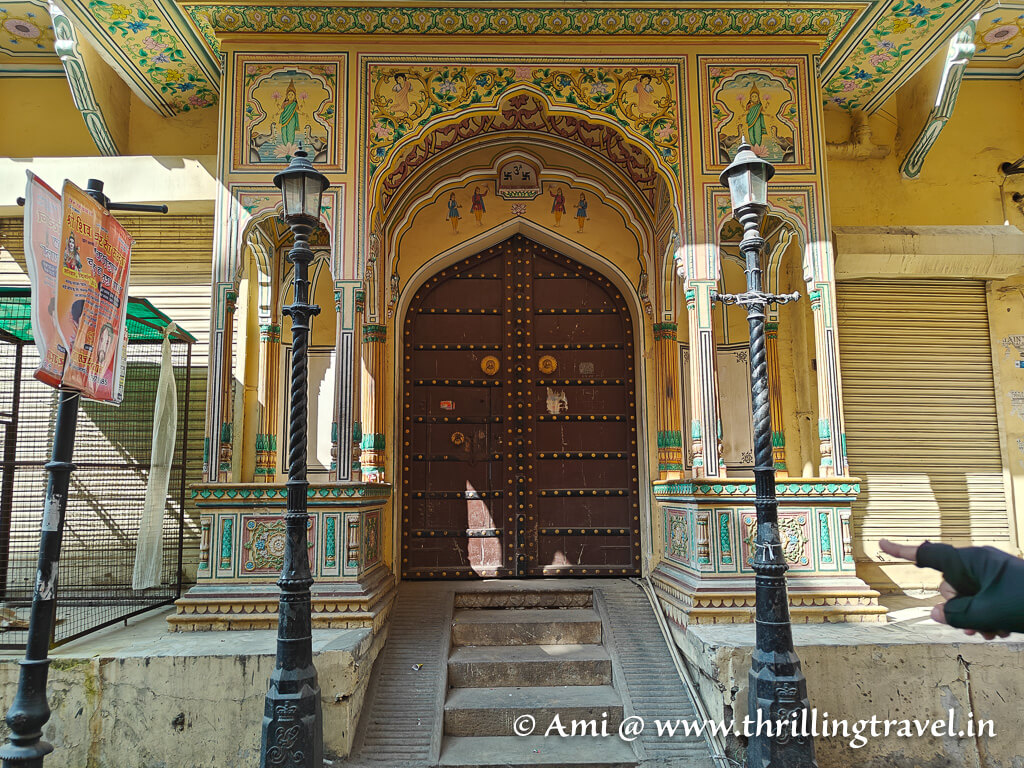
Well known for the sole pin-hole camera photos studio, Kala Bhavan is actually a haveli that seems fairly well-preserved. One look at the mansion and you know that the family was a prominent one. Not only is the facade elaborate but has two vintage lampposts with the engraved crest of the Queen of England. Pleased with the reception of the Pink City, the royal family who visited Jaipur in the 1800s honored a few families by gifting them these lampposts.
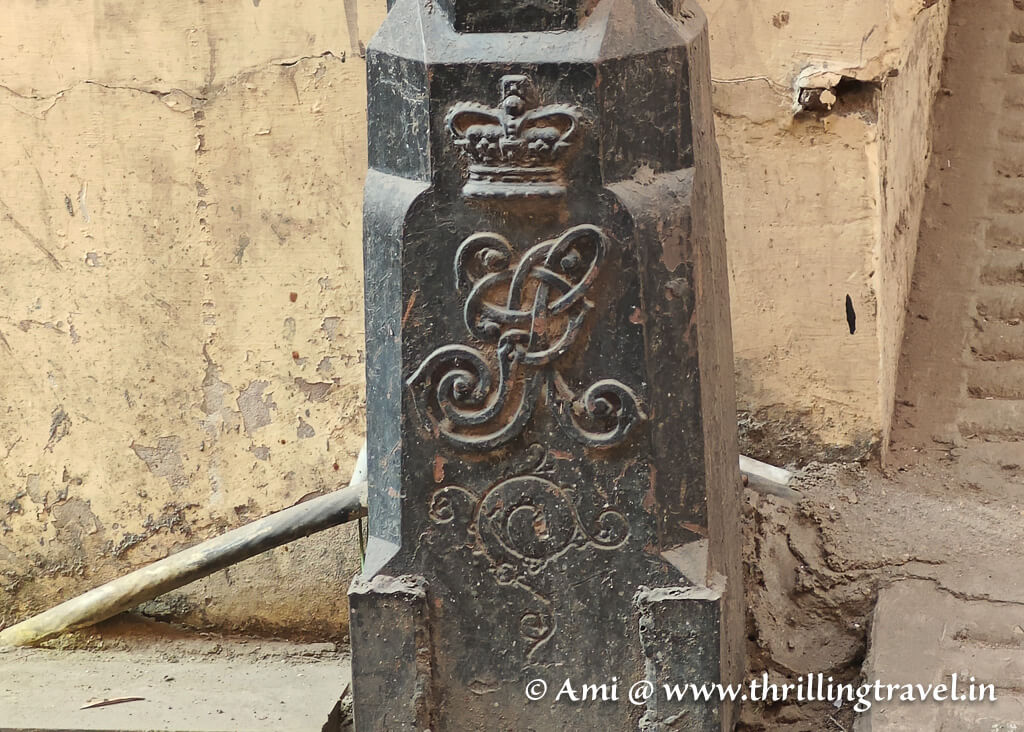
On the walking tour of Jaipur, you might find many of these posts. However, many of them are without the crest, made following the inspiration of the crested ones. Kala Bhavan Haveli is one attraction on the Jaipur heritage walk where you can find the originals.
While you cannot see inside the haveli (remember, it is private property), you can definitely take some time to admire the frescoed facade. Be sure to note the painting over the gate – they are generally indicative of the family that owns the haveli. A norm that I observed in a few of the Shekhawati havelis too – though those predominantly had an image of one of the deities, usually Lord Ganesha.
P.S: Kala Bhavan is marked as Mahaveer Park on the Jaipur City Walk map.
Maharaja School of arts and crafts
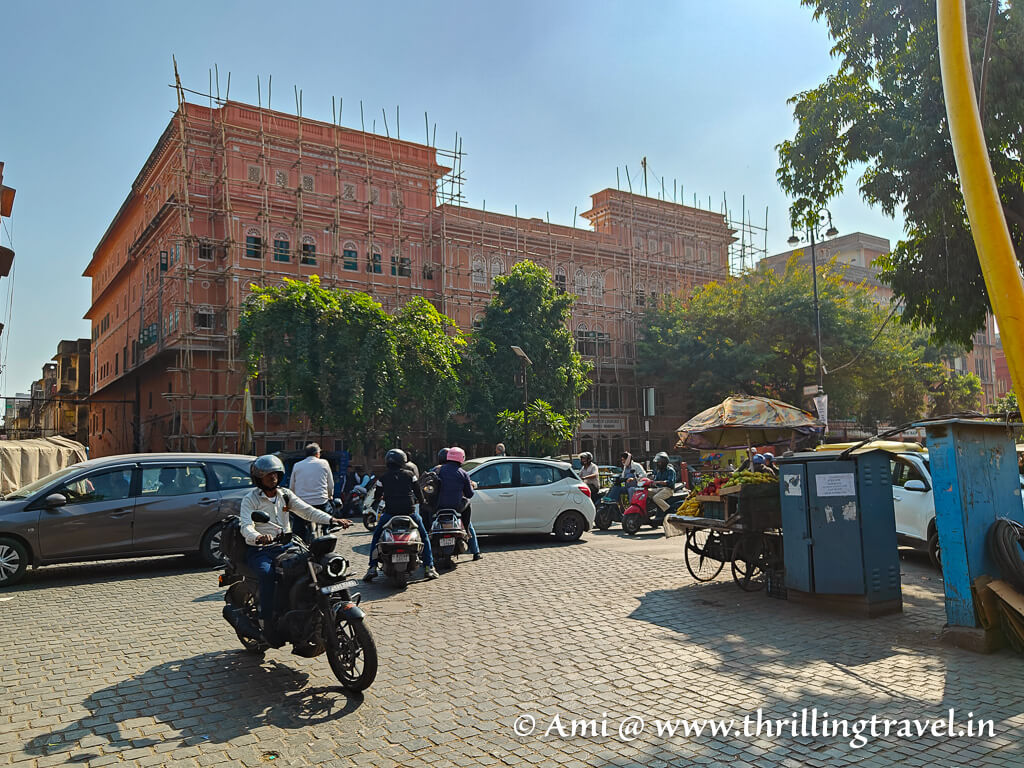
Established in 1857 by Maharaja Sawai Ram Singh II, this grand building was called the Madrasa e Hunari, which translates to Institution of Arts. Gurus from various disciplines, ranging from dance to music and crafts, imparted their knowledge and ensured that their arts stayed alive. I was quite thrilled to know that even Kathak’s Jaipur Gharana was a part of this mix – a personal high as I have been a student of this Gharana and have done my Visharak (degree) in it.
The original name changed to Maharaja School of Arts and Crafts in 1886 and the legacy continued for a while. Now the building is under renovation and will also, have a museum of arts and crafts soon.
Khajane walon ka raasta – another timeless karkhana of Jaipur
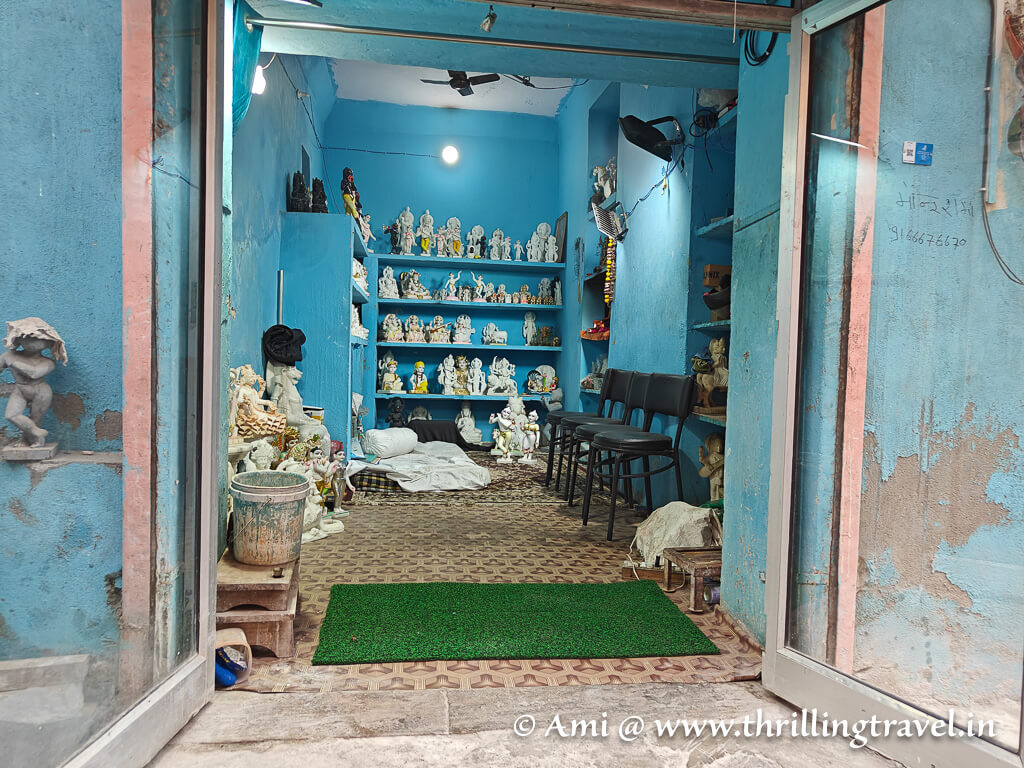
Add some notes of chiseling to the rhythmic hammering of the Thatheron ka Raasta and you know you have arrived at Khajane walon ka Raasta. Khajana literally translates to treasures and in this case, that refers to the marble extravaganza that you will see in every shop. Still handcrafted, there are statues of every possible personality or deity and furniture items like tables, mirrors and even fountains.
Most of the marble for the artisans comes from Kishangarh or Makrana, the latter being the same source for marble used in the construction of the Taj Mahal. Walk into any of the stores and the artisans are happy to demonstrate the process which converts the shapeless raw pieces into meaningful shapes – a lot of which is customized for the clients.
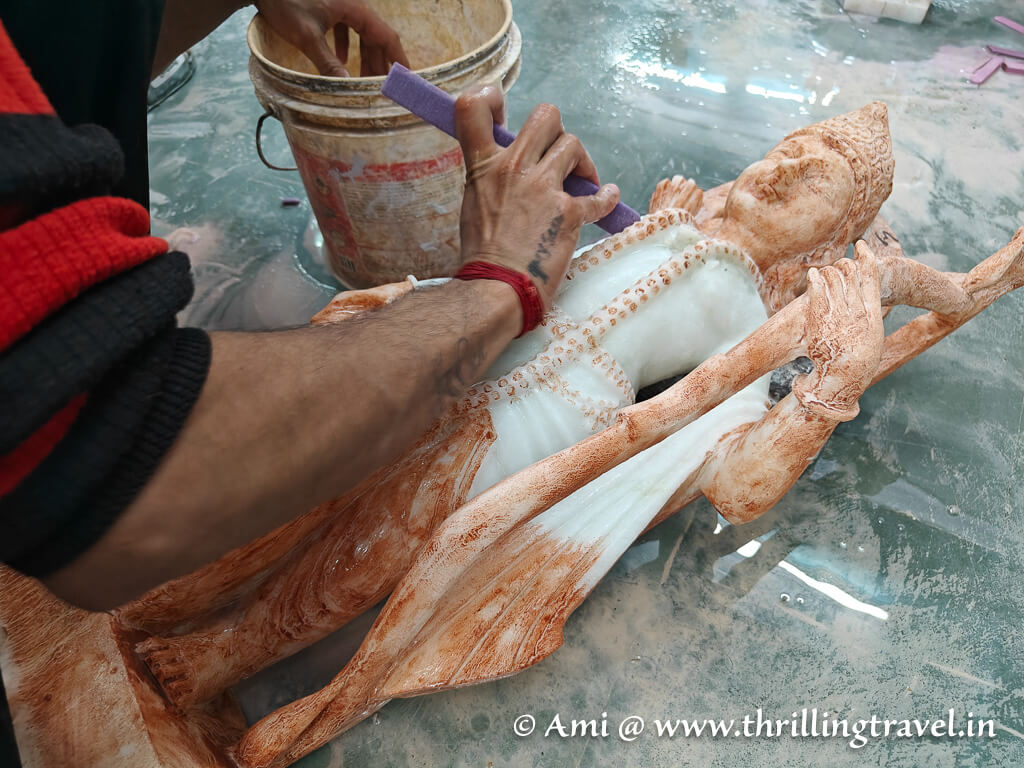
The process begins with a sketch that is mapped onto the stone with precise measurements. Only one half of the stone is first chiseled and the second half mirrors the first. Sandstone paste is applied on the finished piece and then polished to ensure that no surface is left untouched. Many clients like a little color on their piece – which becomes the next and final process.
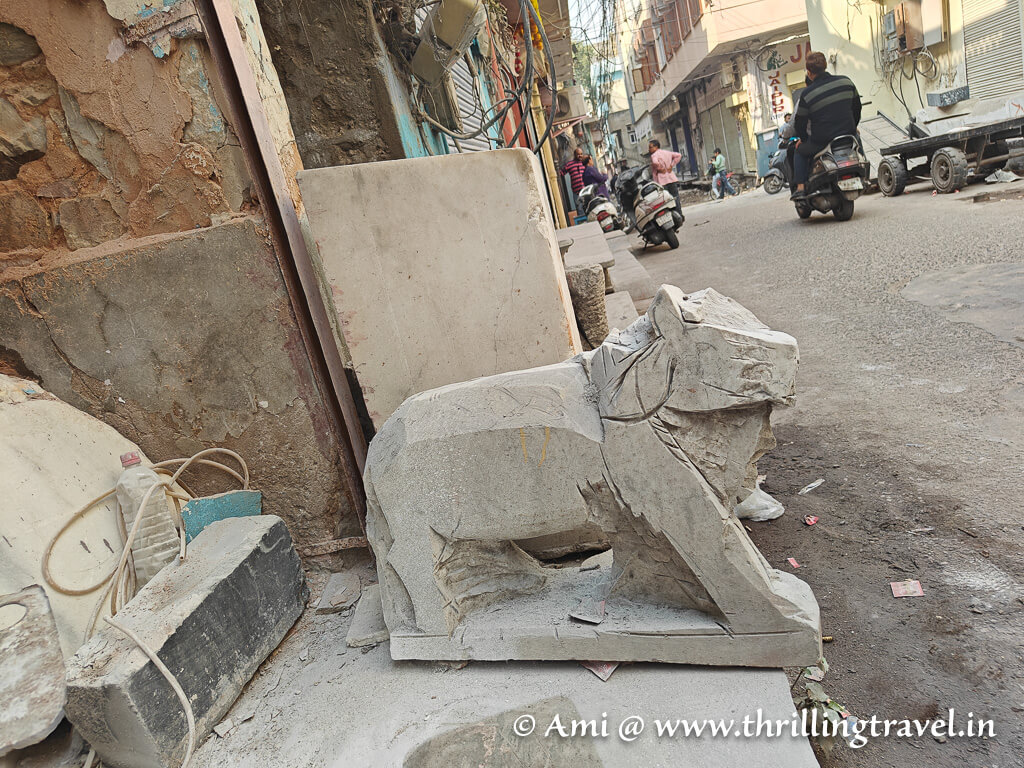
At one of the shops, the artisan had already imparted a certain shape to a piece and we had a fun time guessing what was being made. Lion? Tiger? Elephant? – turns out all of these were right!. The artisan had just given a form and could transform it into any of these figures with his magical skill.
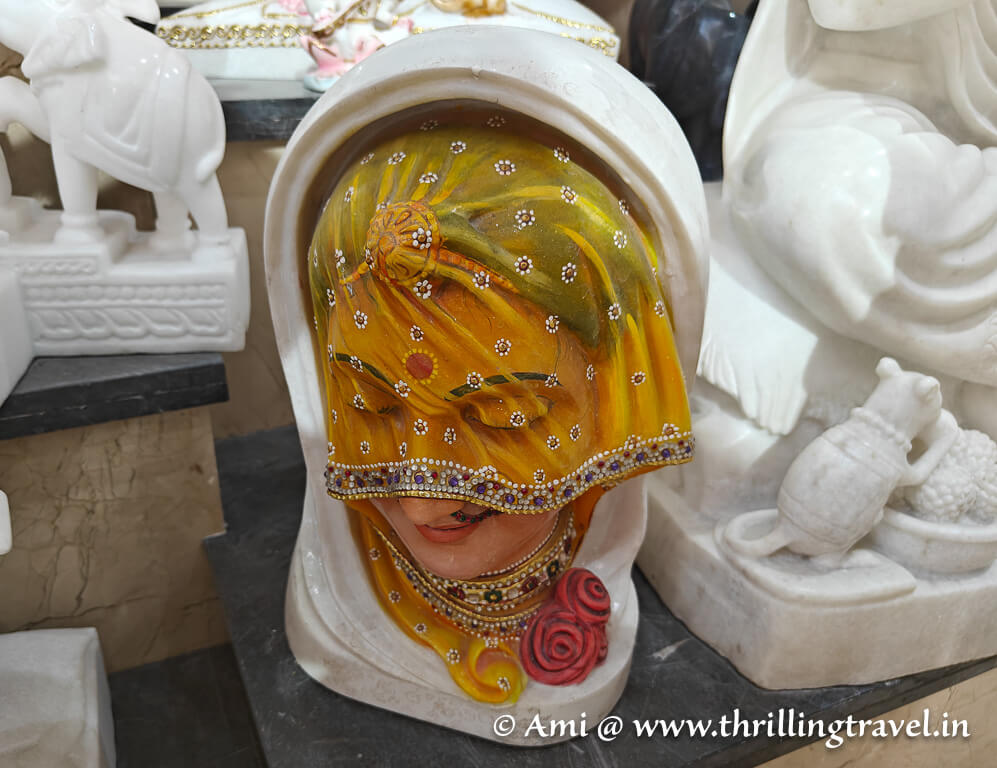
One of the most stunning pieces that I saw was this veiled lady. It reminded me of the piece I had seen at the Podar haveli in Nawalgarh, as well as the veiled Rebecca that is kept in the Salar Jung Museum of Hyderabad.
Choti Chaupar – one of the three big squares of the original 18th-century Jaipur city planning
A lot of old Jaipur city walks begin at this square and even if they don’t – you will likely pass through this spot during your stay in the city. Hustling and bustling, this was one of the three main squares marked in the original Jaipur city plan. Once upon a time, the center had a step well that was connected to various water sources by underground aqueducts. The space doubled up as a venue for social hangouts back in those days.
Relics of the water system were found when the current space was used to build the underground metro. A dedicated museum at Choti Chaupar now showcases these. An attempt to re-create the step well has been made, except that you now find a fountain at the center of the square. I hope to visit the museum sometime later, whenever I get back to Jaipur. I am told that currently, it is free to visit.
The three big historical centers including Choti Chaupar had four temples at each of its corners. The placement follows the rules of Vastu Shastra. While I did not have the time to explore all four temples, I did manage to visit one.
Char Bhujanath ji temple
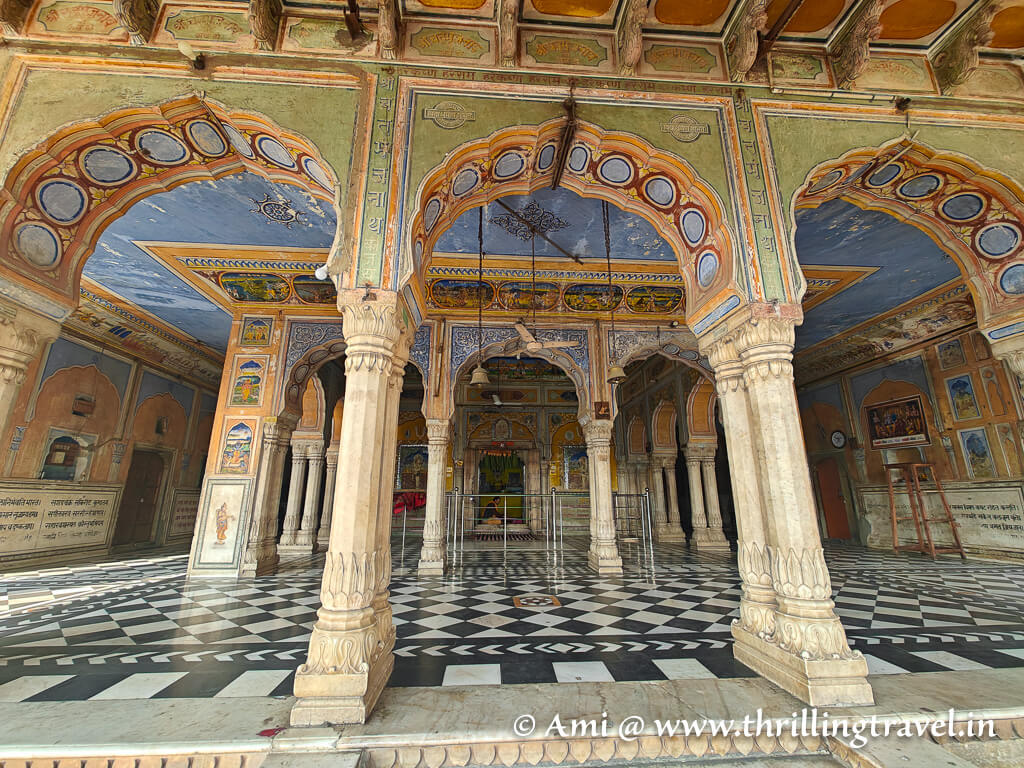
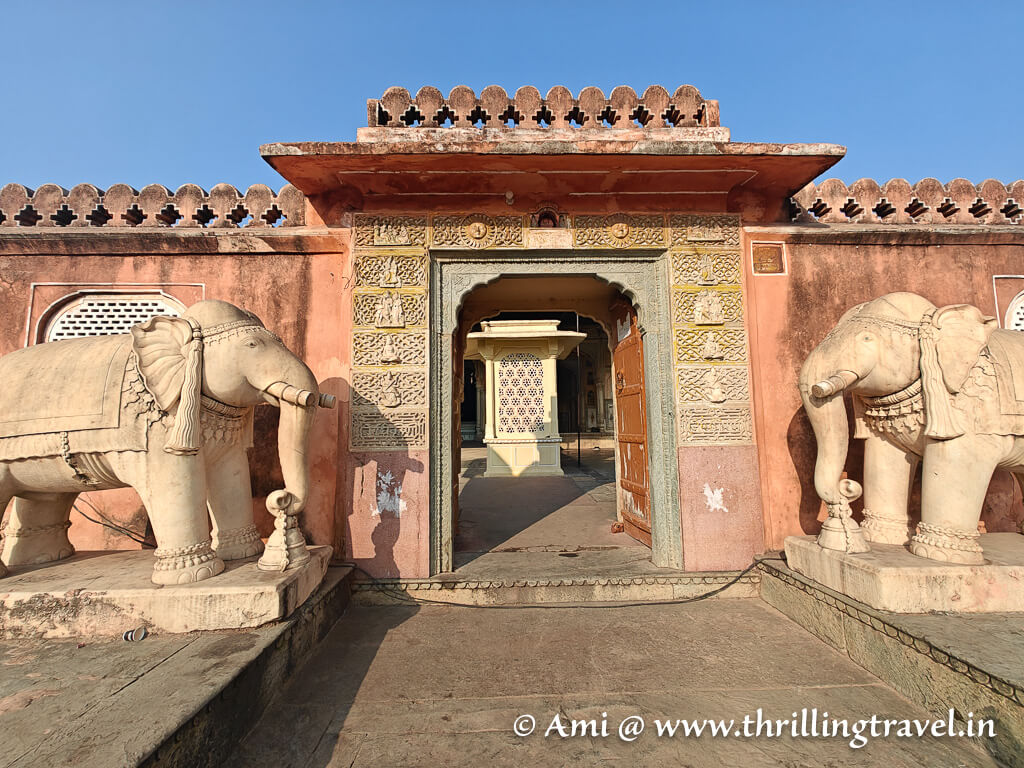
Right behind a e-rickshaw stand, a flight of stairs leads you to a doorway flanked by marble elephants and framed with sculptures of various deities. Enter the same and you will be hushed to silence by the 18th century haveli -styled temple of Char Bhujanath or Lord Vishnu. Indigo frescoes attract you from every corner – depicting chapters from the tales of Lord Krishna. Along with those are scriptures etched in Sanskrit.
I would have loved to see these murals in detail but time ticks and I just had to be satisfied with glimpses. However, among the few details I noticed were a mini shrine of Garuda facing Lord Vishnu. This conforms to the norm of the temple architecture where the celestial vehicle of the main deity facing him. As Archit explained in parlance – vehicle a parked outside your home.
Maniharon ka raasta

This street is a visual delight with scores of vibrant bangles beckoning you to have a closer look. Maniharon ka raasta essentially refers to the street of the Bangle makers – specifically the lac bangle artisans. Name your color combination and you will find an adornment of that shade – or else the artisan will make it – then and there in front of your eyes.
The lac bangle makers were one of the first few settlements in the new capital of Dhurandhar. The art has thrived for generations together and to some extent, still relevant today. The lac bangles are widely used with the traditional outfits on occasions like weddings and festivals such as Teej and Gangaur. The varied shapes and designs do make a good fashion statement even with contemporary wear.
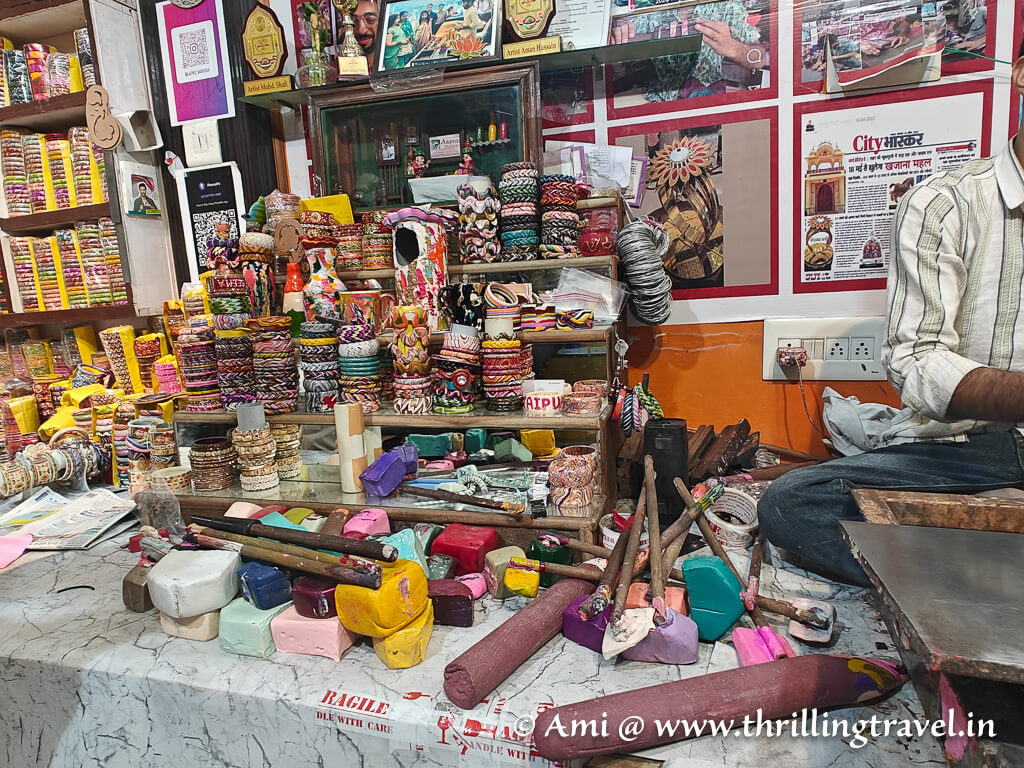
Most of the manihars are happy to demonstrate the process of bangle making to you. Be warned – it is quite hypnotizing to watch them melt their chapdis (lac pellets) onto a hat (wooden rod) and roll the semi-solid mass. Sprinkles of colors are added on or in some cases, gems are encrusted on it and tada! You have a sparkling bangle ready.
I could liken the process to that of baking – from creating a dough (semisolid lac) to moulding and decorating it. Minus of course, the delectable smell.
You can buy these bangles for yourself or for gifting. The prices range from INR 100 to 2000.
Isarlat Sargasooli – the tall tower of Old Jaipur
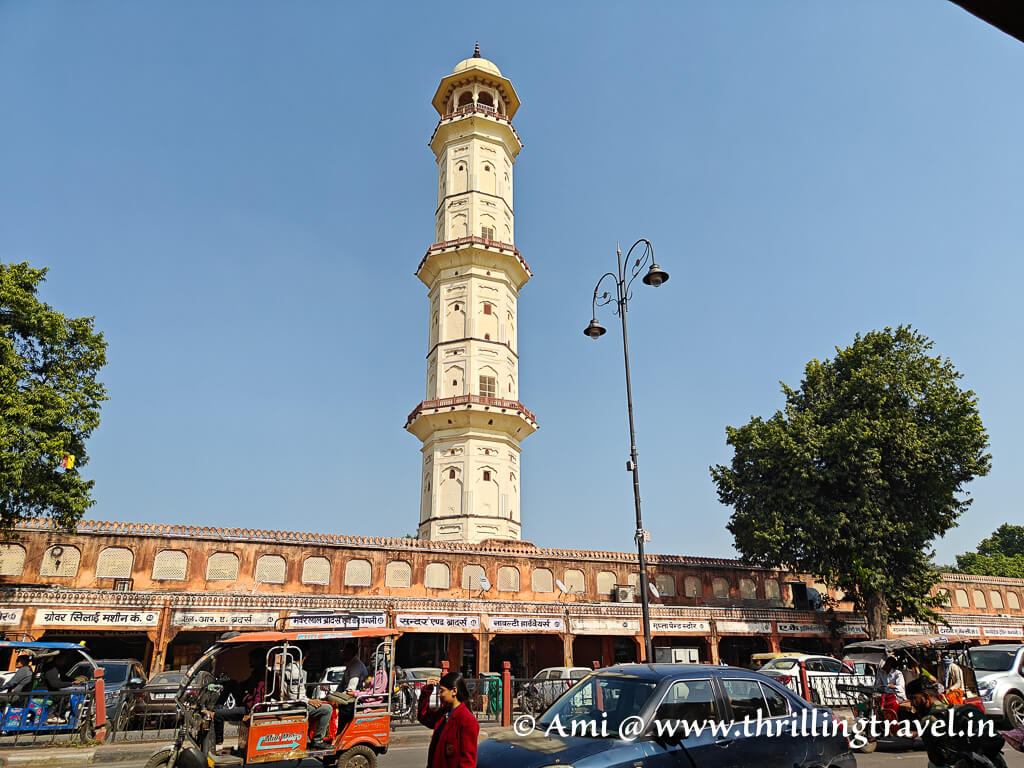
The erstwhile watchtower of Jaipur is quite an impressive sight – one that you can spot from Maniharon ka raasta. Called Isarlat Sargasooli, this was a victory tower added in 1749 by Maharaja Sawai Ishwari Singh – the son of Maharaja Sawai Jai Singh II.
History has it that there was a power struggle between Maharaja Sawai Ishwari Singh and his half-brother Madho Singh. With the Mughals as his ally, Maharaja Ishwari Singh marched into a battle with his Mewari brother and the Marathas. Maharaja Sawai Ishwari Singh won and, as a mark of his triumph, built this tower.
Sargasooli or Swargasuli means “passage to heaven.” The seven-floor tower exhibits a Mughal Rajput fusion architecture with its arched balconies and chhatri on the top. It is 43m tall and has a spiral staircase with 264 steps to the top. The tower is built to allow in plenty of light and air and even today, you can climb right to the top to enjoy a panoramic view of Jaipur.
Tripolia Bazaar
Named after the Tripolia gate – the entrance for the royalty to the City Palace area, this is one of the oldest markets of Jaipur. It is known for lac bangles, brassware and clothes. Follow this street to the next big historic square – the Badi Chaupar
Badi Chaupar
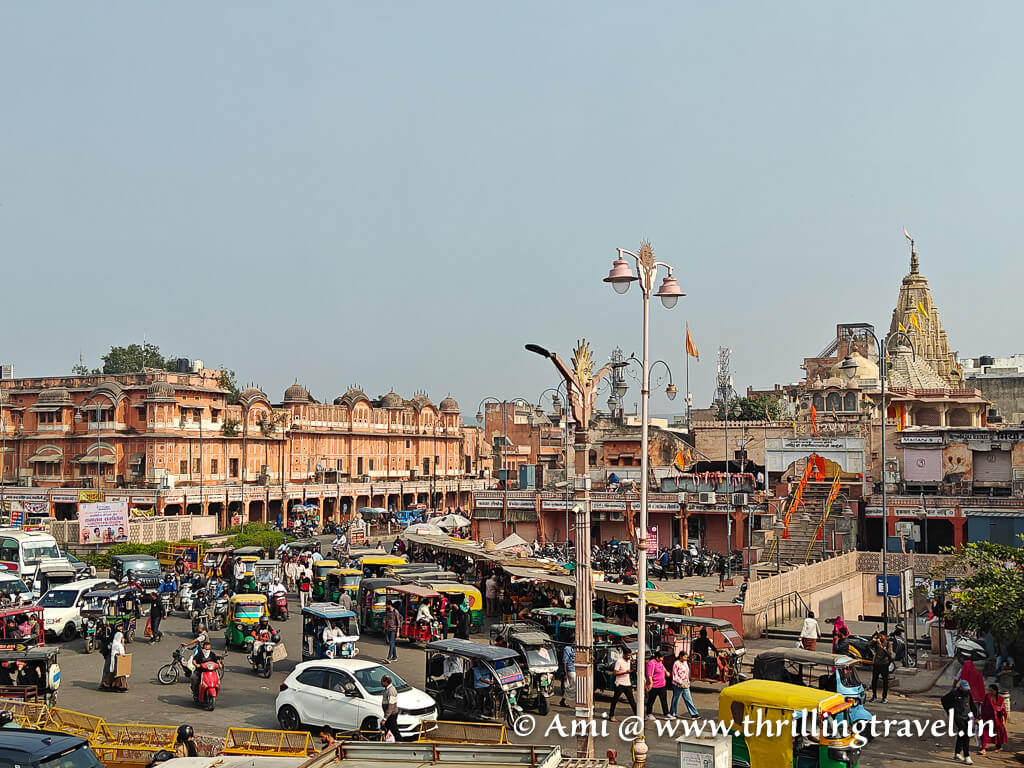
Badi Chaupar is like the hub of Old Jaipur and there is always so much action around this square. Street vendors, food trucks and even puppeteers are a part of this scene. Four temples at the corner and four different bazaar streets add to the bustle. It is actually quite a scene – one that is best observed from a vantage point.
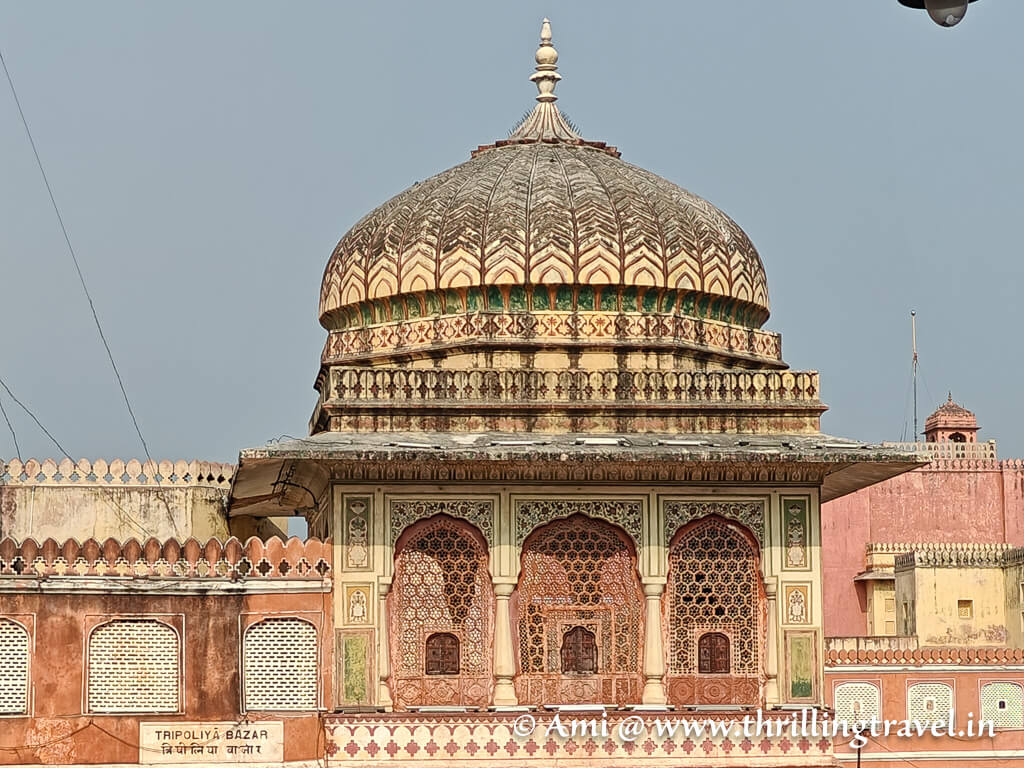
I got lucky with one such place – from where I could see the domed building connected to the gorgeous Hawa Mahal. Lattice windowed structures – possibly barracks for the sentry stood tall on the other side. You can also, clearly see the symmetry and architectural features of the buildings along the streets – the classic Chajjas or sun shades and their uniform heights – all elements specified in the classic Jaipur city planning documents of the 18th century.

A tall pole with the Sun emblem stood in front of me – one that I would have missed at the ground level. The sun emblem is representative of the Royal family who are believed to be Surya vanshi or descendants of the Sun God. The pole was awarded to the community of Jewelers of Johari Bazaar, who first contributed towards the city’s well-being, either by accepting the taxes or by way of donations.
You can see the same royal emblem along the lampposts that line up the various roads from Badi Chaupar. It is worthwhile to just stand and watch the chaos that brings out the flavor and the heritage of Jaipur city. I could well imagine it as busy in the 18th century with the central step well being the hub and vendors on carts around it.
Johari Bazaar
Well, technically, my Jaipur city walk itinerary ended here. However, I extended the rest on my own to include the street of the Jewelers – more so to see the gorgeous Hawa Mahal. The street also, has some good eateries that serve traditional Rajasthani fare. Or if you just fancy a coffee, then just hop over to the rooftop cafe opposite Hawa Mahal. Nothing beats the taste of coffee with this view.
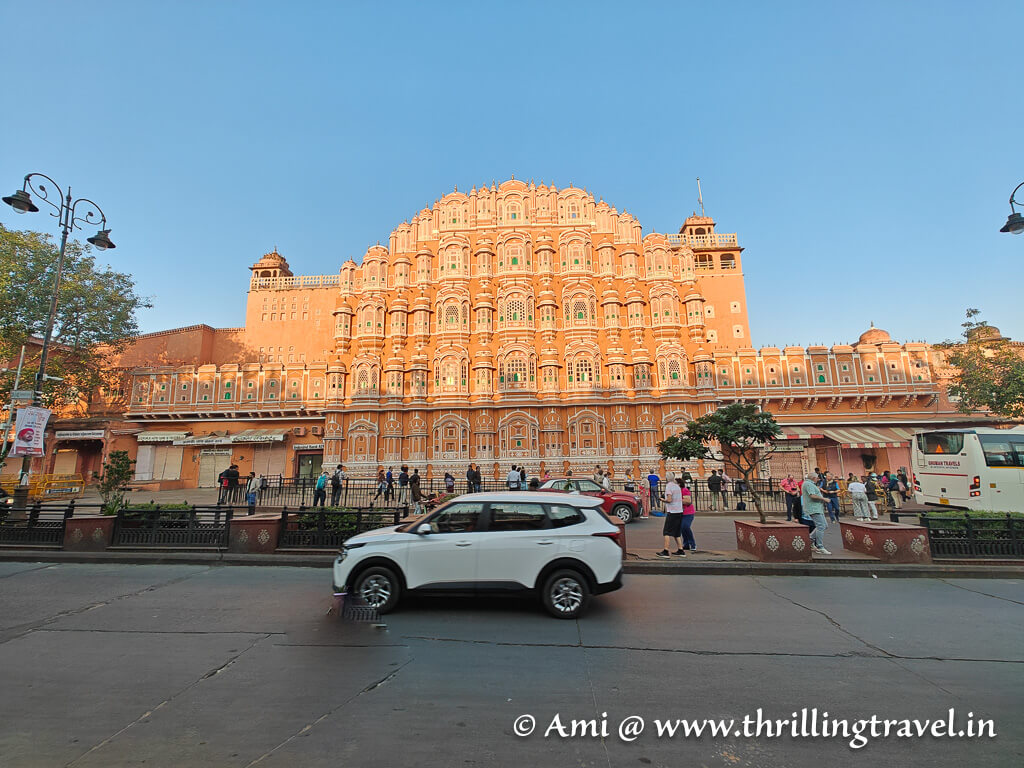
Miscellaneous havelis that you can spot during your Pink City walk
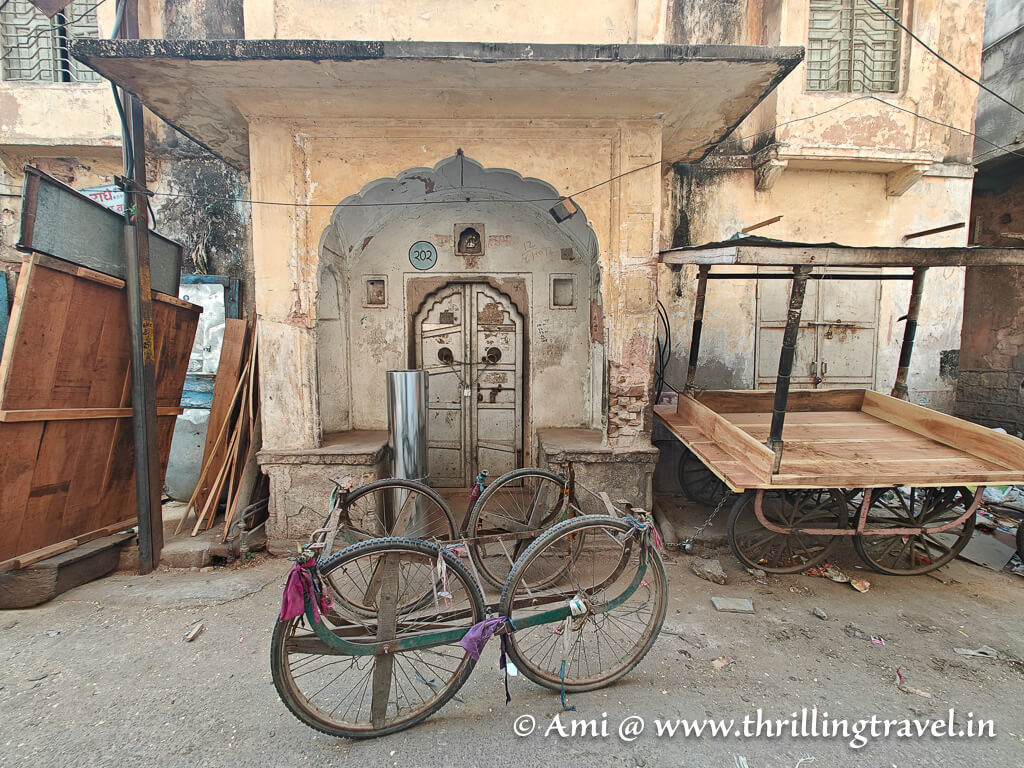
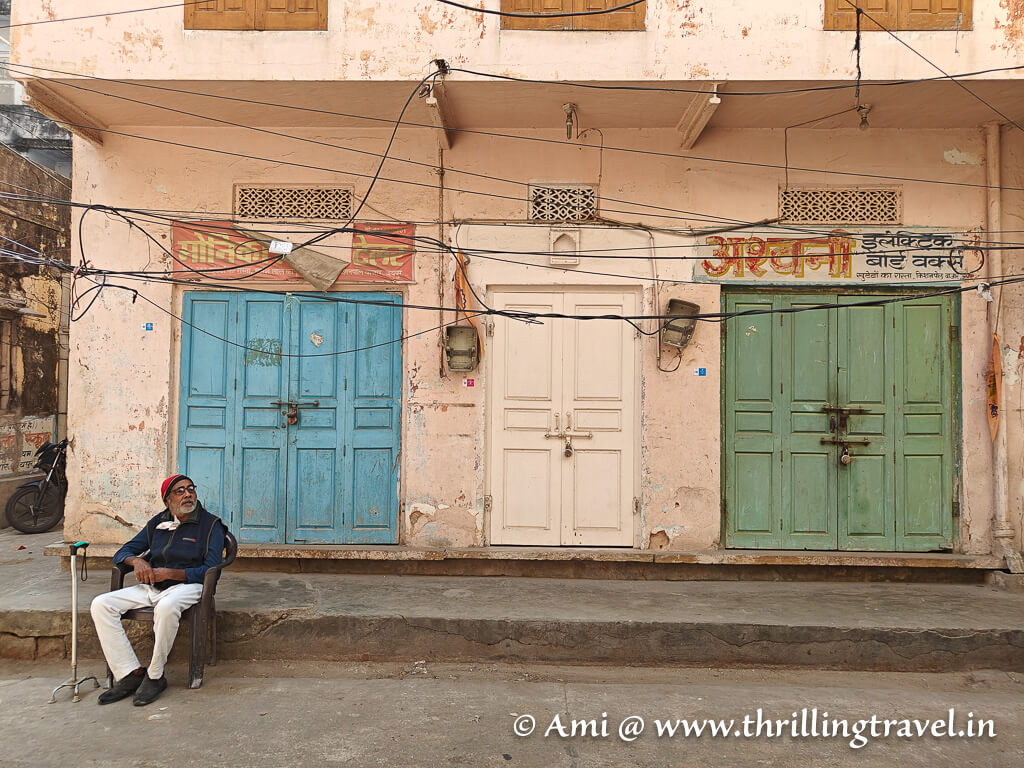
While I was on my trail of the Jaipur city walk, I came across quite a few interesting heritage havelis in Jaipur. Sharing a few pictures of these from the walk. Each one of them had their own unique appeal – from frescoes on some to stunning arched entrances and just simple, cheerfully colored doors. I am sure if I decide to get lost in these lanes again, I will find more of these treasures.

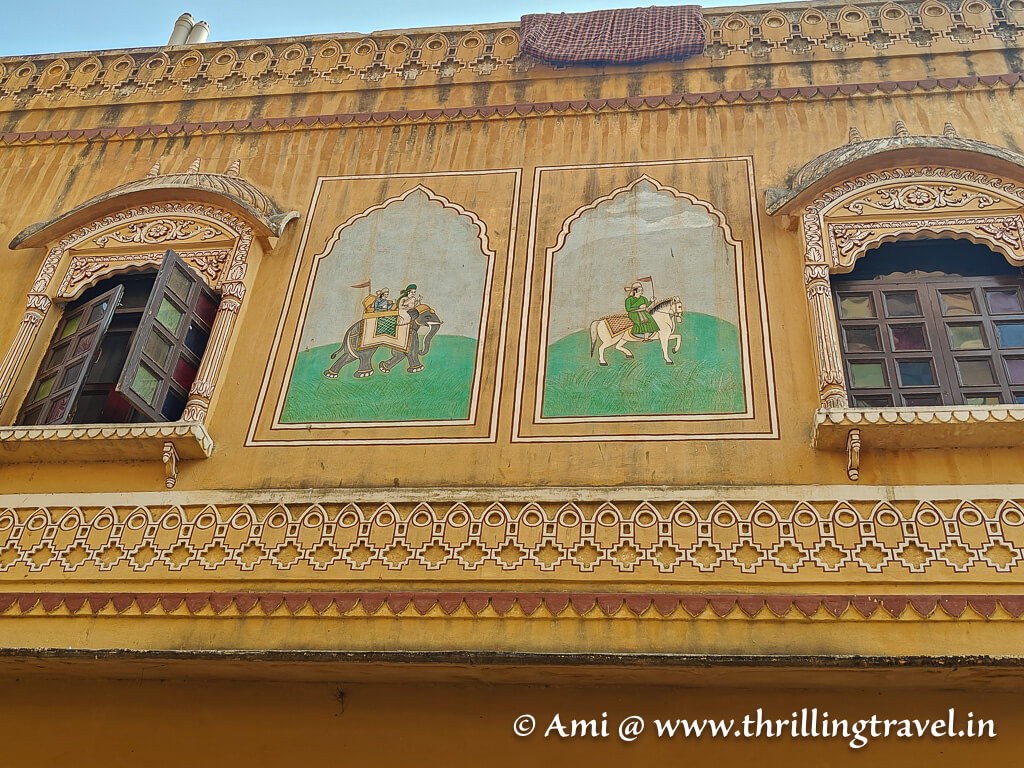
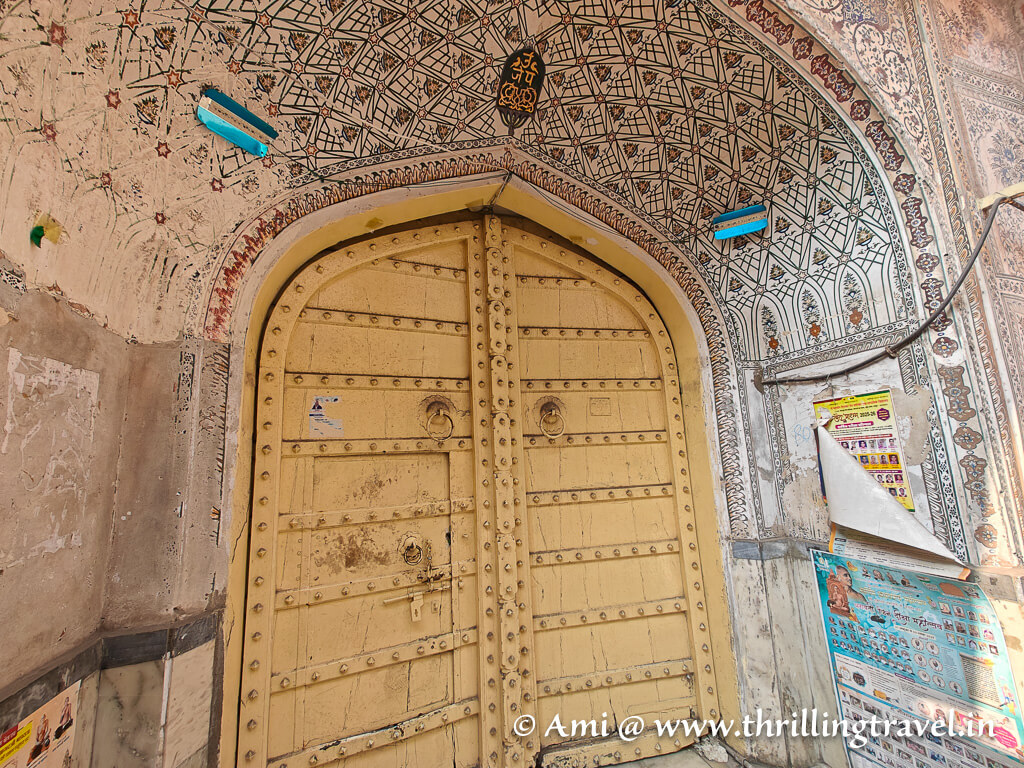
With that I conclude my experience of the heritage walk in the walled city of Jaipur. I am sure you now have a good idea of what to expect when planning your own Jaipur heritage walk or while comparing a checklist of the various Jaipur heritage tours.
What is the best time to do a Jaipur city walk?
I would recommend doing this walk in the first half of the day – any time after 8 am would be ideal. This is when you get to see people in action and experience the cultural heritage of Jaipur. However, be warned that it might get a little busy too. Anytime till 4 pm is good – though you might find it getting warmer towards noon.
If you prefer a quieter time, then early morning is good but then you will miss out on the actual activity that happens in the streets like Thatheron walon ki gali or Khazane walon ka raasta.
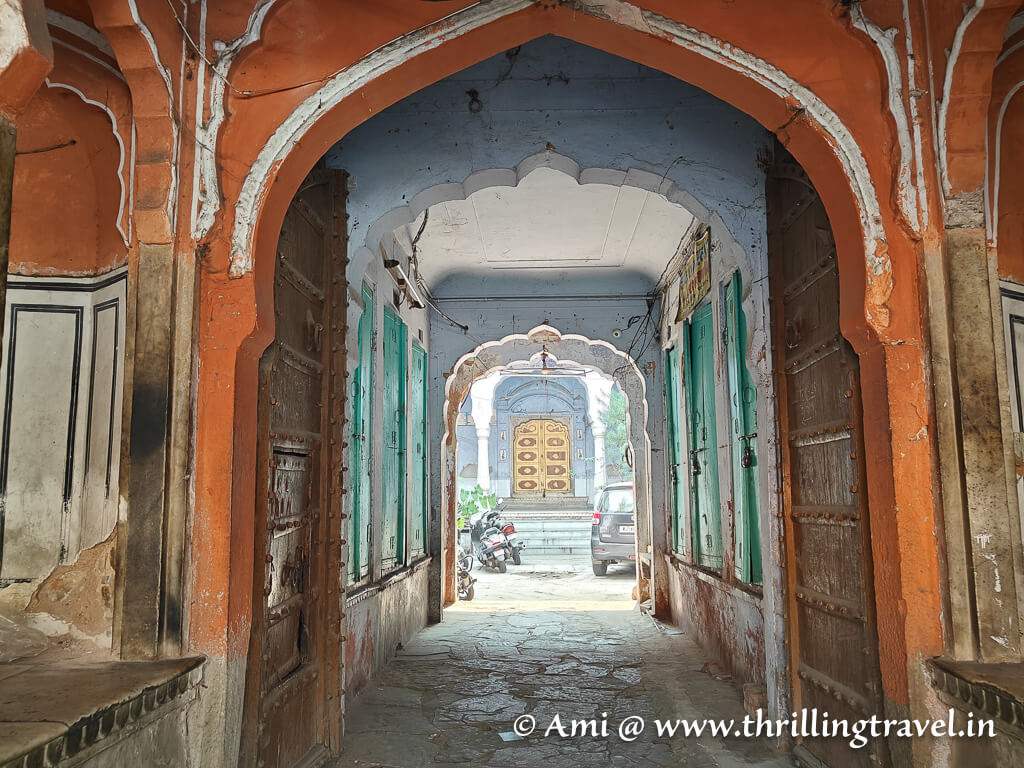
Weekdays are recommended over weekends when the businesses are shut.
In terms of the season, the best time to do a walk in Jaipur would be between October to March. Summers are insanely hot and very uncomfortable for outdoor expeditions. Monsoons between June and September can again hamper your outdoor experience.
Caveats and tips for your walking tour of Jaipur old city
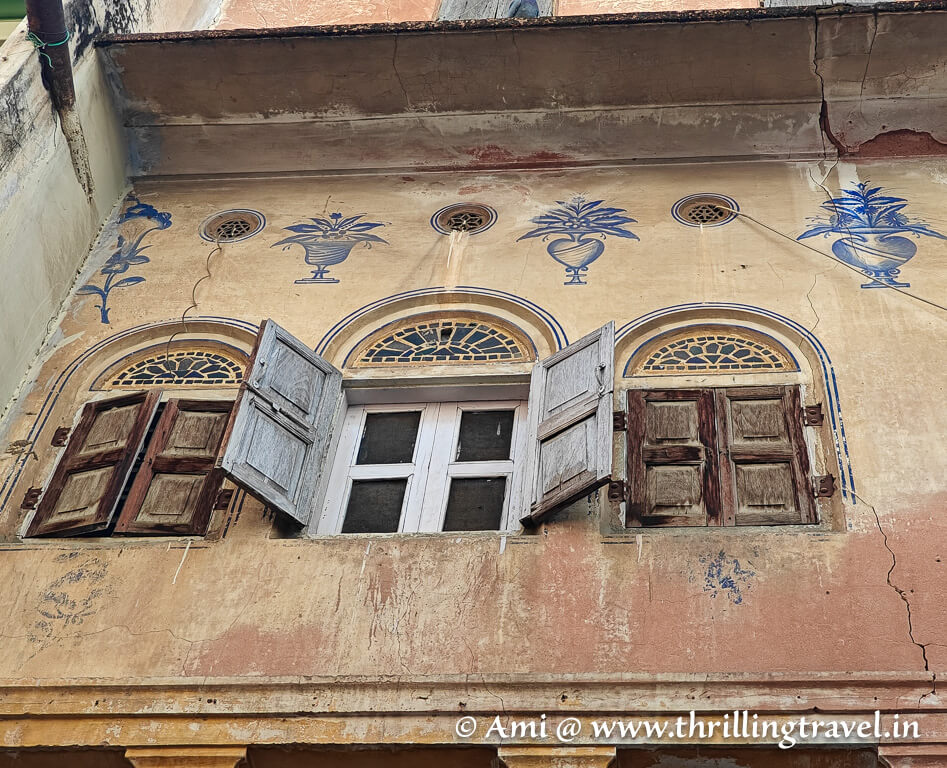
Though I have sprinkled my tips throughout this Jaipur city walk guide, in this section I will consolidate and add the most important ones.
- Wear flat shoes and comfortable cotton clothes when heading out for your tour of Jaipur old city. Modest clothing. – short sleeves (not sleeveless) and pants as you might want to venture into some of the temples on your Jaipur old city trail.
- Carry a bottle of water – though you can always purchase one during your walk. There are plenty of shops along the way.
- You are walking through the living heritage site of Jaipur. Be mindful of the local sentiments, their homes and private spaces and their culture. They are friendly enough for you to chat with them, but please ask for their permission if you wish to take a picture of them or their belongings.
- Jaipur – the UNESCO World Heritage city has tons of narrow lanes that is not just occupied by vehicles but also their pet cows, two wheelers and even e-rickshaws. The 18th century city has open drainage system along the sides of the same lanes. Please be careful of where you walk and step.
- There is no compulsion to shop when you visit any of the shops during your walk.
With that, I am sure you are all prepared to discover the secrets of the Old walled city of Jaipur. It is truly fascinating to map it against the 18th century city plan of Jaipur and see how much of it is exists and is relevant even today. Trust me, if you are heritage and culture aficionado – this is one tour you want to sign up for.
Common FAQS about the Jaipur heritage walking tour
Are any of the larger historical monuments like Hawa Mahal and City Palace included in the heritage walking tour of Jaipur?
Usually no, they are not a part of the tour. There are plenty of other things to see during the walking tour of the old city that it is hard to include these too. However, you can plan to visit them after the walk as they are in the vicinity itself.
How long are the guided walking tours of the Old City of Jaipur?
They can last anywhere between 2 – 3 hours.
Before you go, pin this

Popularly referred to as a Restless Ball of Energy. My Mom refuses to entertain my complaints about my equally restless daughter & assures my husband that I was born with a travel bug.
I am a Post-Graduate in Marketing by qualification and a travel blogger by passion. Besides travel, I enjoy photography and if you don’t find me at my desk, I would be out playing badminton or swimming or just running. I believe in planning for every long weekend through the year. And when I cannot travel physically, I travel virtually through this travel blog. My travel stories have also, got published on various websites and magazines including BBC Travel, Lonely Planet India and Jetwings. I have recently published my first book – When Places Come Alive – a collection of stories that are based on legends, landscapes, art and culture of a place which is available in both ebook and paperback format.
You might also like these posts –
- Jaipur City Palace Royal Tour: Experience the Grandeur of Royalty
- All the things that will make you go WOW at the City Palace Jaipur
- How to plan a trip from Delhi to Jaipur by road?
- Inside the Palace of Winds: A Guide to Hawa Mahal Jaipur
- How to enjoy a Sunrise at Taj Mahal? – What to expect, tips & tricks
- My lovely yet incomplete tour of Amer fort Jaipur
- Tour of the Jantar Mantar in Jaipur
- 10 travel tips for Rajasthan
- The intriguing Jal Mahal in Jaipur
- Sisodia Rani Bagh: A royal tryst with nature
- Secrets of the Jaigarh Fort in Jaipur
- Best areas to pick hotels in Jaipur
- Places to see in Jaipur over 3 days