
 Church bells echo down a village hushed and old,
Braganza House glows with chandeliers of gold,
Fernandes House still hides a tunnel and a tale untold,
just a few of the sights this Chandor Heritage Trail will unfold.

Get tips on planning a self-guided Chandor Heritage Trail through Braganza House and Fernandes House. Discover other places to see in South Goa, with routes, timings and practical tips for your visit.
It wasn’t my first time in South Goa. I had already spent lazy holidays discovering Varca, Colva, Palolem and a fair few hidden beaches along this coastline. This time I wanted to discover something different. Maybe a dose of heritage like what I had found on my Panjim heritage walk. That is how I discovered this intriguing village dotted with larger-than-life mansions and whispers of a lingering curse. Chandor had me curious! I boked myself a spot on the Chandor Heritage Trail and it sure was an unforgettable experience.

Chandor did not disappoint. It was a Goan village frozen in time. Quiet secrets lurked in corners. Unlike the colorful Portuguese homes of Fontainhas, the mansions here were like sets straight out of Pride and Prejudice. The Braganza House in Chandor holds an invaluable relic gifted by the Portuguese themselves. Then, there is the Fernandes House in Goa with a hidden passage behind unassuming doors. And also, the age-old curse of Chandor that the Kadambas are said to have left behind – one that locals still swear lingers over the village. Every bit of this heritage trail in Chandor had me mesmerized.
If you, like me, are wondering what to see in South Goa and want to do something different, you have come to the right place. This blog post is not just a virtual stroll through Chandor but a guide to help you plan your own visit. I have put together everything you need on the Chandor Heritage Village and its grand Chandor mansions and how to go around visiting them. I have included tips gathered from my own visit on the routes, timings and how to go about planning your own visit. Whether you book a guided tour or attempt a self-guided Chandor Heritage Trail, you will find all the information you need right here.
Quick links for a South Goa tour
- Booking.com has several good Delhi hotels listed on their site. You could use this link to browse and book the same.
- GetYourGuide has various local tours and car bookings available that you can use to explore South Goa. They have quite a few options for Chandor too. Here are a few that you can consider when you are here –
- There are tons of tours and experiences available on Viator.com that you can book for your visit. Here are a few that might appeal to you – including some to Chandor village.
- For any of your travel needs or general shopping, consider using Amazon through this link.
Disclaimer: This article includes affiliate links. This means that at no cost to you, I will receive a small commission if you purchase through my link. Thank you for supporting me with this.
Where Is Chandor in Goa?
Chandor village, Goa is a small settlement in the Salcete taluka of South Goa. It is spread across just around 248 hectares and has a population of around 700. It sits on the banks of the Kushavati River – the very river that has given this hamlet a colorful history.
History of Chandor, Goa
What seems like a sleepy little village was not always like that. Once upon a time, Chandor was buzzing with power. Long before Old Goa rose to prominence, and long before Panjim became the state capital, Chandor was Goa’s first capital. The Bhoja rulers held court here as early as the 3rd century CE, and the Kadamba dynasty inherited it soon after. They turned the settlement into a thriving port town along the Kushavati River. Its capital status, though, did not last. In 1054, the Kadambas moved their seat of power to Gopakapattana, present-day Goa Velha – largely to accommodate their growing navy.
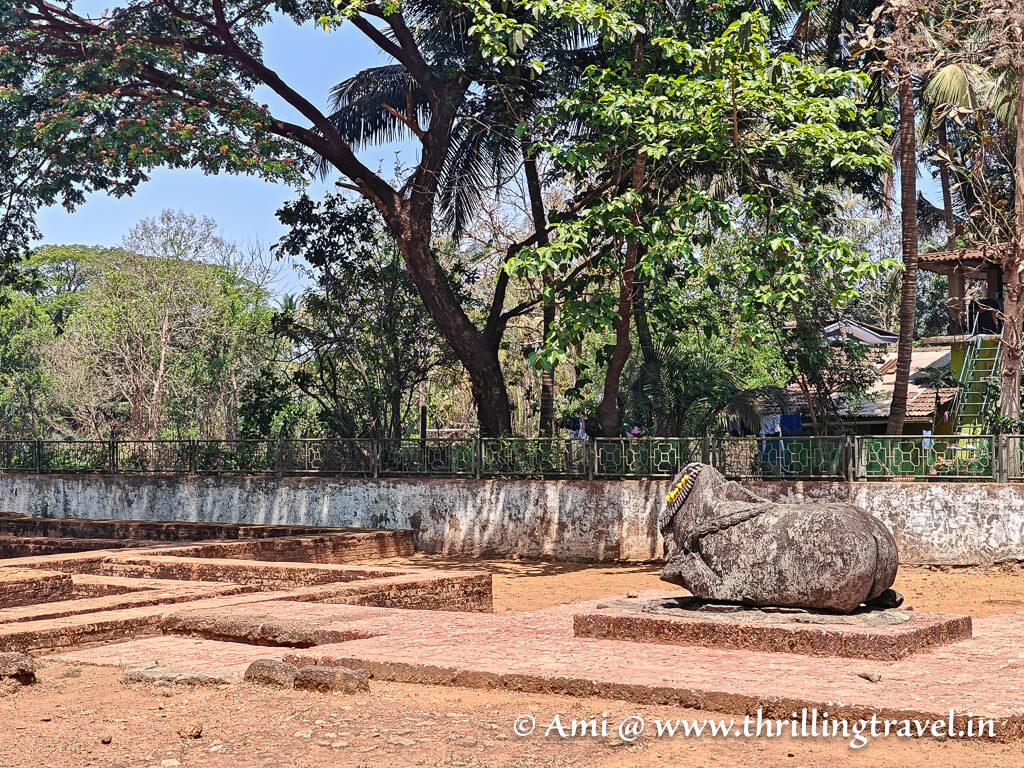
The name Chandor itself carries meaning. Chandor was once called Chandrapura, quite literally the City of the Moon. It was named for Chandreshwar – another name for Lord Shiva who carries a crescent moon in his hair. The Kadambas built a Shiva temple here, whose ruins, along with a headless Nandi bull, still stand today.
Chandrapura reclaimed its status as capital once more, after the Kadambas’ new seat at Gopakapattana was sacked by Alauddin Khilji’s forces in 1312. Chandrapur unfortunately, was fraught with more attacks from Muslim invaders. Eventually, the Kadamba rule fell.
When the Portuguese took over, Chandrapura was anglicised into Chandor. Everything changed with their arrival. The Kadamba-era temple was destroyed, a chapel built in its place, and most residents converted to Christianity. The wealth that followed, through trade, land, and colonial patronage, found its way into the grand mansions Chandor is known for today.

Among these mansions, the history of Menezes Braganza House and Fernandes House stand out. Trust me, I found so many stories and treasures that I had to create a section for each in this Chandor heritage village guide. For now, this is your teaser before you set off to explore the many other things to see in South Goa that Chandor alone can offer.
Is the Chandor Heritage Trail a walking trail?
When I was planning a visit to Chandor, my online search had me really confused. There were some calling it a Chandor heritage walk, while many claimed that this was not a walking tour. After having done this tour, I agree with the latter – Chandor heritage trail is not a walking tour.
For one, if you look at my Chandor heritage tour map, you will see that points of interest are a little apart. While Braganza House sits right by the village church, Fernandes House is more than a kilometer away. Sure, you can walk but the Goan heat can be quite a deterrent on the sparsely populated path. This is really a Chandor heritage route best covered by vehicle rather than on foot.
I would recommend bringing your own car or hiring a scooter for the day. You can hire it locally – they are available almost everywhere in Goa. Alternately, hire an auto for 2 – 3 hours. I hired a car, which gave me the freedom to move at my own pace and stop wherever something caught my eye. My guide led the way on her scooty.
That said, going self-guided is entirely possible. With the route map and stop-by-stop suggestions laid out further in this Chandor Goa guide, you can plan your own version of this trail – on your own time and at your own pace.
My Self-Guided Chandor Heritage Trail Route
I have already included the route map I followed above. This will help you plan your own version of this Chandor heritage trail.
I recommend that you give yourself at least 2 – 3 hours on this trail. While there are not many stops on this tour, Braganza House and Fernandes House will eat up the better part of that time. And honestly, I could have done with more to explore their grand halls and quiet, dust-laden corners with old furniture – all the while imagining the people and their lives here.
Braganza House in Chandor – the first stop in Chandor Heritage village

Braganza House, among all the places to visit in Chandor Goa, is the one every visitor ends up talking about. One look at it and I admit that this mansion is easily one of the grandest Chandor mansions still standing. The facade alone thrilled me before I had even stepped inside.
Even from the outside, it was evident that there were two parts to this house. This became obvious as I climbed up and reached a landing that clearly split into a left wing and a right wing. I turned right and was greeted by Ashley, who welcomed me into his family’s side of the house. He went on to share the story of his ancestors and why Braganza House ended up divided in two.
Braganza House History
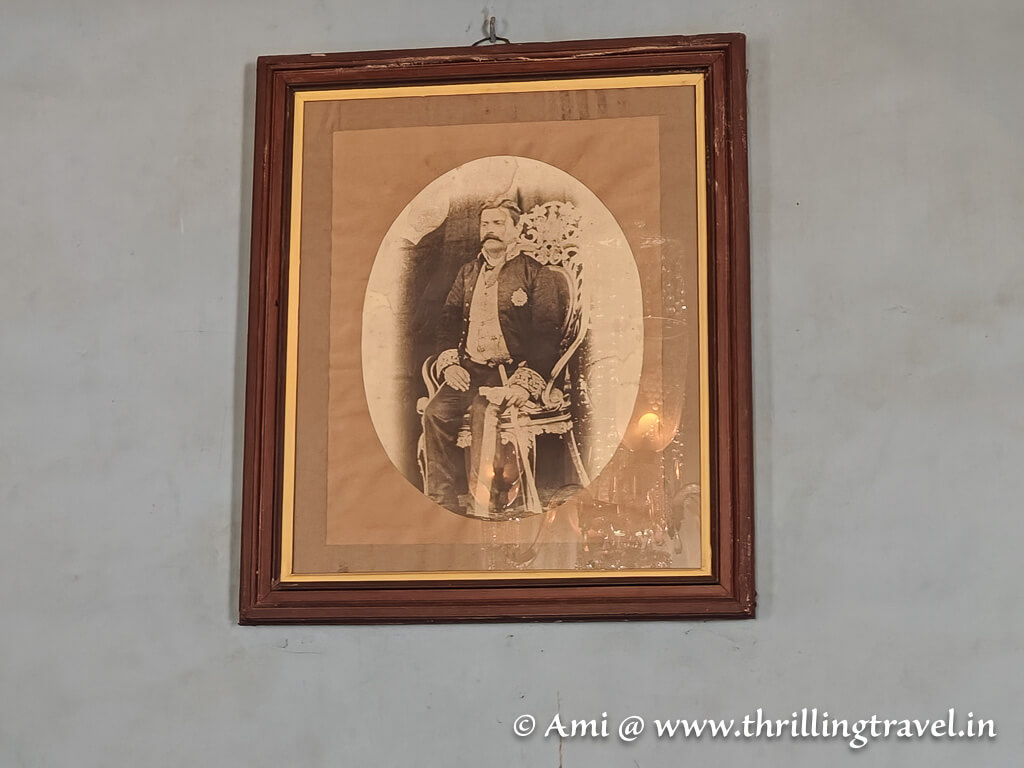
Ashley took me through the history of Braganza House. The house was built by his great-great-great-great-grandfather on land granted by the Portuguese crown in the late 16th century. The grant was quite an honor for the man who served as the Vice-Consul of Spain in the Portuguese Indies. Not only was this his home but a symbol of status.
The gentleman had only two daughters and the house eventually passed to them. This is precisely why Braganza House today stands divided into two wings. One daughter – Claudina Stael, married Domingos Joveniano de Menezes. Their son was Dr. Luís de Menezes Bragança, who went on to become one of Goa’s most prominent freedom fighters. This part was the other wing that I did not visit.
The 2nd daughter went on to marry into the Pereira family, and it is her branch that carries the Pereira name to this day.
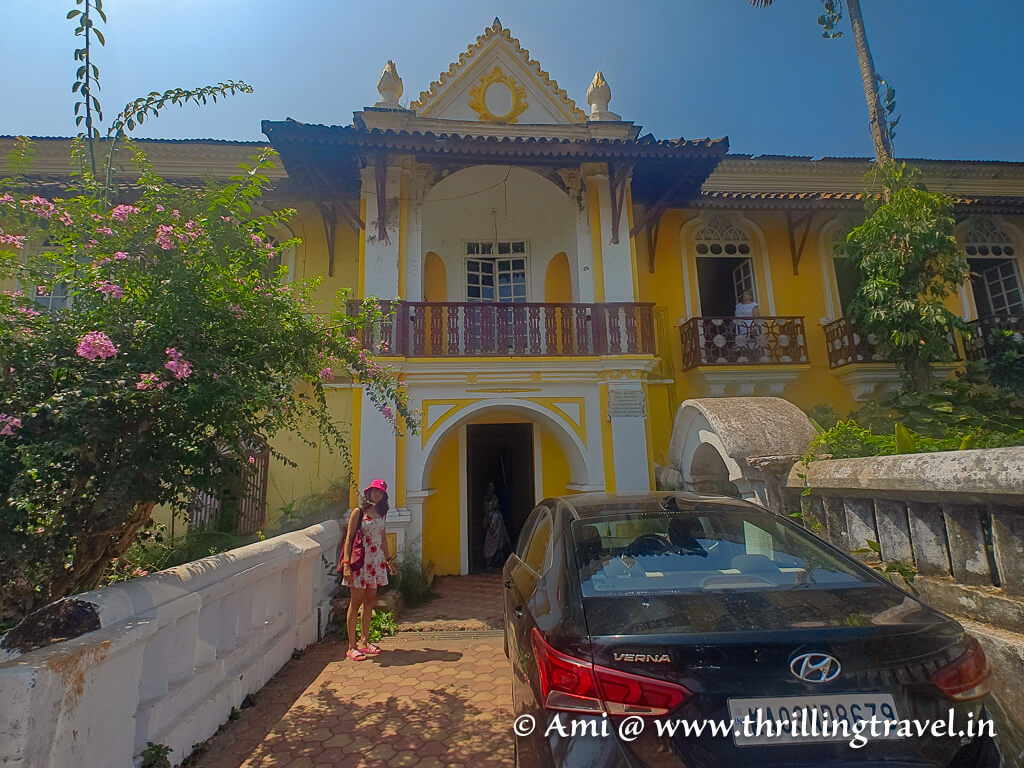
This is also why the house carries more than one name. The west wing, belonging to Luís’s branch, is often called the Menezes Braganza House. The east wing, where Ashley welcomed me, is known as the Pereira House, or sometimes the Braganza Pereira House, tracing back to the Pereira line of the family.
Architecture of Braganza House, Chandor, Goa

Painted in a warm ochre yellow with crisp white pilasters, the house is fronted by a garden sit-out that immediately reminded me of the balcao style seen in the Portuguese homes of Fontainhas. Large arched sash windows line the upper floor. Some of the windows on the inner sides even have the classic oyster shells that are found in the Goan houses. Their main purpose is to let in generous natural light but at the same time, protect the interiors from the harsh Goan heat.

The layout of the house allows for enough cross-ventilation to allow natural air – perfect again for the humid Goa climate. Inside, the interiors are every bit as rich as the facade promises, filled with generations of heirlooms on display. It is easy to see why this house, and this Chandor heritage village more broadly, will appeal to any architecture lover.
Inside Braganza House
The Hall

Step inside Braganza House, and every single element belies just how well-traveled its occupants once were. I have a habit of picking up a souvenir or two from every place I visit. Turns out the Braganza family followed a similar tradition, except theirs, understandably, puts my modest collection to shame. In fact, most of it was intentional and a big part of their interiors.
Ashley walked me through the various pieces on display- each one from a different corner of the globe. Let me list them as a treasure hunt for you.

Italian tiles run through the mansion, and an Italian marble-topped table sits in the hall. The furniture itself is handcrafted rosewood brought in from Burma. Now, this seemed to be the trend on those days, as even the extravagant mansions of Chettinad sported the wood from Burma. And they belonged to the same era.
Then, there are the teakwood ceilings that hold the Braganza House Belgian chandeliers, all crystal, originally lit by candles since electricity did not reach this village until the 1970s.
Elsewhere in the hall, you will find porcelain wall plates from Macau and hat stands from a bygone era. A loveseat fashioned as a literal tete-a-tete, the kind built for two people to sit and converse face to face, is one of the main pieces here.

The wall paintings are all hand-painted, one of them designed specifically to match the tile pattern beneath it. But the detail that stayed with me the most was a set of chairs bearing the initials AFSP, a nod to Ashley’s great-great-great-grandfather, Antonio Francisco Santana Pereira. Nearby, a table carved from elephant tusks sourced from Africa stands on legs shaped like elephant trunks.
And this, believe it or not, was just the hall.
The Gallery and Dining Area

Beyond the main hall lies what is essentially an exhibition space the family has curated over generations. Ruby-red candle stands and turtle shell artifacts from Goa’s own coastline sit alongside pieces gathered from far more distant shores. Try to spot that one Italian marble tabletop with a carved monkey eating breadfruit, upside down.

Among the more unusual pieces is a coco de mer, nicknamed the coconut of the sea. This comes from the Seychelles and is quite a rare possession. The coco de mer grows naturally on just two islands in the entire Seychelles archipelago. It takes eight to ten years to ripen, and produces the largest seed of any plant on Earth. For centuries, sailors found these giant seeds floating at sea. They had never seen the tree itself and believed they grew on the ocean floor.
Elsewhere in the gallery, the collection turns almost into a cabinet of curiosities- catfish skulls, hippo teeth, and a rhino horn. These were reminders of an era when animal products like these were widely traded across continents without a second thought.
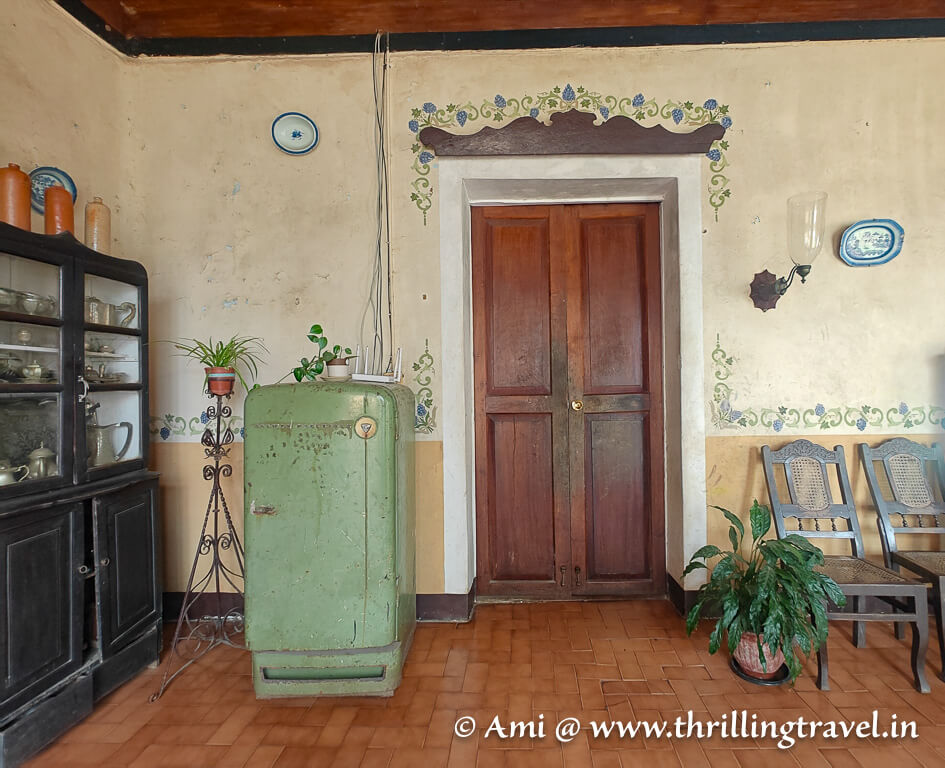
Among them are two pieces of mechanical equipment – Philips radio from the 1940s and an Allwyn refrigerator that used to run on kerosene.

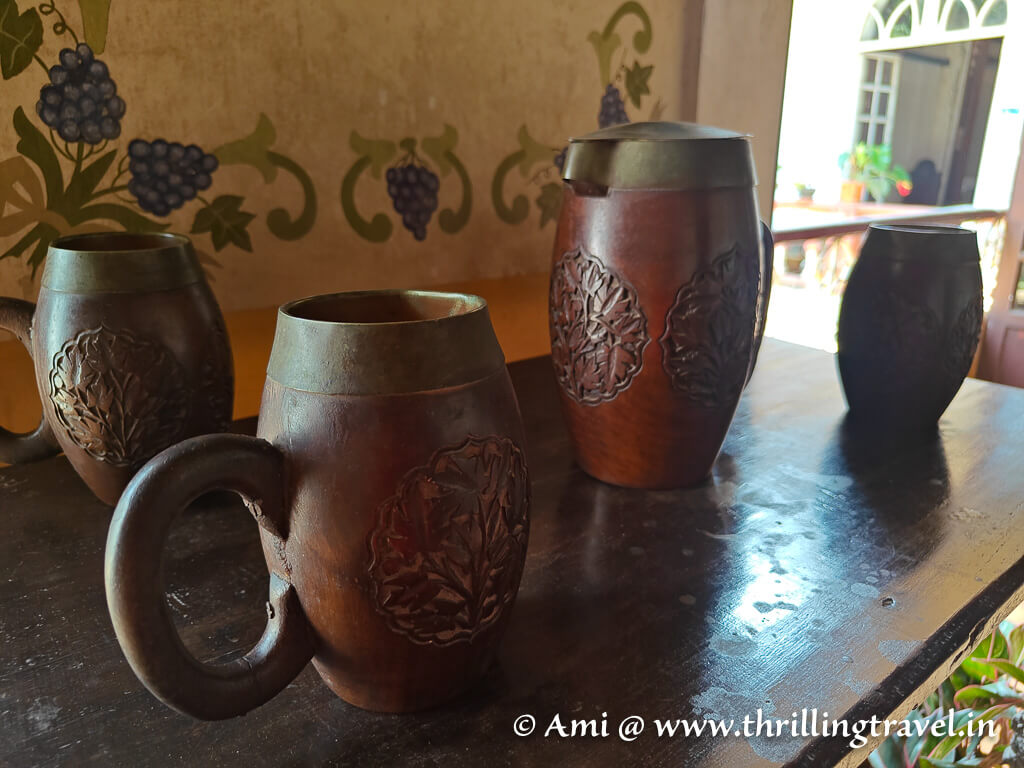
The dining room carries its own character, with a ceiling shaped like an upturned boat. Look closer at the barware and you will spot German beer mugs lined with copper on the inside and wood on the outside – a clever design meant to keep the beer cold for longer. A large foldable dining table takes center stage, and even the old bottles have stories of their own. There is a German soda bottle strikingly similar to the Goli sodas we grew up with in India and a gin bottle that made its way here all the way from Rotterdam.
The Family Chapel
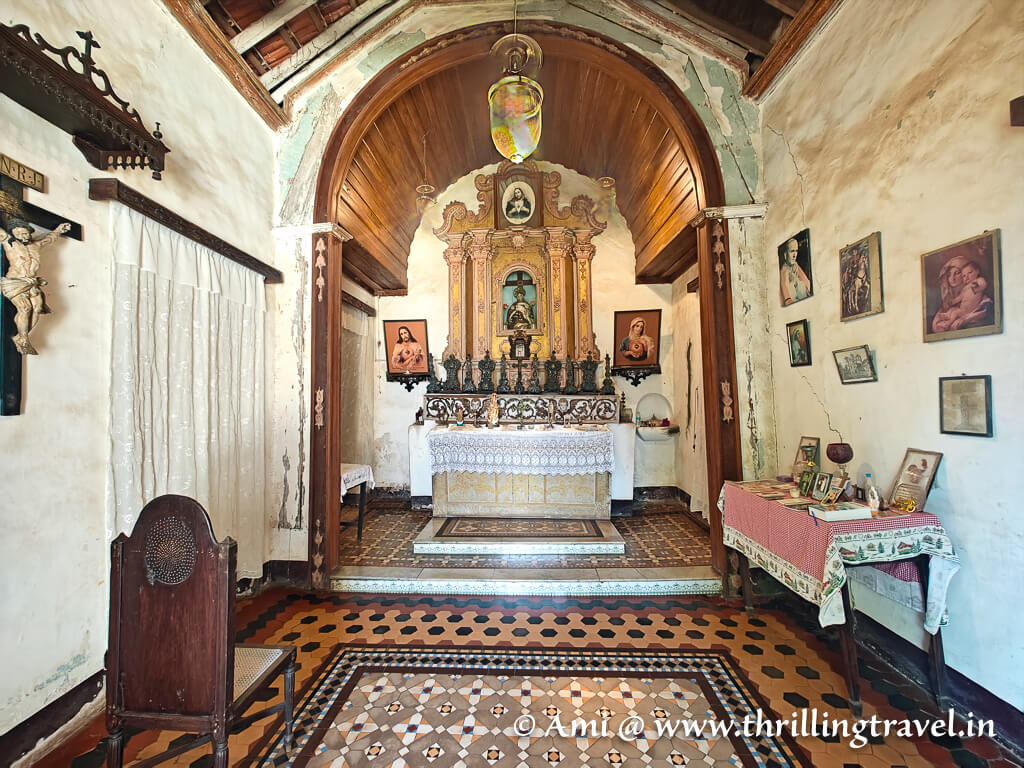
Unlike the rest of the mansion, the family chapel has Spanish flooring. The altar is done up in the Spanish Baroque style, with a statue of Our Lady watching over the room. What was interesting is that it even had a confessional chair – an older version of confessional booth.

However, the real treasure that I hinted at earlier is the relic. Tucked inside an oval glass case with gold plating sits a fingernail relic believed to belong to St. Francis Xavier, Goa’s most revered saint. It was gifted to the family generations ago. Clearly, this speaks of where the Braganzas stood in Portuguese Goa’s social order.
The Braganza House Ballroom
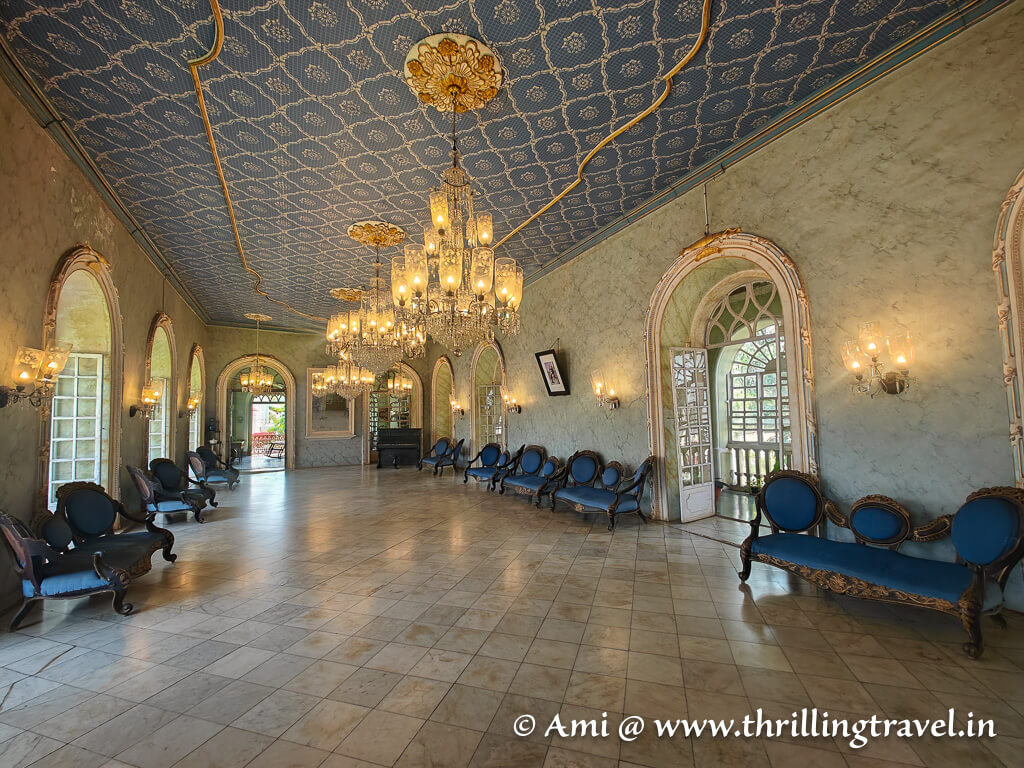
If I ever had to picture a ballroom scene straight out of a British classic like Pride and Prejudice, this would be the setting. In my mind’s eye, I could clearly visualize what it might have been. Women swishing about in wide silk gowns, men buttoned into tailored coats, a live orchestra tucked into a corner, wine glasses with the glint of the candelabra, while some couples turned slow, practiced circles across the floor under a glittering chandelier.
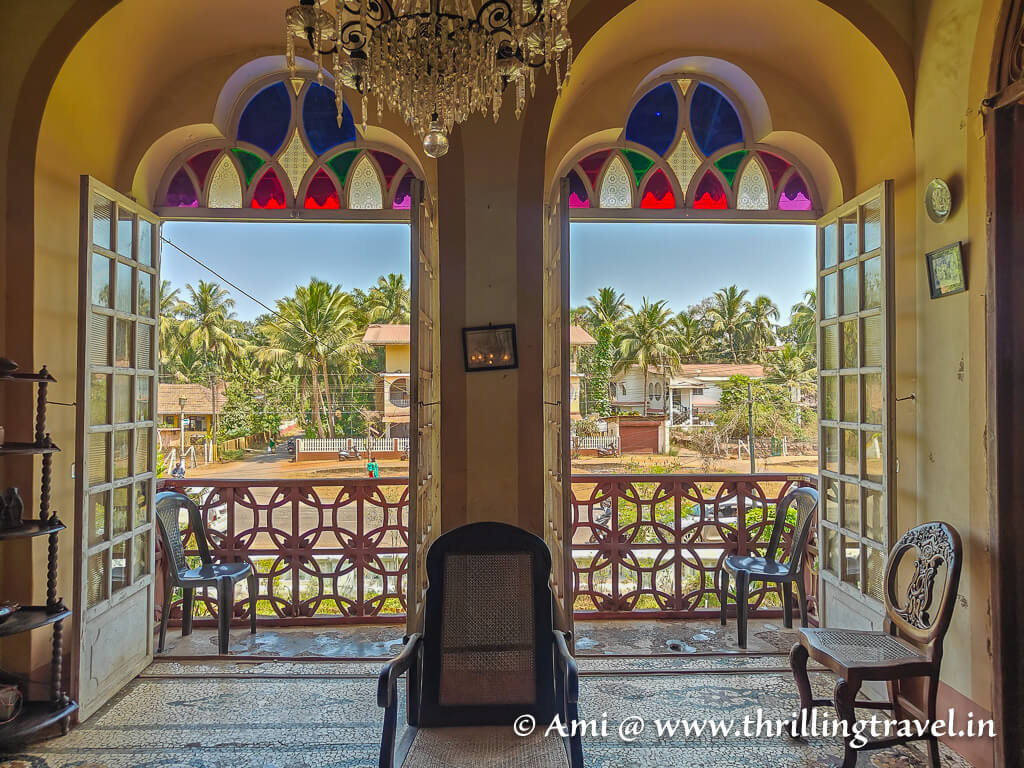
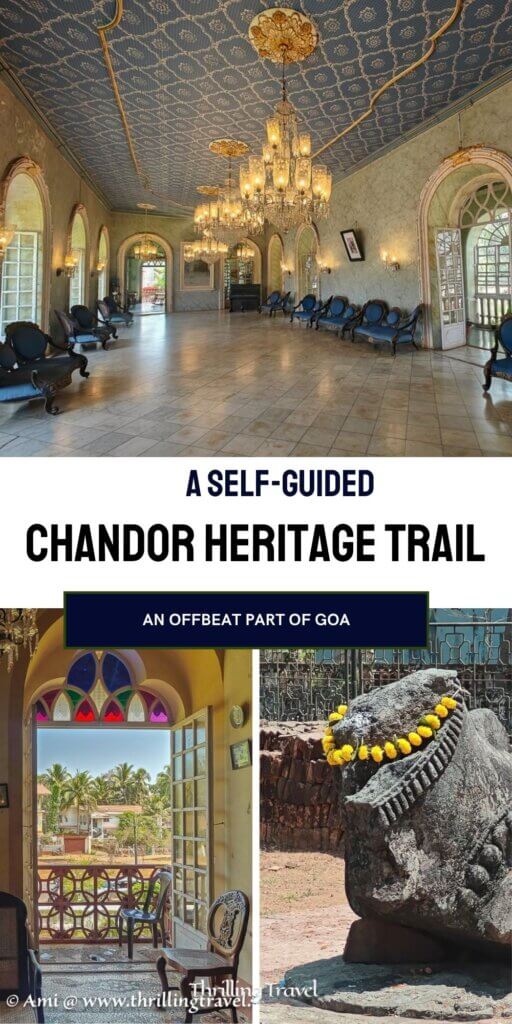
Made with zinc purely for acoustics, the ceiling had this stunning chandelier that once held actual candles. Imagine how its light would have enhanced the colors from the stained glass windows shipped all the way from Belgium.
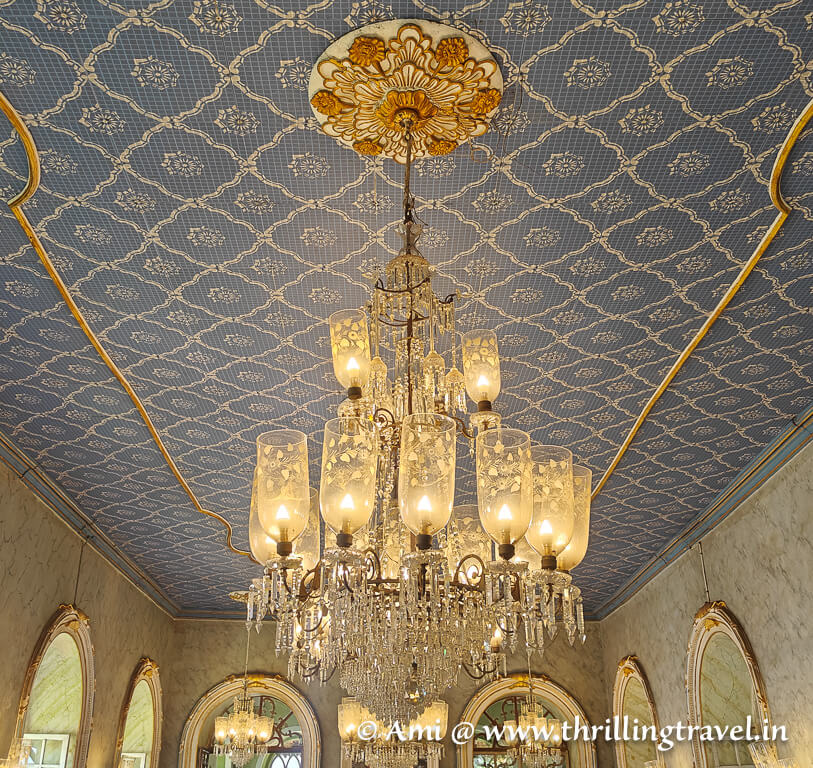
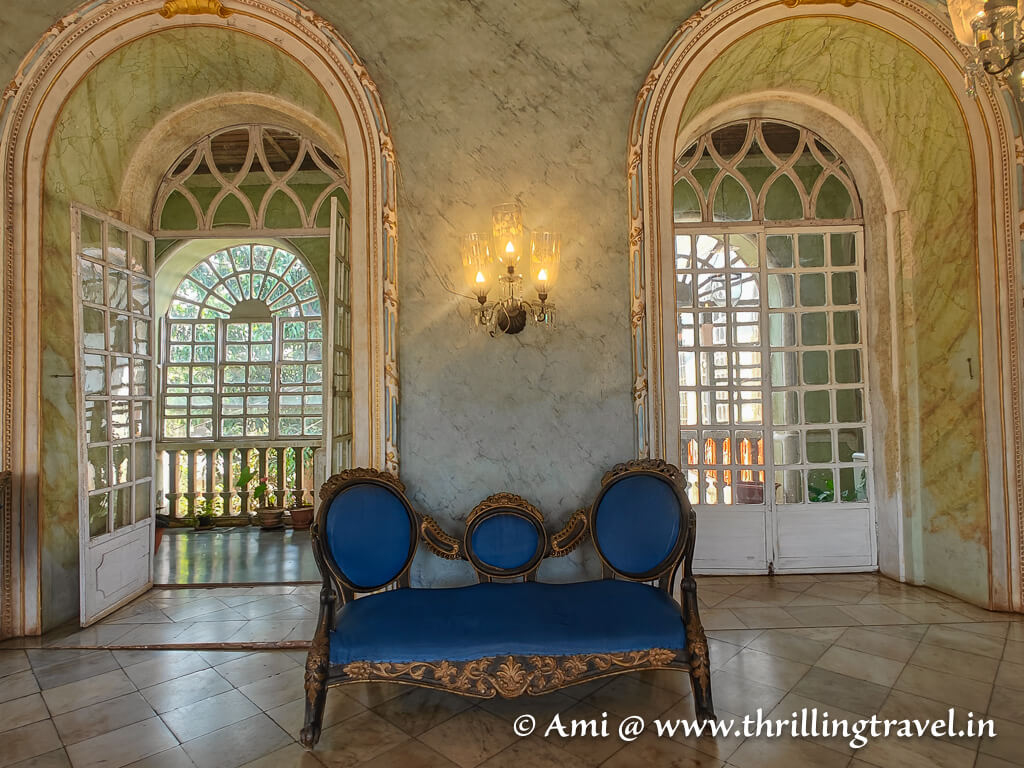
At first glance, the walls seem like marble but that is just an illusion. They have been painted so as to mimic the cool stone. Among the furniture sit two especially prized chairs, the very same ones bearing the AFSP monogram I mentioned earlier, gifted to the family by Portuguese royalty itself.
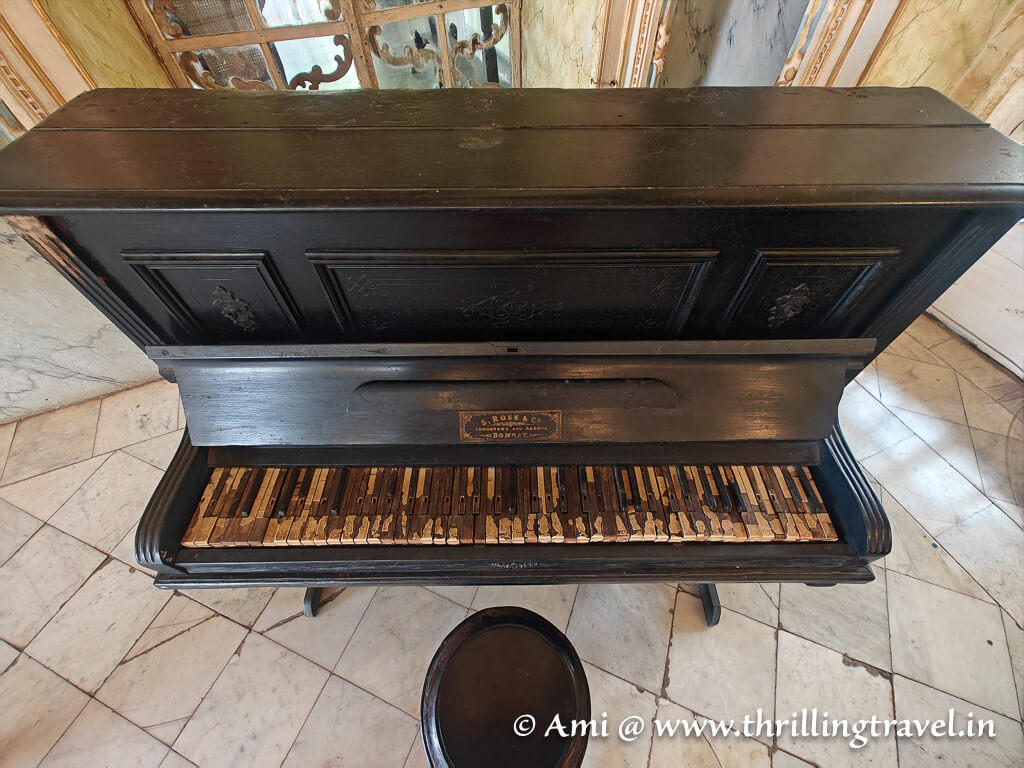
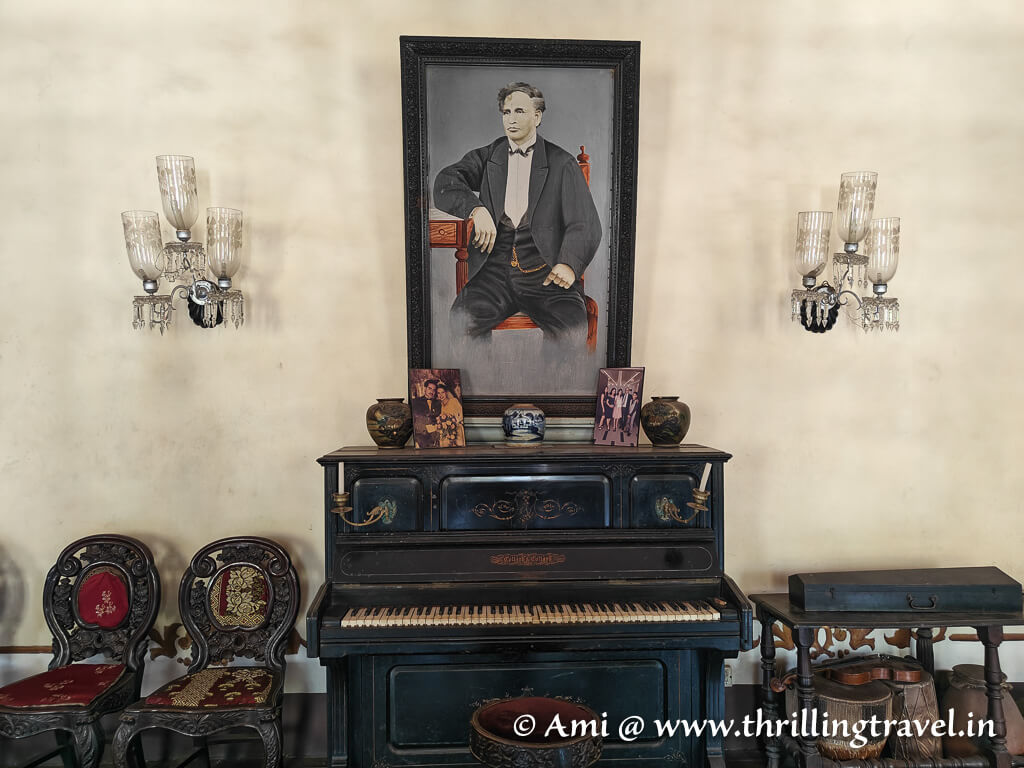
In one corner is an 1800s piano with ivory keys. It lies silent as a display but I am sure it was the very instrument that once set the rhythm for every dance this Braganza House ballroom ever hosted.
Guest Bedroom and Other Exhibits

The guest bedroom is right after the ballroom and seemed a little bare compared to the rest of the house. A mother-of-pearl cupboard stood out with what Ashley described as crystal handles. Alongside it sat a chamberpot and cloth stands, and an open wardrobe that gave a small, intimate glimpse into how the decor might have been back then.
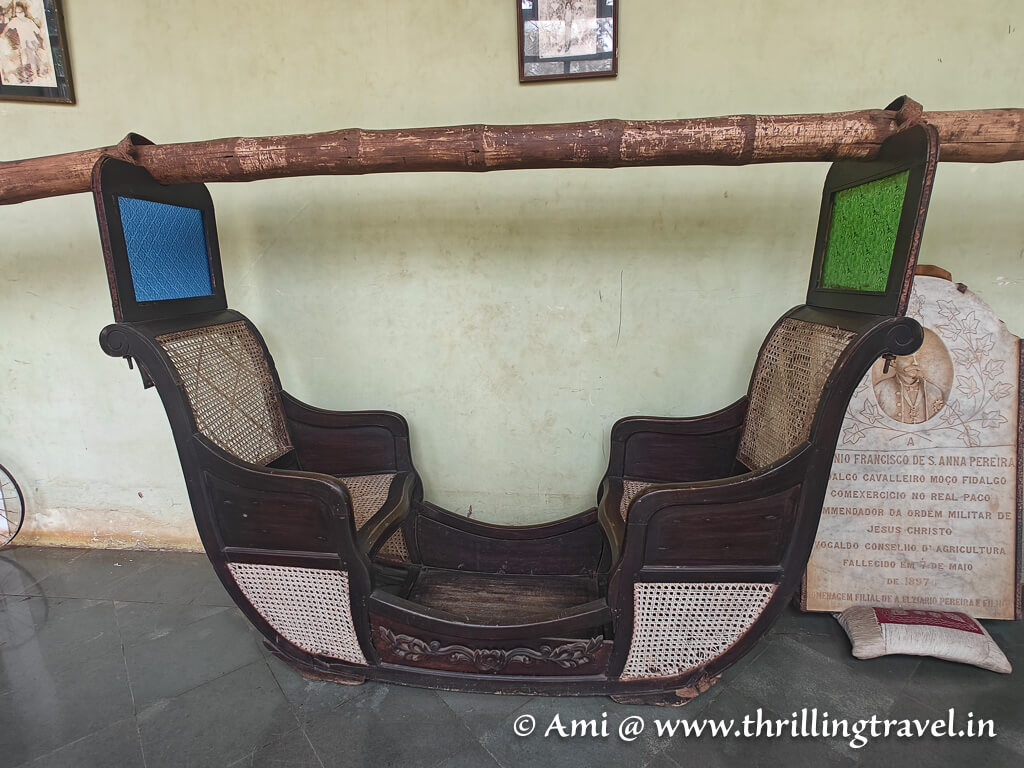
Out in the corridor, a row of palanquins in various seating styles was on display. Nearby stood two tombstones, one for AFSP and one for his wife, their inscriptions written in Portuguese, topped with a coat of arms bearing stars, doves, and a cross.
And with that, the tour of this wing of the Braganza house came to an end.
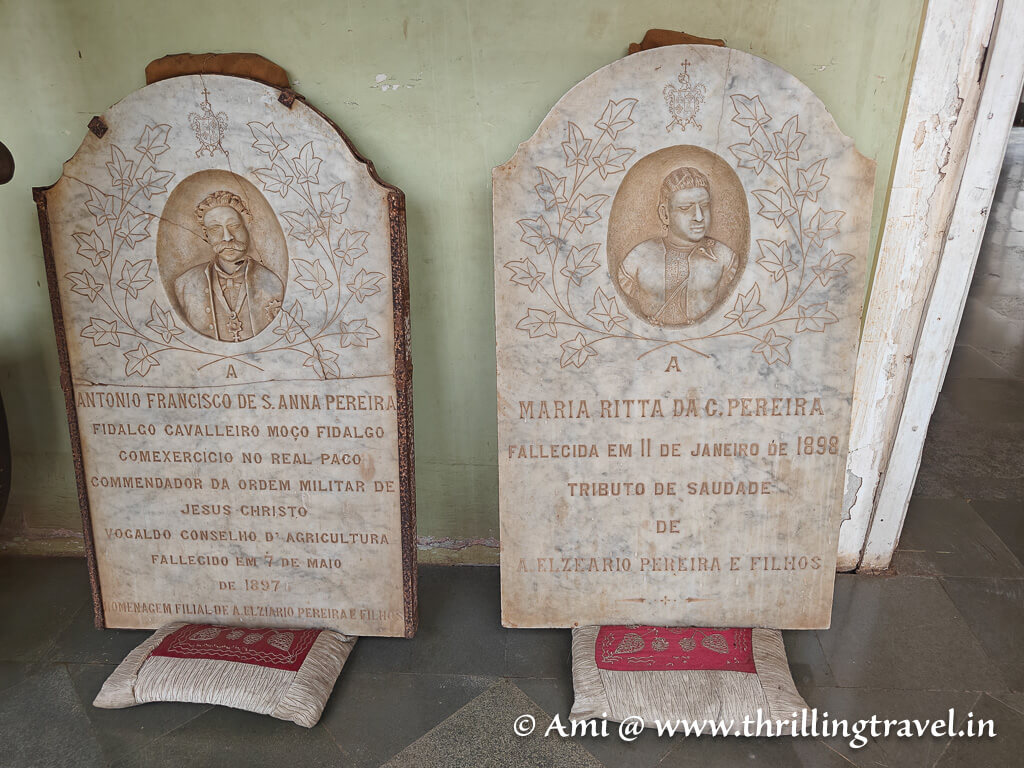
The other wing, belonging to the Menezes Braganza family, holds its own set of treasures, but its true crown jewel is the library. Believed to be the first, and still the largest, private library in Goa, it holds more than five thousand leather-bound books across four languages, English, Latin, French, and Portuguese, collected by Luís de Menezes Braganza himself across generations of the family before him. However, that is something that I have left for another day.
From there, we moved on to the next stop on this Chandor heritage trail – the village church.
Chandor church (Church of Nossa Senhora de Belém) – next stop on the Chandor heritage trail
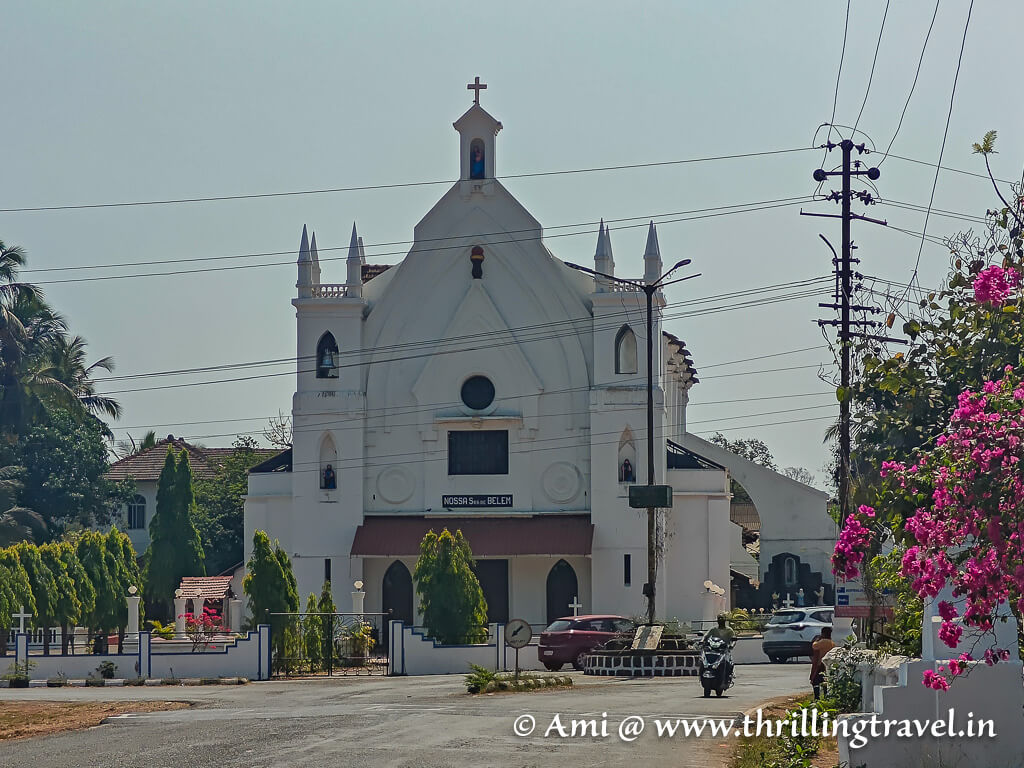
Right across from Braganza House, at the main intersection of the village, stands the Chandor church of Nossa Senhora de Belém or Our Lady of Bethlehem. It is believed that this was built upon a demolished Hindu temple – the Saptamatrika Temple, or the Seven Mothers Temple. When the Chandor church was originally built in the 17th century, it was called Our Lady of Remedies. However, after it was reconstructed following a collapse in the mid-20th century, it was renamed to its current title.
The church’s exterior is relatively simple, with two towers that give it the look of a small fort. The facade hides just how ornate and detailed the interiors actually are. However, for me, that was not the most interesting facet of this stop.

It was the Braganza crypt or mausoleum. As their tradition goes, 3 years after a family member is buried, their remains are transferred into the family mausoleum. These crypts are visible for the portico of Braganza House – which is where I spotted them from as the church was closed by the time I stepped out to visit it.
My Chandor heritage walk guide – Medora had another story to share before we got into our car for the next stop. She mentioned that the church had an annual feast that was celebrated alongside the feast of Three Kings Day, or Epiphany, on the 6th of January. On this day, three chosen people, crowned and dressed as kings, rode into Chandor’s parish church on horseback to distribute gifts. Now that definitely makes this stop an attractive one on the Chandor heritage route.
Kadamba Temple and the Tale of the Chandor Curse
The 4 km drive from Chandor Church was along a road lined with pretty homes marked either by a rooster to indicate a Portuguese alliance or a soldier to mark the sanctuary of a freedom fighter. This was kind of similar to the homes that I had seen during my Fontainhas walk. Before I realized, I had reached a quiet site that gave very little away at first glance.
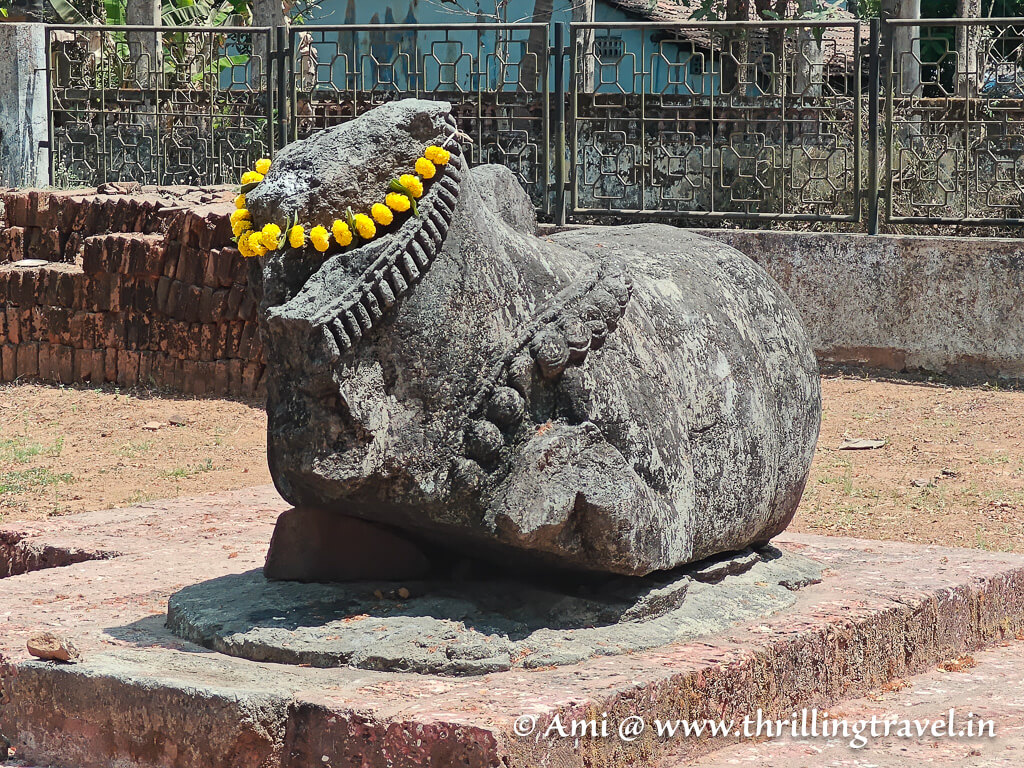
This was where once the Kadamba-era Shiva temple stood. But today, only foundations remain today, along with a half-destroyed Nandi that likely once sat facing the shrine. Coins from the Kadamba dynasty have been found here giving us tangible proof of just how far back this small clearing in the village stretched into Chandor history.
Standing among the ruins, Medora finally told me the story of the Chandor curse.
As the legend goes, Queen Kamaladevi once left Chandrapura, as Chandor was then known, to visit her father’s palace in Hangal. While she was away, disaster found her kingdom. The fort was betrayed from within and the enemy broke through. King Harihara – her husband died fighting the war and from the Queen’s point of view, the people of Chandor did little to defend him.

When Kamaladevi returned to find Chandrapura in ruins and her king gone, grief gave way to fury. She is said to have beaten her feet upon a stone and pronounced a curse on the village, one dooming its women to widowhood for generations to come. Since then, it is believed that any girl who married a Chandor boy soon became a widow.
What gave me goosebumps was a strange fact that my guide – Medora, shared. According to the 2011 census, Chandor still shows an unusually high concentration of widows. Coincidence, consequence, or curse? I will let you decide that one for yourself.
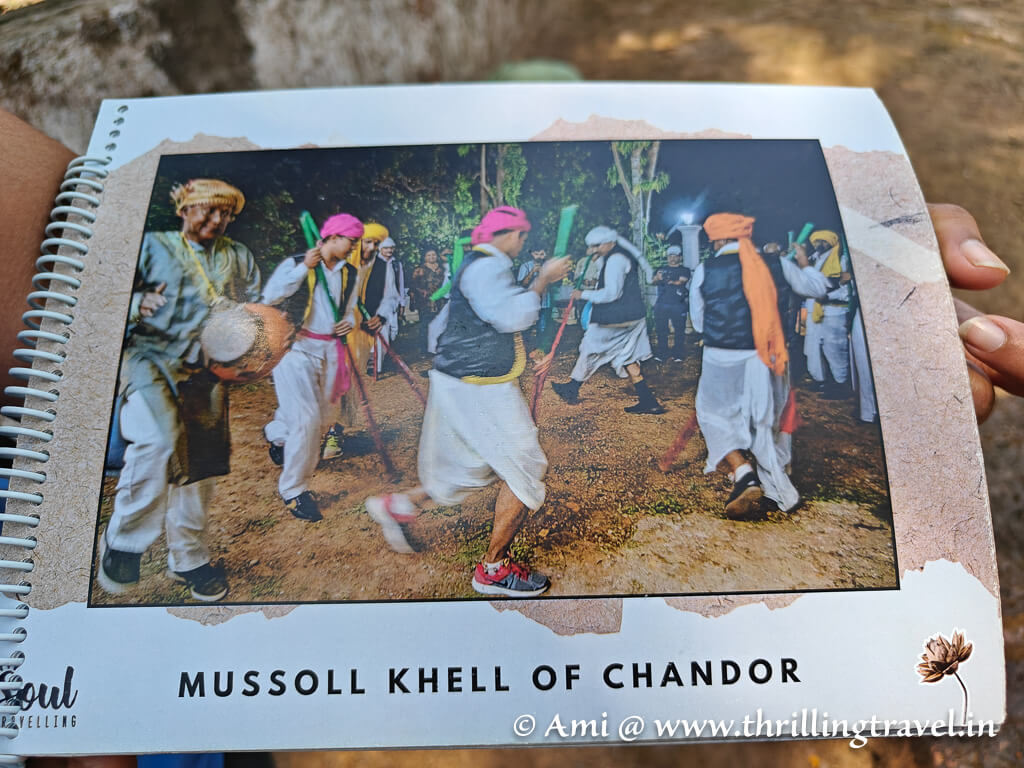
At the very same site stands a cross that is a part of Chandor’s most distinctive living tradition – the Mussol Khel dance. Descendants of the Kshatriya families who converted to Christianity gather at this cross to offer their prayers, a chant leading the invocation before the dancing begins. To the beat of the gumot, dancers dress in traditional attire and move in slow, deliberate circles, the songs recalling Chandor’s Kadamba-era past, its kings, its battles, and the village’s own complicated history with them.

Medora had pictures on her phone from a past Mussol Khel dance, along with photos of some of the Kadamba coins found at the site – all of which helped me imagine life back in the Kadamba era of Chandor.
Fernandes House, Goa
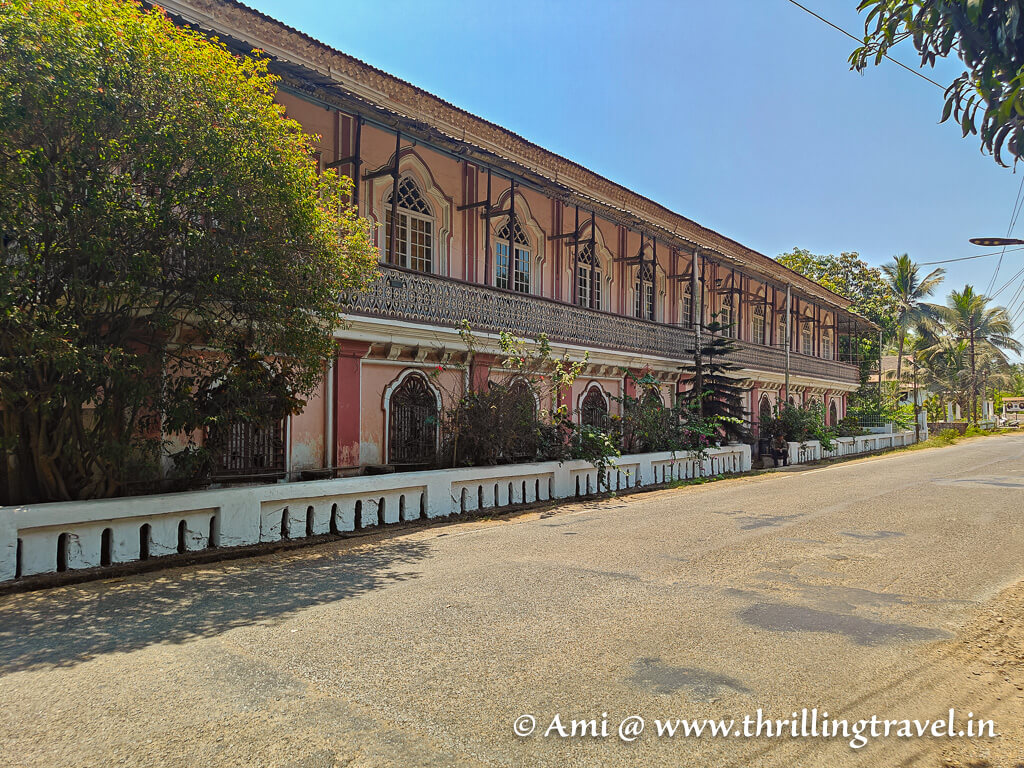
Just half a kilometer from the temple was my next stop on this Chandor heritage trail. Fernandes House was another one of those Chandor heritage houses that make this village so special. The facade was every bit as impressive as Braganza House, yet it carried a distinctly rustic aura. It felt a little less polished and more lived-in. The house wore its age proudly rather than trying to hide it.
Rajeev Fernandes, a pleasant, friendly face, ushered us in. One step inside and I knew this was going to be a very different experience from Braganza House. Braganza House was all about status and grandeur – clearly Portuguese in its influence. Fernandes House Chandor, on the other hand, felt humble yet majestic, with a medley of cultures. I only came to understand properly once I discovered the history behind it.
Fernandes House history
Fernandes House is one of the oldest of the Chandor heritage houses, with its original structure dating back to around 500 years. Long before the Portuguese ever set foot here, the family belonged to a high-status warrior community – or as the term goes – Kshatriyas.
Everything changed with the arrival of the Portuguese. With religious purging and pressure, the family converted to Christianity. They adopted the surname Fernandes.
What makes Fernandes House Chandor so interesting is that they chose to keep elements of their earlier heritage – including the original layout of the house. This is why the house carries that unmistakable medley of cultures.
Fernandes House architecture and layout
“The house at the back is in close proximity to the Kushavati River and we also needed to protect our walls“ – explained Rajeev as he led us into his home. Fortification walls remain along that side even now.

Step past that and I felt as if I were transported to the old homes of Chettinad. The open courtyard style with natural light bursts, sloping roofs angled for the rain and windows placed all around the house keep the cross-ventilation. There is also a big secret built into this house for defense – one I will reveal a little later as we move room by room through the house.
The original core of Fernandes House was built with thick mud and laterite stone walls. As time went by, new additions added that Portuguese touch – making this Chandor house what you see today. Note this Indo-Portuguese fusion with the European-style facades and mother-of-pearl shell windows.
Inside Fernandes House, Chandor

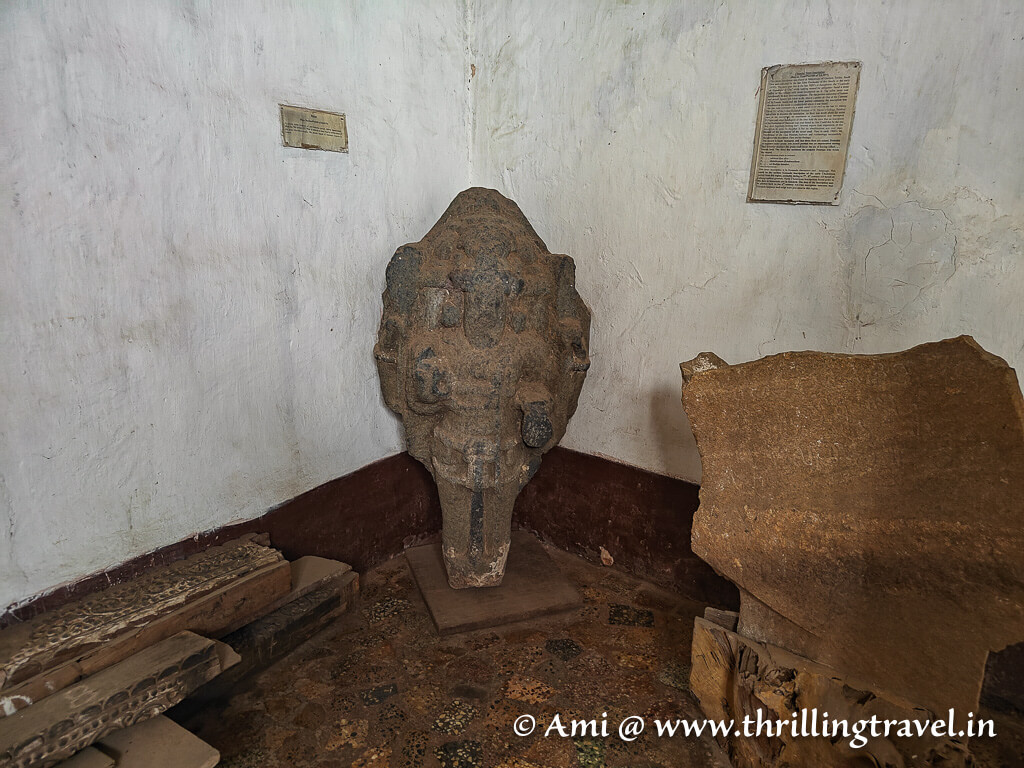
Unlike Braganza House’s carefully curated global collection, what you find inside Fernandes House is modest. It is antique but literally from the family’s own backyard. The ground floor has the makings of a small museum. Ancient inscriptions carved into stone, hero stones once belonging to a Shiva temple, and a handful of pretty old paintings are all on display. A few idols too find their place here. Apparently, all these have been recovered near the mansion in Chandor.

Then, there are the Fernandes House palanquins and one intriguing wood piece that seems like a carved Ganesha. I was told that while it seems carved, it is actually a natural piece.

Some rooms on this floor now serve simply as storage, built deliberately below ground level to keep them naturally cool. At the doorway of one such room, Rajeev paused and said, almost mysteriously, “We will visit this room later.”
The Upper Floor
The courtyard feature of the house becomes even more apparent as you climb up. I was pleasantly greeted by a beagle, with another one trailing right behind it. It turned out that there is an entire family of these adorable dogs that live right here in this ancestral mansion. It was hard to tear myself away from them and focus on the corridor filled with artifacts. Plantation chairs, large pots, and paintings lined the walk, each one a small chapter of this Chandor heritage trail story.
Eventually, Rajeev led us toward the bedroom with a secret.
Fernandes House bedroom with a secret

Ushering us in, Rajeev led us to what looked like an ordinary walk-in wardrobe, except it had a secret door that opened onto a staircase. That staircase led into a tunnel, one that opened up in the very same storage room Rajeev had mysteriously promised we would return to earlier.
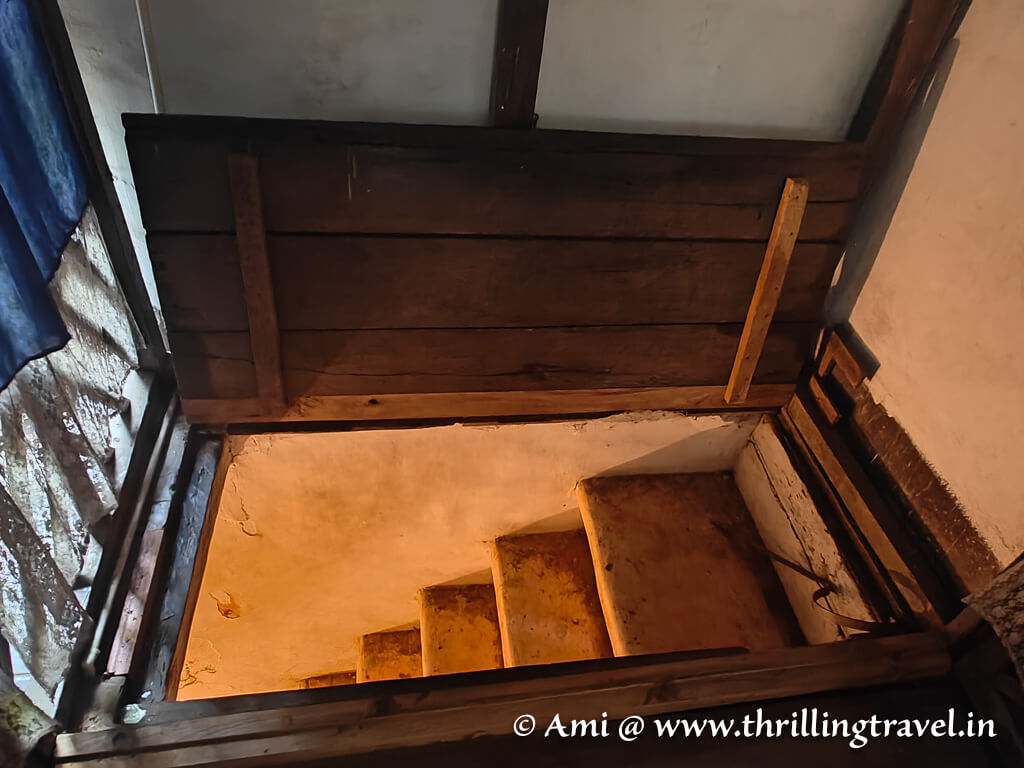
This was no ordinary passage. It had served as a hidden escape route during the Goan liberation movement, giving people access to the back of the house and a clear path toward the river beyond. It even had bullet holes from that very era, positioned so that anyone defending the house could fire on an approaching enemy without ever being seen themselves.
The Family Room
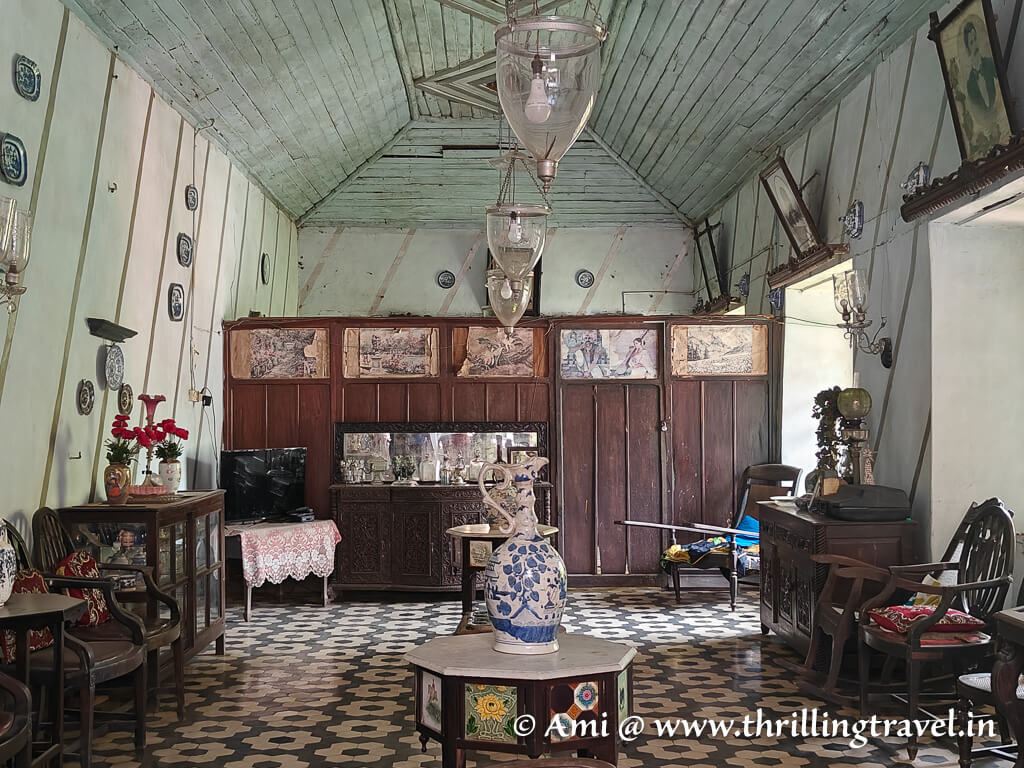
Back up from the tunnel, we stepped into the family room. This is where the mood shifted completely. There was a genuinely cosy feel to it, with loveseats clearly built for intimate conversation, fine glassware and crockery on display and a few porcelain vases.

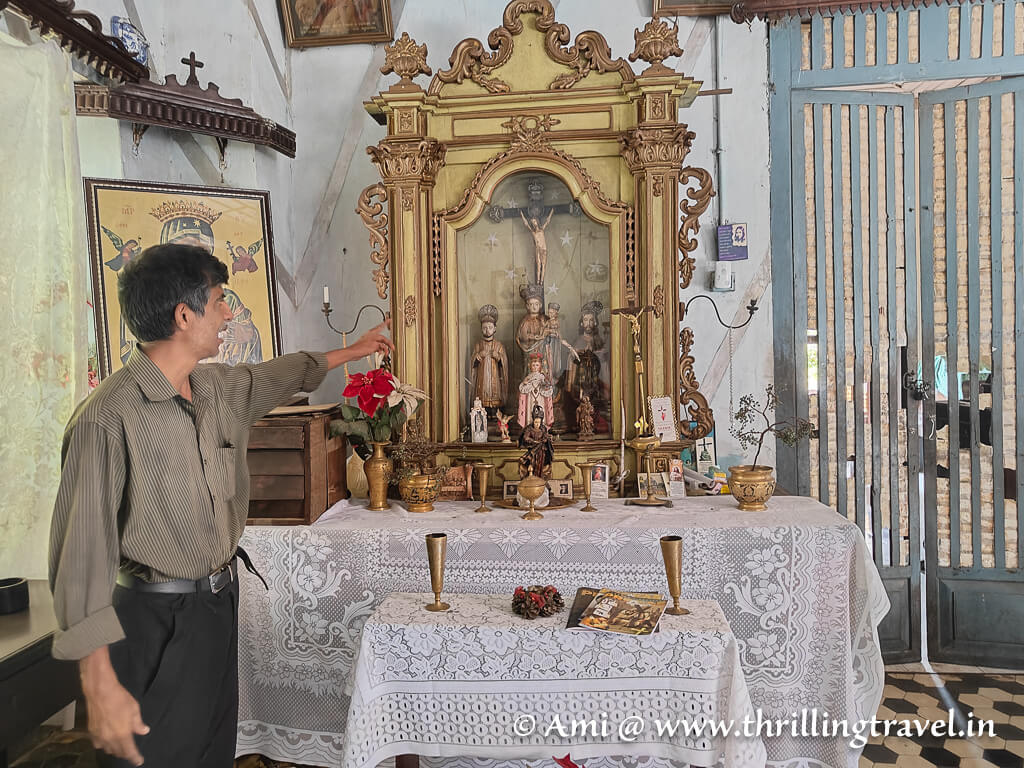
Tucked into one corner was a family altar with heavily ornamented private Christian altars and religious artwork.
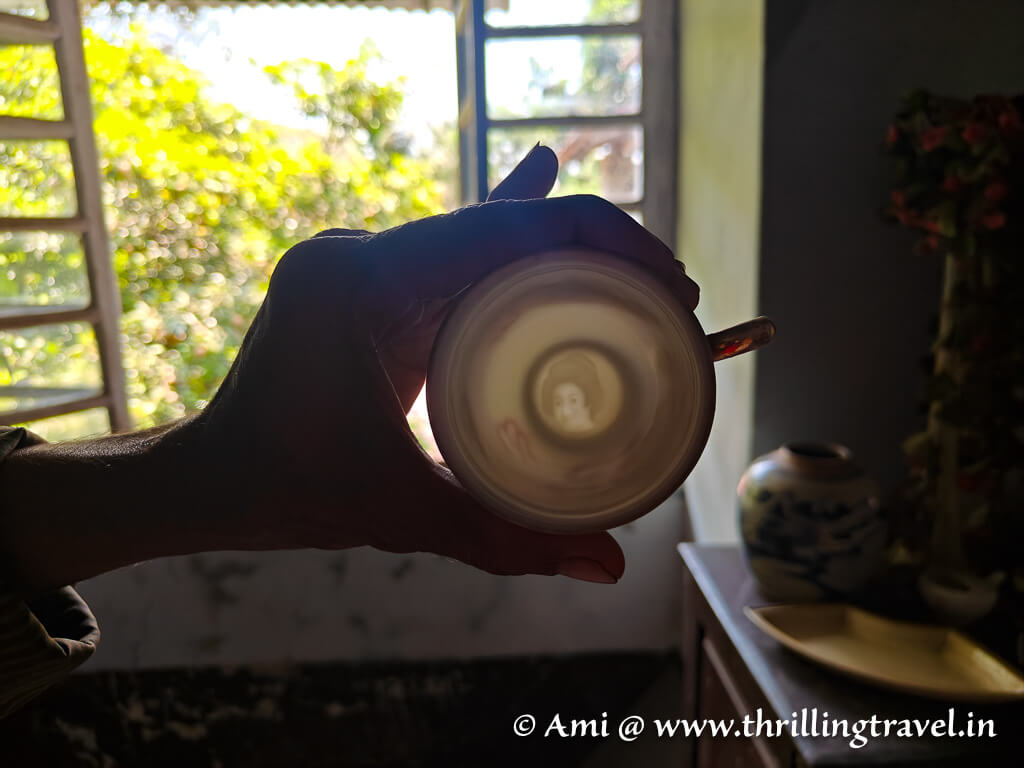
Rajeev also showed us a collection of medallions gathered by his ancestors over generations. However, the one artifact that genuinely surprised me was a delicate cup decorated with a Chinese fire dragon on the outside. Hold it up against the light and at the bottom, you will see the hidden portrait of a queen.
Fernandes House ballroom
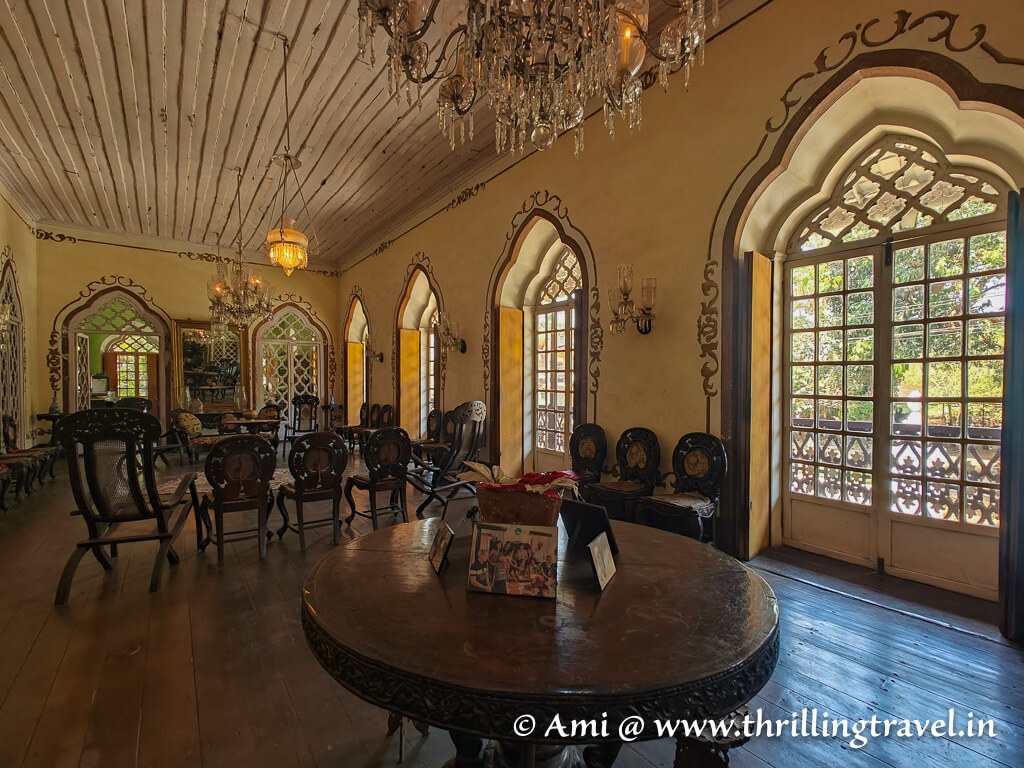
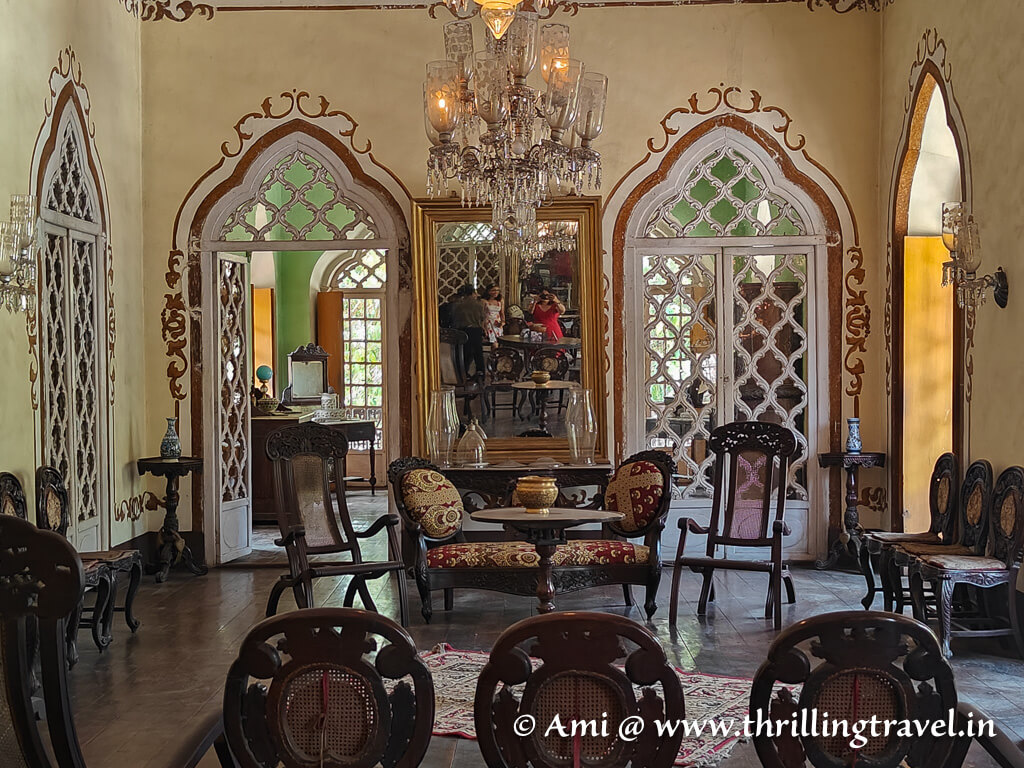
This is where the European influence was stark. Built for high-society entertainment, the ballroom came complete with a Belgian chandelier, baroque-styled furniture, a classy mirror, and arched doorways framing the whole space. An old piano sat in the corner, and yes, I am told that it still works.
The room was evidence of a genuinely well-to-do family and honestly, quite a contrast to the rest of the humble dwelling.
The Guest Room
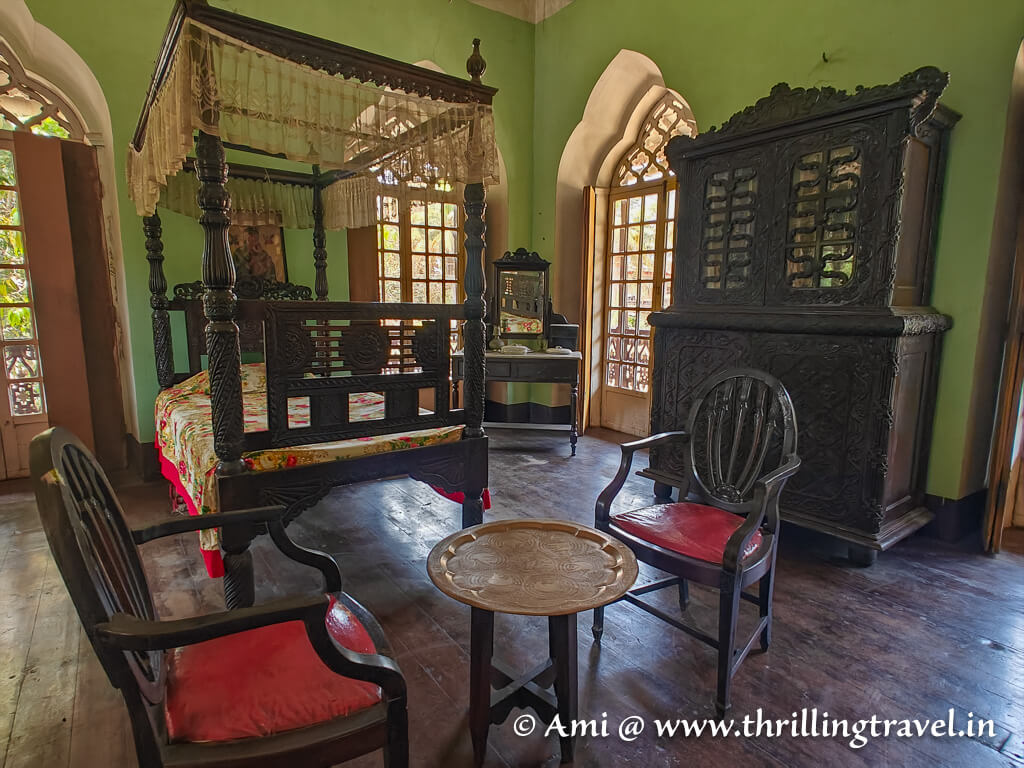
The last stop was the guest room with yet another intriguing tale. This time, it came in the form of secret drawers tucked within a cupboard. It was built specifically to hide precious things and had so many hidden corners behind false boards. In fact, it was like a puzzle where you had to move certain parts to access the opening beyond. Watching Rajeev as you can see in the video – I felt as if this were a set from one of those spy movies. I guess, In a time marked by liberation struggles and the constant threat of attacks, hiding places like these were probably a necessity.
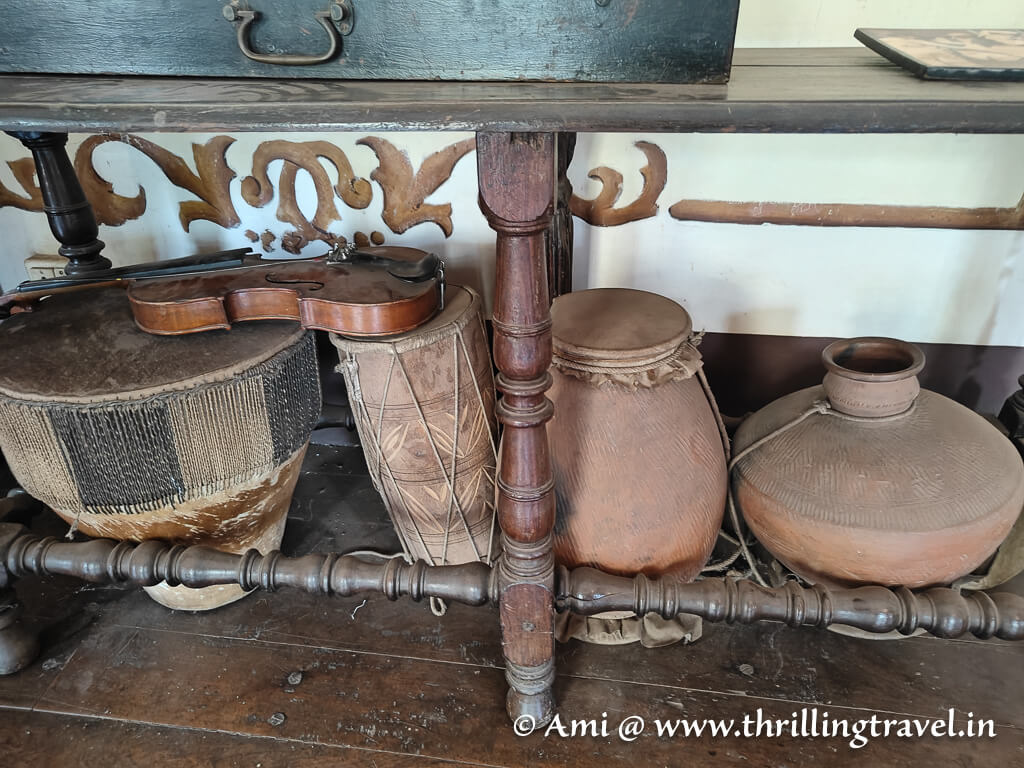
The room also held the traditional instruments used in the Mussol Khel dance, something Rajeev and his family still practice and keep alive today at the Kadamba temple.
With that, we bid goodbye to the soft-spoken guardian of this Chandor mansion and ended the epic Chandor village trail.
How to Plan a Chandor Heritage Village Tour
Planning a Chandor heritage village tour is simple, but the first thing to sort out is how you will get around. Braganza House and the church sit right across from each other, Fernandes House and the Kadamba temple site are almost 4 kilometers from the church. That is why you need your own car or a bike to cover this heritage trail in South Goa. Once you have wheels, you have two options: take a guided tour, or do it yourself with the help of this guide.
Chandor Guided Tour
A guided tour covers the whole trail in one go, and the charges include the entrance fees to both Braganza House and Fernandes House. It also ends with a refreshment at a quirky little cafe, which was a lovely way to wrap up my own trail.
The biggest pros are that you do not need to plan in detail and there is no need for navigation.Most of all, you get the stories. Medora’s telling of the curse at the Kadamba temple, along with her photos of the Mussol Khel dance and the Kadamba coins, is something no signboard could have given me. She also had a tale for the sights along the way.
However, the guided tour comes with a few cons. For one, you move at the group’s pace. It also costs more than doing it yourself. You can book one using the links given in the booking section above.
Self-Guided Tour of Chandor heritage village
This is the option for anyone who likes to set their own pace. The Braganza House Chandor timings are generally 9 am to 5 pm daily, and Fernandes House keeps similar hours. Both are run by the families who live there. The Braganza House entry fee is INR 500 per person, and the same applies at Fernandes House. That cover charge includes a guided visit by the owners themselves, so you still hear the family stories in person.
What you miss out on is the extra information and stories, especially at the Kadamba temple and the sights along the way.
Honestly – I would have not minded doing a self-guided tour but the lack of information on the internet made it a tad bit difficult. Lucky for you, I have put my experience along with the route map and the stop-by-stop details in this guide to help you get started on your own.
Basically, with this Chandor blog post, you are all set to explore these gorgeous stops at your convenience. Do ping me back once you have, Would love to hear from you.
My insider tips for visiting the Chandor mansions and other stops
A few things I learned along the way that will make your visit smoother:
- Carry water. The Goan heat is no joke, and the stretch between stops is sparsely populated, so you will not find a shop at every corner.
- Dress light. Breathable, comfortable clothing works best, since you will be moving between sunny roads and the closed-in rooms of the mansions.
- Wear walking shoes.
- Top up your fuel before you set off. The petrol bunks are a bit away from each other and also, Chandor. Running low between stops is the last thing you want on this trail. It can really take you off the route and delay things – especially if you are with a group.
- Keep aside half a day. The stops themselves take two to three hours, but with the drives in between, the time you will want to linger inside Braganza House and Fernandes House, and a refreshment at the end, half a day lets you enjoy it without watching the clock.
Common FAQs for the Chandor heritage trail
Is the Chandor heritage trail a walking trail?
No. Braganza House sits by the village church, but Fernandes House is more than a kilometer away and the Kadamba temple site is almost 4 kilometers from the church. You need your own car or a bike to cover the trail.
How long does the Chandor heritage trail take?
Plan for at least 2 to 3 hours of touring, with Braganza House and Fernandes House taking the larger share. Keep aside half a day so you can linger and enjoy a refreshment at the end.
What is the Braganza House entry fee?
It is INR 500 per person, which includes a guided visit by the owners of the house. The same applies at Fernandes House.
What are the Braganza House and Fernandes House timings?
Both are generally open from 9 am to 5 pm. As the houses are run by the families who live there, timings can shift, so it is worth calling ahead.
Do I need a guide for the Chandor heritage trail?
No. You can do the trail yourself with this guide and route map, and the owners will guide you through each house. A guided tour adds the stories at the Kadamba temple and along the way, and the charges include entrance to both houses and a refreshment at a cafe.
What is the curse of Chandor?
It is a local legend that Queen Kamaladevi, grief-stricken after her king died and her people failed to defend him, cursed the village so that its women would become widows. Whether it is true is for you to decide.
Can I visit both wings of Braganza House?
Braganza House is divided into two wings, owned by two branches of the family. I toured the Pereira wing, while the other wing is home to Luís de Menezes Bragança’s library of over 5,000 books. You can visit both the wings but you will have to pay separately for each. That would mean a total cost of INR 1000 per person.
Is Chandor worth visiting?
Definitely. It showcases a different side of South Goa – away from the beaches. You get two grand mansions, a Kadamba-era temple site and a village full of stories.
Where is Chandor, and how far is it from Panjim and Margao?
Chandor is in the Salcete taluka of South Goa, about 10 kilometers from Margao and roughly 40 kilometers from Panjim.
What is the best time to visit Chandor?
November to February is the most comfortable, with dry weather and cooler days. Whatever the season, start in the morning to beat the heat.
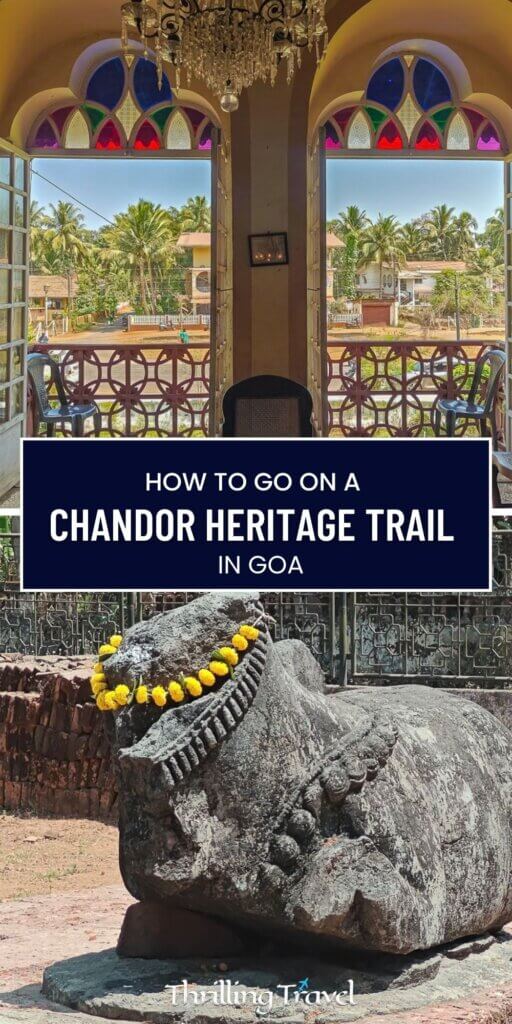
Before you go, pin this


Popularly referred to as a Restless Ball of Energy. My Mom refuses to entertain my complaints about my equally restless daughter & assures my husband that I was born with a travel bug.
I am a Post-Graduate in Marketing by qualification and a travel blogger by passion. Besides travel, I enjoy photography and if you don’t find me at my desk, I would be out playing badminton or swimming or just running. I believe in planning for every long weekend through the year. And when I cannot travel physically, I travel virtually through this travel blog. My travel stories have also, got published on various websites and magazines including BBC Travel, Lonely Planet India and Jetwings. I have recently published my first book – When Places Come Alive – a collection of stories that are based on legends, landscapes, art and culture of a place which is available in both ebook and paperback format.
You might also like these posts –